Get Full Government Meeting Transcripts, Videos, & Alerts Forever!
Get email alerts on the Facility Security topic
No spam. Unsubscribe anytime.
North Dakota State Penitentiary outlines perimeter, surveillance and contraband controls
Summary
NDSP officials told the Senate Appropriations Human Resources Division about physical perimeter measures, surveillance coverage and a recent body‑camera trial; staff requested funding to extend body cameras and to evaluate millimeter‑wave screening to reduce contraband.
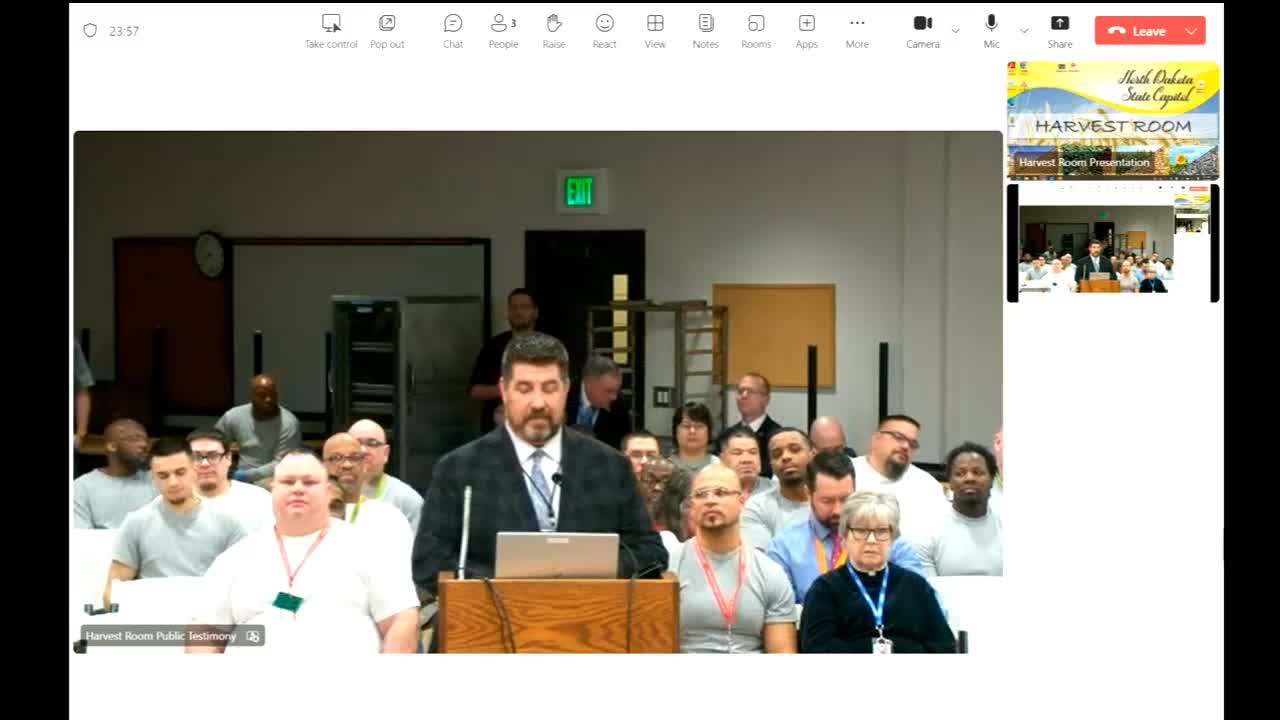
The North Dakota State Penitentiary in Bismarck described layers of perimeter fencing, surveillance and new screening tools during testimony to the Senate Appropriations Committee's Human Resources Division.
"We currently run a little over 500 security cameras inside and outside to monitor our perimeter and the resident movement," Chief of Security Todd Flanagan said, adding the facility's fence is a double design of about 6,500 feet and ranges from 18 to 24 feet in height.
Flanagan told senators that NDSP conducted a three‑month trial issuing body cameras to correctional officers to evaluate officer safety and operational benefit. "The majority of officers at the end of the trial reported that they were feeling more protected while wearing the cameras," he said, and investigators could shorten review time by pulling relevant footage.
Why it matters: officials said the combination of physical barriers, cameras and screening reduces the risk of escapes and improves incident investigation. Flanagan also described ongoing work to limit narcotics smuggling: U.S. mail is now scanned out of state and delivered electronically to residents, arriving residents pass through body scanners, and the department is exploring millimeter‑wave technology to detect contraband concealed under clothing.
Support and limits: Flanagan said the body‑camera trial coincided with a period in which officers reported fewer disorderly incidents toward staff and no credible allegations of serious staff misconduct during the trial window. He told the committee the department is "requesting funding for [body cameras] in the 25‑26 biennium." Senators asked about escapes; Flanagan described the perimeter and technology as effective and said escape attempts are rare.
Details from testimony and committee exchange: the facility's morning count included 814 residents and 40 corrections staff on duty; Flanagan said the prison is maximum security and is the largest DOCR facility in the state. He described prior investigative timelines being shortened from days to minutes when footage was available. Senators pressed on contraband and escape risks; Flanagan highlighted layered detection measures and ongoing technology pilots.
Ending: Committee members did not take formal votes during the visit but heard NDSP staff ask legislators to consider funding for equipment and technology that staff said improved officer safety and investigative efficiency.