Get Full Government Meeting Transcripts, Videos, & Alerts Forever!
Get email alerts on the Optometry Telemedicine topic
No spam. Unsubscribe anytime.
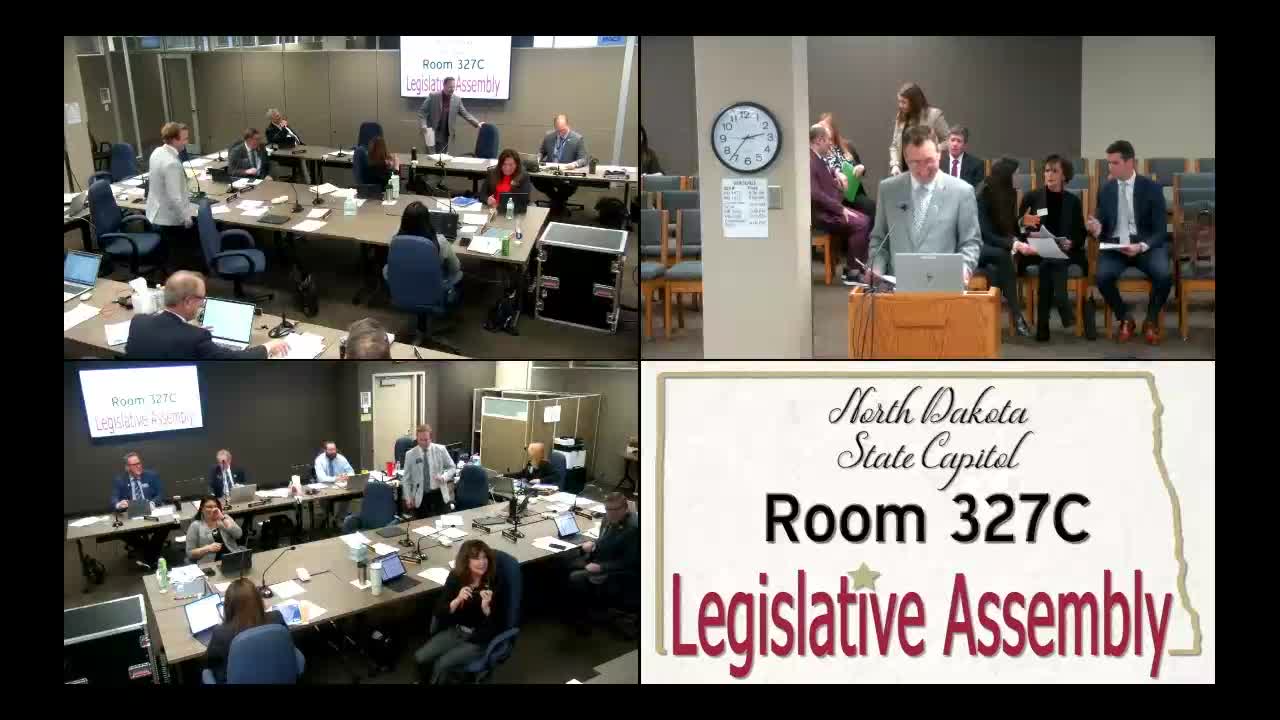
North Dakota committee reviews bill to codify telemedicine rules for optometrists, sparking scope debate
Summary
House Bill 1267, introduced to update North Dakota's optometry practice act, would define optometric telemedicine, require an initial in-state comprehensive eye exam to establish the provider-patient relationship, and modernize statutory language.
House Bill 1267, introduced in committee as a modernization of North Dakota's optometry practice law, would define optometric telemedicine, require that initial patient relationships begin with a comprehensive eye exam by an optometrist licensed and physically located in North Dakota, and update statutory language on fees and board roles.
Supporters including the State Board of Optometry and practicing optometrists told the Industry, Business and Labor Committee the changes create guardrails for telemedicine while protecting patient safety and access in rural communities. "This legislation responsibly integrates telemedicine into optometric care," one sponsor said, adding the bill does not change scope of practice "at least that's not the intent."
Proponents described the bill as an effort to replace antiquated language in the Century Code and to add definitions such as "distance site provider." Dr. Tayah Patzmann, executive director of the State Board of Optometry, said the measure would require telemedicine exams to be linked to a physical in-state office so there is a location for follow-up care and for the board to investigate complaints. "We're actually making it that the patient has to, like, go to an office in North Dakota to have this done," Patzmann said.
The bill also removes references to an elected "secretary" and replaces the term with "executive director," and would add a fee schedule to replace the current single $200 application/renewal fee.
Opponents, primarily ophthalmologists and the North Dakota Medical Association, said they generally support telemedicine safeguards but urged the committee to add precise limits around surgical procedures and injections. Dr. Michelle Atchison, an ophthalmologist practicing in Fargo, said she and other surgeons are proposing a narrowly worded definition of "invasive surgery" to ensure that more complex, potentially blinding procedures are not permitted without appropriate training and oversight. "Injecting medication in the eye one time can be blinding," she said.
Stakeholders said an amendment circulated in committee clarifies several definitions and struck language that unintentionally suggested broader authority. Terry Efertz, an attorney representing the Optometric Association, told the panel an amended version (referred to in testimony as 25.0935 0.01001) removes an unintended "except by injection" phrase and consolidates duplicate definitions. Efertz also said the bill was the product of work by the optometric association, the licensing board and the attorney general's office.
Committee members pressed witnesses on practical concerns, including how telemedicine exams are conducted and the accuracy of remote refraction compared with in-person testing. Dr. Leslie Hellebusch, an optometrist with clinics in Bismarck and other communities, cited retinal imaging and referred care coordination as examples of telemedicine augmenting in-person care. She described telemedicine as a complement, not a replacement, for in-person exams.
Ophthalmologists emphasized training differences between their specialty and optometry, noting residency and case-volume requirements. Dr. Darren Hill, an ophthalmologist in Minot, said the committee should aim for specific, codified lists of procedures that remain clearly within ophthalmology if the goal is not to expand optometric surgical authority.
No committee vote on the bill was recorded in the transcript. Committee discussion focused on whether to accept or reject amendments that would further define "invasive surgery" and on whether the statute should explicitly limit injections and other procedural authorities.
Supporters urged the committee to pass the bill with telemedicine safeguards; opponents asked for clearer surgical definitions or a separate bill to address any scope changes.
The committee closed the hearing after questions and indicated further consideration of amendments would follow.