Get Full Government Meeting Transcripts, Videos, & Alerts Forever!
Get email alerts on the School Meals topic
No spam. Unsubscribe anytime.
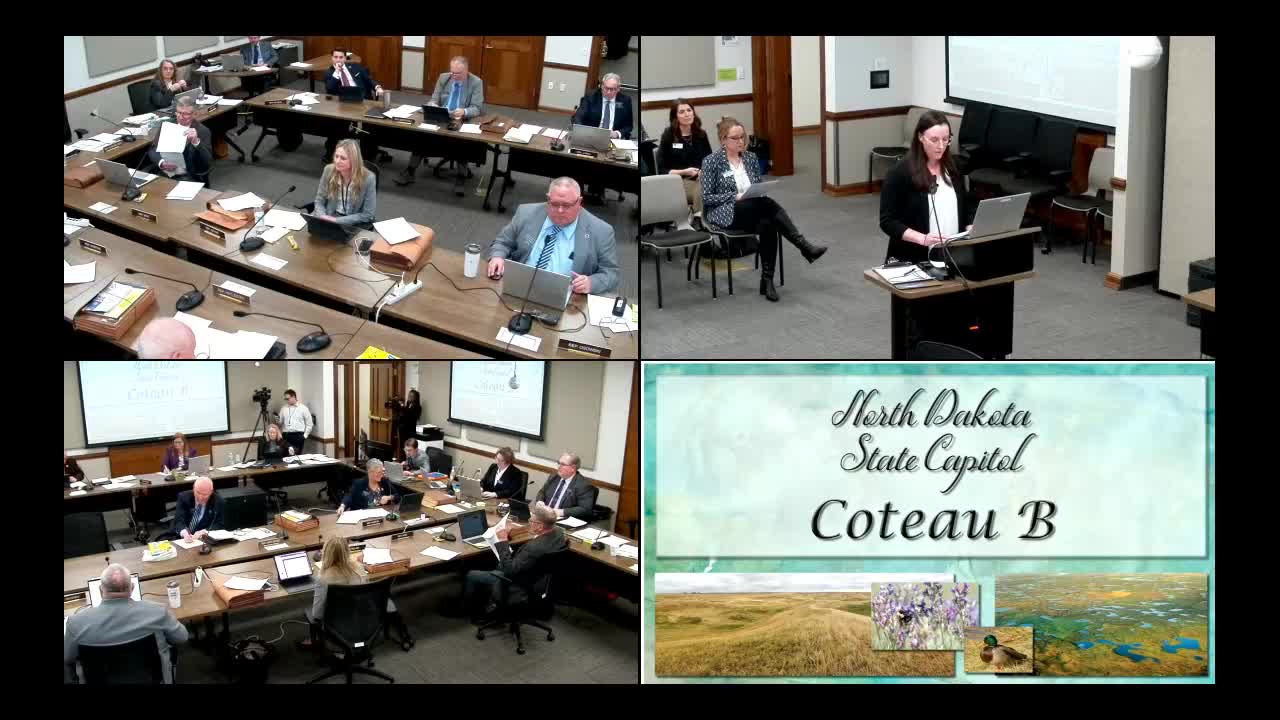
House Education Committee hears broad support for universal school meals bill, $140 million appropriation proposed
Summary
Representative Patrick Haddlestead, sponsor of House Bill 1475, told the House Education Committee the bill would "relieve a child's food insecurity by providing two nutritious meals to all school‑aged children every day of the school year."
Representative Patrick Haddlestead, sponsor of House Bill 1475, told the House Education Committee the bill would "relieve a child's food insecurity by providing two nutritious meals to all school‑aged children every day of the school year." The measure asks the state treasury to appropriate $140,000,000 (the bill language: $140,000,000 or the sum necessary) to reimburse school districts for serving universal breakfast and lunch, less any federal, state or private reimbursement the district receives.
The bill's supporters told the committee the proposal would reduce stigma, help working families and benefit local producers. Landis Larsen, president of the North Dakota AFL‑CIO, said, "Free school meals would mean an extra $850 per child per year that working families can keep in pocket." Michelle Wagner, child nutrition program director for Bismarck Public Schools, urged the committee to consider local agricultural impacts, estimating added milk purchases and additional federal entitlement dollars tied to higher participation.
Nut Graf: Proponents — including unions, school nutrition directors, education leaders, farmers and parent advocates — framed HB1475 as both a child‑wellness measure and an economic stimulus. Department of Public Instruction (DPI) staff told the committee how federal programs and reimbursement rules would affect the bill’s fiscal impact and participation projections.
Key details and testimony
- Sponsor: Representative Patrick Haddlestead (represents District 1, Williston). Haddlestead told the committee the bill aims to remove food insecurity barriers that reduce school readiness and learning.
- Supporters: Testimony in favor came from the North Dakota AFL‑CIO (Landis Larsen), North Dakota United (Nick Archuleta), Bismarck Public Schools nutrition director (Michelle Wagner), North Dakota Farmers Union (Matt Perdue), the North Dakota School Nutrition Association, North Dakota Council of Educational Leaders (Amy Copas) and several labor and community groups.
- DPI briefing: Lynelle Johnson, Director of Child Nutrition and Food Distribution at DPI, described how the National School Lunch and School Breakfast programs are federally administered by the U.S. Department of Agriculture and implemented at the state level through DPI. Johnson gave program counts: roughly 32,000 students currently qualify for free meals, about 7,700 for reduced price, and roughly 1,800 under the state’s expanded eligibility category. DPI staff said the $140 million estimate was calculated to maximize Community Eligibility Provision participation and to reflect projected participation and future reimbursement rates.
- Fiscal context: Witnesses and DPI referenced prior years when meals were offered at no cost (post‑COVID) and said participation rose then. DPI reported districts collected about $35,000,000 in federal reimbursements during 2023–24 and described how CEP (Community Eligibility Provision) and direct certification drive federal reimbursement rates.
- Local impacts cited: Nutrition directors and unions highlighted potential benefits to local agriculture, job creation in school kitchens, and reduced household food costs. Opposing viewpoints were not recorded in the hearing record.
Clarifying details from testimony
- Requested state appropriation: $140,000,000 (biennial amount as referenced in testimony). The sponsor and DPI used that figure in describing the bill’s fiscal note.
- Participation and counts: Testifiers cited approximately 168 public schools and 25 nonpublic schools that currently participate in federal meal programs, and an approximate 25,000 students participating in the National School Lunch Program (figures provided by the sponsor).
- Uncollected lunch debt: Testimony referenced rising unpaid meal debt of about $3,000,000 as of November (speaker provided that figure).
- Federal entitlement: Testimony cited an approximate federal entitlement allocation of $6,700,000 received in the 2023–24 school year for commodity entitlement; witness estimates projected an additional roughly $1,000,000 in entitlement funding with higher participation.
Committee action and next steps
The committee received extensive testimony and closed the hearing without taking a committee vote on HB1475 at that time. DPI staff and several testifiers urged committee members to consider implementation details — including maximizing federal reimbursements through CEP, collecting household applications where required, and clarifying how paid meal reimbursements would be handled — before formal action.
Ending: The Education Committee concluded the public hearing on HB1475 and moved to other bills on the agenda. No formal committee recommendation on the bill was recorded in the transcript provided to the committee.