Get Full Government Meeting Transcripts, Videos, & Alerts Forever!
Get email alerts on the Dental Board Reform topic
No spam. Unsubscribe anytime.
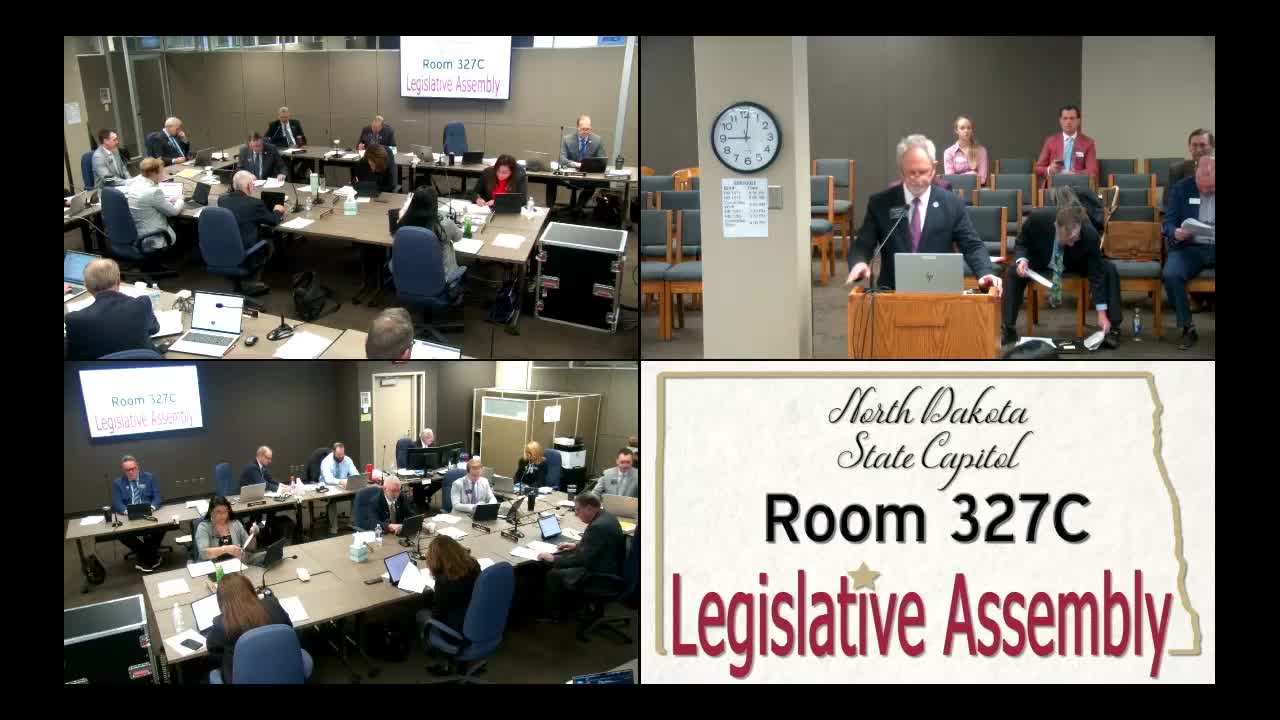
Lawmakers hear divided testimony on bill to add consumer members, change complaint process for State Board of Dental Examiners
Summary
Representative Don Vigasaw introduced HB1512 to add two independent consumer members to the State Board of Dental Examiners and to change complaint procedures so complainants would receive dentist responses and could recover costs when discipline results.
Representative Don Vigasaw introduced House Bill 1512 on behalf of a constituent who described a contentious dental experience. The bill would amend North Dakota Century Code sections relating to the State Board of Dental Examiners to add two independent consumer members, require the board to direct a complaint committee to investigate complaints, mandate that complainants receive a copy of a dentist’s response, and grant a complainant who obtains disciplinary action a right to recover costs incurred.
Jerome (Joe) Francis, the constituent whose experience prompted the bill, described extensive dental work he said did not match his instructions. He testified he filed a complaint with the dental board but the board dismissed it; Francis said the treatment he received was “exactly what I told [the dentist] I would refuse” and that resolving the issue would cost tens of thousands of dollars.
David Shibley, executive director of the State Board of Dental Examiners, told the committee the board is mindful of patient frustration but said the proposed changes would substantially reconfigure the board’s role and operations. He described four main concerns:
• Board composition: HB1512 would increase consumer members to three. Current statute sets a quorum at four members; Shibley said three consumer members would be “one vote shy of a quorum” and would give consumer appointees an outsized influence on decisions that require clinical expertise, such as scope-of-practice or licensing decisions.
• Automatic entitlement to costs: Section language in the bill would make a complainant “entitled” to recover costs if the complaint resulted in disciplinary action. Shibley said the bill does not define “costs” and gives the board no clear role in assessing or awarding those amounts.
• Release of dentist responses before discipline: Current practice (and existing open-records rules cited by Shibley) allows complaint file information to be public after the board finds discipline warranted; HB1512 would require the dentist’s response be released earlier. Shibley warned mandatory early release could expose preliminary or contested statements to public distribution (for example social media), creating reputational harm for licensees when no discipline is ultimately imposed.
• Mandating a complaints committee for every matter: The bill would require a complaints committee to investigate, which Shibley said would create administrative burdens, slow investigations and generate additional records (minutes, recordings) that may be used in civil litigation.
Shibley also provided data: the board receives roughly 20 complaints a year and, during his two years as executive director, he estimated about five disciplinary findings across two years (numbers offered as approximate).
The North Dakota Dental Association, represented by William Sherwin, and others also testified at the hearing. Sherwin said he sympathized with constituents who feel harmed but cautioned the board is charged with safeguarding patient safety and licensing competence, not adjudicating civil damages; he urged the committee to rely on civil courts for monetary remedies. Sherwin also said the board’s existing statutory authority and processes already allow consumer perspective; he said the finding-and-discipline process is meant to be clinical and to protect patients’ safety.
Committee members asked about specific word choices in the bill, including the draft change of the word “person” to “individual” (which Representative Ruby flagged as potentially narrowing the set of possible complainants) and how the board currently handles investigations, quorum and open-records rules. Shibley encouraged legislative counsel and the committee to consider the practical effects of mandating disclosure and committee procedures.
No committee vote was taken on HB1512 during the hearing; the matter was discussed and witnesses were released. The hearing record includes requests for the committee to review language with legislative counsel and continued discussion at a later date.
Why it matters: HB1512 touches on the balance between consumer protection and professional oversight. Supporters said the changes would increase consumer representation and give complainants clearer access to information; opponents warned it could transform a licensing board into a forum for civil monetary awards and could create procedural burdens and unintended disclosure of preliminary information.