Get Full Government Meeting Transcripts, Videos, & Alerts Forever!
Get email alerts on the Agriculture Value Added Facility topic
No spam. Unsubscribe anytime.
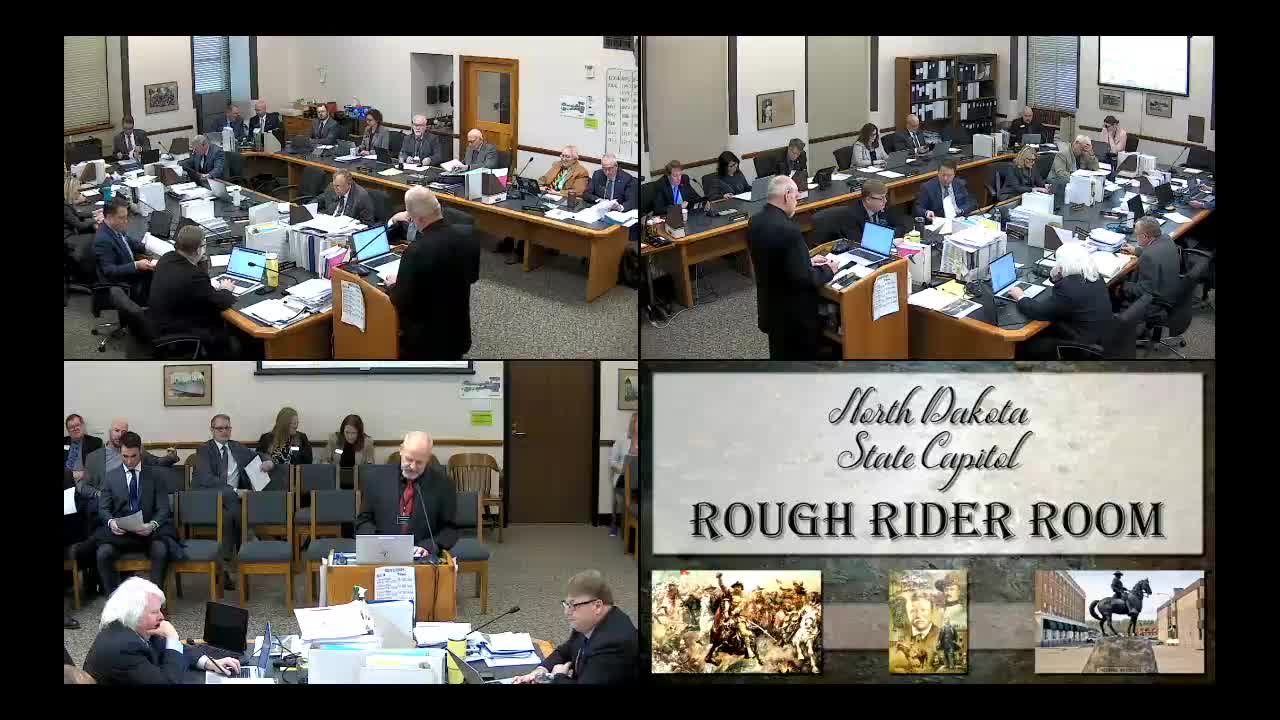
Appropriations hearing: $30 million incentive proposed to land Belgian potato processor in Grand Forks
Summary
Representative Mike Belts told the Appropriations Committee House Bill 13‑32 would add a value‑added agriculture facility incentive to the AD Fund and transfer $30 million to help land a Belgian potato processor in Grand Forks.
Representative Mike Belts introduced House Bill 13‑32 on behalf of the Agriculture Committee, describing it as an insertion into the existing Ag Diversification and Development (AD) Fund to create a value‑added agriculture facility incentive and to transfer $30 million from the relevant fund to support a single proposed potato processing facility on the north side of Grand Forks.
Why it matters: Belts told the committee the project — led by a family‑owned Belgian company identified as Augusto/Agristo in testimony — would expand the state's potato acreage by about 25,000 acres (a roughly 33% increase from current levels), leverage nearly $150 million in on‑farm investment from regional growers, and produce an estimated annual income impact greater than $20 million (project proponents put a longer‑term economic impact at about $42 million). Proponents said the state investment would level the playing field against an offer from Wisconsin and trigger much larger private and regional investment.
Program details and disbursement: Under the bill as presented, grant funding would be reimbursable and disbursed in phases: an initial half upon certificate of occupancy and the remainder when the facility reaches 50% of production capacity. Representative Belts said the AD program's process and committee would administer the incentive and that the appropriation would likely not be disbursed until the 70th legislative assembly; the bill's language anticipates future drafting adjustments.
Local and financial testimony: Mayor Brandon Bochenski of Grand Forks described $28 million in local investments already made in infrastructure for an industrial/ag park called the Peony Site and said the city would also offer property tax abatement (testimony cited an estimated $60 million abatement over 30 years) and other local supports. Kelvin Hullick, Chief Business Development Officer at the Bank of North Dakota, explained a proposed financing approach: the bank could provide a line of credit for the post‑production grant disbursement and the Ag Commissioner would later seek legislative repayment authority (so the legislature could choose the repayment source rather than automatically drawing from SIF).
Questions and concerns: Committee members raised process questions about whether the measure creates a single‑project carve‑out or establishes an ongoing program, how the AD Fund's typical $25 million biennial appropriation would be affected, transparency and evaluation procedures for project selection, and whether Department of Commerce would be a more appropriate home for large economic development incentives. Representative Belts and BND staff said the AD program and its established committee and criteria would process applications and that the bill is crafted to address this specific opportunity while leaving the AD Fund intact for future projects.
Outcome and next steps: The committee closed the hearing on HB 13‑32 after testimony; no committee vote appears in the transcript. Committee members asked for additional detail on timelines, repayment mechanics and whether the appropriation could be structured as line‑of‑credit support instead of tied cash. Mayor Bochenski and local representatives emphasized the project is time‑sensitive and that state support is intended to prevent the company from selecting an out‑of‑state site in Wisconsin.
Ending: The hearing established key terms of a targeted $30 million incentive and highlighted local financial commitments and infrastructure already in place; the bill will return to committee for further drafting or future action as sponsors and staff address the repayment and oversight mechanics.