Get Full Government Meeting Transcripts, Videos, & Alerts Forever!
Get email alerts on the Property Taxes Homestead Exemption topic
No spam. Unsubscribe anytime.
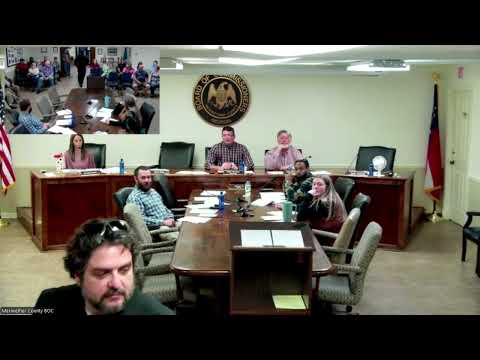
Meriwether County holds public hearing after board announces intent to opt out of state homestead exemption
Summary
The Meriwether County Board of Commissioners announced an intent to opt out of Georgia House Bill 581the statewide homestead exemption, held a public hearing to explain the county's 24-year floating homestead policy and to gather public feedback, and scheduled two additional hearings in February.
The Meriwether County Board of Commissioners announced at a public hearing that it intends to opt out of the statewide homestead exemption created by House Bill 581 and opened the floor for residents to ask questions and comment.
The county presented its 24-year "floating" homestead exemption as the primary reason for the decision, saying that the existing local policy freezes a home's taxable value at the time of purchase and therefore better shields long-term homeowners from market-driven tax increases than the statewide plan under House Bill 581. The board said it would hold two more public hearings on the topic on Feb. 11, 2025, and Feb. 18, 2025, both from 6 to 7 p.m. at the Meriwether County Board of Commissioners office.
Chair, Meriwether County Board of Commissioners, read a statement explaining the action and its rationale. "Meriwether County Board of Commissioners has formally announced this decision to opt out of the newly proposed statewide homestead exemption under House Bill 5 81," the chair said. The chair and county staff described the local exemption as a "floating" or base-year freeze that keeps an assessed value the same for the owner unless the property is sold or a permit triggers a reassessment.
Ryan Moore, a city councilman in Greenville who spoke during public comment, said the issue is complex but urged clarity for voters. "We're only talking about homeowners, not commercial, agriculture, industrial, nothing," Moore said, emphasizing that a homeowner who stays in place benefits from the county's current program and that if the county "stay[s] in" the state and local calculations will be done and the homeowner will receive whichever produces the lower tax.
County staff and the chair explained technical triggers for reassessment under the local program: a sale, building permits for upgrades or additions, or removal of structures. County staff also said the county must maintain a share of total assessed value between roughly 38% and 42% to retain certain public-utility funding; staff said small adjustments to assessments this year caused slight increases in some individual tax bills to meet that threshold.
Speakers raised concerns about who would bear the burden if the county collected less revenue under the state plan, whether opt-out decisions could be reversed, and how changes would affect renters and owners of commercial or rental properties. The chair said the state law gives each governing authority the ability to opt out and that reversing an opt-out would require a multi-step process involving the legislature and a local referendum. The board also noted that the Meriwether County School Board had announced its intent to opt out and that municipal governments within the county would hold their own meetings so residents can comment locally.
County staff clarified that the local option sales-tax component discussed alongside the homestead changes (referred to in the hearing as a "FLOS" or sales-tax mechanism) would require an intergovernmental agreement representing at least 50% of county population in order to proceed and would also require voter approval in a referendum.
Public commenters asked for data the county did not have on hand at the hearing, including the number of homestead claims in the county and salary information for school board employees; commissioners advised citizens how to request those records and said additional information would be posted on the county website. John Gorton, the county finance director and county administrator, appeared at the hearing and responded to questions about process and timelines.
No formal local ordinance adopting or rejecting HB 581 appears on the public record in the transcript of the hearing; the meeting record shows motions to open and close the public hearing and to adopt the agenda. The board said it will use the three public hearings to gather public feedback before taking any further formal action.
The board and staff said they will publish materials and answers to outstanding questions on the county website and in local media. Residents who spoke were asked to sign an attendance/comment sheet for follow-up.