Get Full Government Meeting Transcripts, Videos, & Alerts Forever!
Get email alerts on the School Budgeting topic
No spam. Unsubscribe anytime.
Concord and Concord‑Carlisle committees approve FY‑26 budgets, establish revolving funds and declare Peabody property surplus; $1.85M amenities warrant advances
Summary
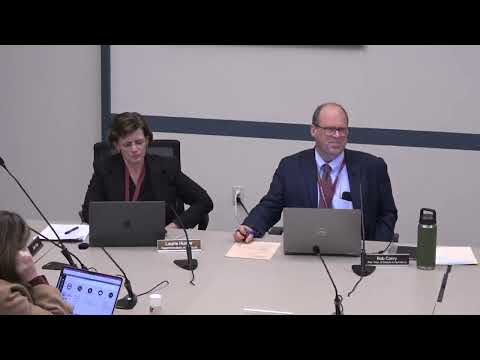
Concord and Concord‑Carlisle school officials approved separate FY‑26 budgets, authorized several finance measures and declared the Peabody School property surplus during a Feb. 4 joint meeting that also advanced a $1.85 million warrant article for an amenities building at Concord‑Carlisle High School.
Concord and Concord‑Carlisle school officials approved separate FY‑26 budgets, authorized several finance measures and declared the Peabody School property surplus during a Feb. 4 joint meeting that also advanced a $1.85 million warrant article for an amenities building at Concord‑Carlisle High School.
The Concord Public Schools (CPS) committee approved a district FY‑26 operating budget of $47,632,034, plus a supplemental appropriation request of $69,906 tied to expected McKinney‑Vento (homeless) transportation reimbursements. The Concord‑Carlisle Regional School Committee separately approved a regional FY‑26 budget of $40,479,952.
The budgets, presented by district staff, were the outcome of months of planning. Bob (staff member) said the CPS presentation incorporated a mix of level‑service assumptions, statutory mandates and one‑time consolidation savings tied to the move into the new middle school. “As part of that transition, we have realized consolidation savings of $576,000; in FY‑26 that’s incorporated into our budget,” he said.
Why it matters: both budgets steer local spending for the coming year, influence the towns’ assessments and include contingency decisions tied to external reimbursements and state guidance. Committee members repeatedly identified out‑of‑district special‑education tuition as the top budget pressure and flagged delayed federal/state reimbursements for students experiencing homelessness as an implementation and revenue‑timing risk.
Key numbers and drivers - Concord Public Schools proposed FY‑26 total: $47,632,034; supplemental McKinney‑Vento request: $69,906 (to be appropriated by town meeting if reimbursements arrive). - Concord‑Carlisle Regional FY‑26 operating budget: $40,479,952. - Middle‑school consolidation savings incorporated into FY‑26: $576,000. - Gross out‑of‑district tuition increase since budget development: +$462,000 (gross cost ~ $3,541,000), driven by additional student placements. - Fixed‑charge increases driven largely by insurance rate and experience increases; OPEB trust value (06/30/2024) reported at just over $10,000,000 with a liability of $17,400,000.
Discussion highlights and fiscal choices Committee discussion followed an inverted‑pyramid approach: staff led with the most material issues (special‑education placements and transportation), then described category‑level changes. Officials said teaching salaries and instructional supports rose due to COLA, steps and lane movements; administration costs increased in part for software and cybersecurity after a February incident; maintenance and operations rose for contractual wage increases and a new stormwater assessment from the town; and insurance costs pushed fixed charges upward.
On special education, staff explained that out‑of‑district tuition moved from the budget assumption during the fall/winter months when several students were placed outside the district, producing a net budget pressure. The committees were told circuit‑breaker and grant offsets are expected to be relatively flat for FY‑26.
Homeless student transportation: presenters said transportation costs tied to students at a shelter on Elm Street were budgeted in FY‑25 and will be reimbursed by federal McKinney‑Vento funds on a lag basis; staff cautioned the reported August closure of the shelter could eliminate that revenue next year and change staffing and budget needs.
Budget flexibility and proposed cuts District staff identified two near‑term budget levers if cuts become necessary: (1) reduce the FY‑26 contribution to the OPEB trust (example cut discussed: $50,000) and (2) halve the planned replacement investment for interactive classroom boards (example cut: $45,000). Staff also noted the district uses excess and deficiency (E&D) and circuit‑breaker reserves as operating buffers; the committee asked for more website transparency on FY‑26 assumptions and line‑item detail.
Other financial and governance votes - Peabody School parcels declared surplus: the committee voted to declare three parcels (addresses read into the record) no longer necessary for public school purposes and to recommend transfer of care, custody and management to the town select board; motion passed on roll call. - Facilities rental revolving fund: the committee approved creating a facilities rental revolving account under M.G.L. c.71, §71E so rental receipts can fund building operating and maintenance costs that serve the schools. - Nonresident tuition revolving fund: the committee approved a nonresident tuition revolving fund under M.G.L. c.71, §71F to receive tuition revenue when other districts place students in Concord programs and to apply those revenues back to program costs. - Extended procurement authority: the committee approved submitting a town‑meeting warrant article to allow extended contract terms (up to five years) for bus leases and curriculum licenses in accordance with M.G.L. c.30B, §12B to capture multi‑year discounts when appropriate.
Amenities warrant and CPC questions The committee approved a warrant article asking town meeting to appropriate $1,850,000 for construction of an amenities building at Concord‑Carlisle High School that the motion specifies will include ADA‑compliant public restrooms and concession space. Committee members and several speakers framed the project principally as an ADA/compliance need and said they would pursue Community Preservation Act (CPA) funding and other offsets to reduce local tax impact. Legal and intergovernmental questions about how CPA funding or town contributions would affect each town’s regional assessment were raised; staff said they were seeking guidance from town counsel, the Community Preservation Coalition and the Department of Elementary and Secondary Education and expected more detail before town meetings.
Votes at a glance (selected motions adopted) - Concord Public Schools FY‑26 operating budget: $47,632,034; supplemental McKinney‑Vento request $69,906 — APPROVED (roll call recorded) - Concord‑Carlisle Regional FY‑26 operating budget: $40,479,952 — APPROVED (roll call recorded) - Declare Peabody School property surplus (three parcels) and recommend transfer to select board — APPROVED (roll call recorded) - Establish facilities rental revolving fund (M.G.L. c.71, §71E) — APPROVED (roll call recorded) - Establish nonresident tuition revolving fund (M.G.L. c.71, §71F) — APPROVED (roll call recorded) - Request town‑meeting warrant language to allow up to five‑year contract terms for bus leases and curriculum licenses (M.G.L. c.30B, §12B) — APPROVED (roll call recorded) - Appropriation for amenities building (request $1,850,000; motion amended to specify ADA‑compliant restrooms) — APPROVED (roll call recorded) - Motion to enter executive session for collective bargaining strategy (building service workers) — APPROVED (roll call recorded)
Public comment and process notes In public comments, resident Wendy Holt urged the committee to engage independent DEIB reviewers and to include METCO parent representatives directly in follow‑up work, invoking the principle “nothing about us without us” when discussing policy response and community input on diversity and inclusion issues.
What’s next - Town meeting appropriations: several approved actions (CPS supplemental appropriation for McKinney‑Vento reimbursements; the amenities building warrant if placed on town warrants) still require town‑meeting votes or further legal clarification on funding splits and CPA eligibility. - Staff follow‑up: presenters said they would post full FY‑26 budget details on district websites, pursue legal guidance on the amenities funding split and return with any updates before warrant deadlines.
The meeting record shows broad committee support for the budgets and finance measures, while also highlighting several contingent risks — chiefly special‑education placements, insurance and benefit cost volatility, and the timing of federal/state reimbursements for homeless student transportation.