Get Full Government Meeting Transcripts, Videos, & Alerts Forever!
Get email alerts on the Education Savings Accounts topic
No spam. Unsubscribe anytime.
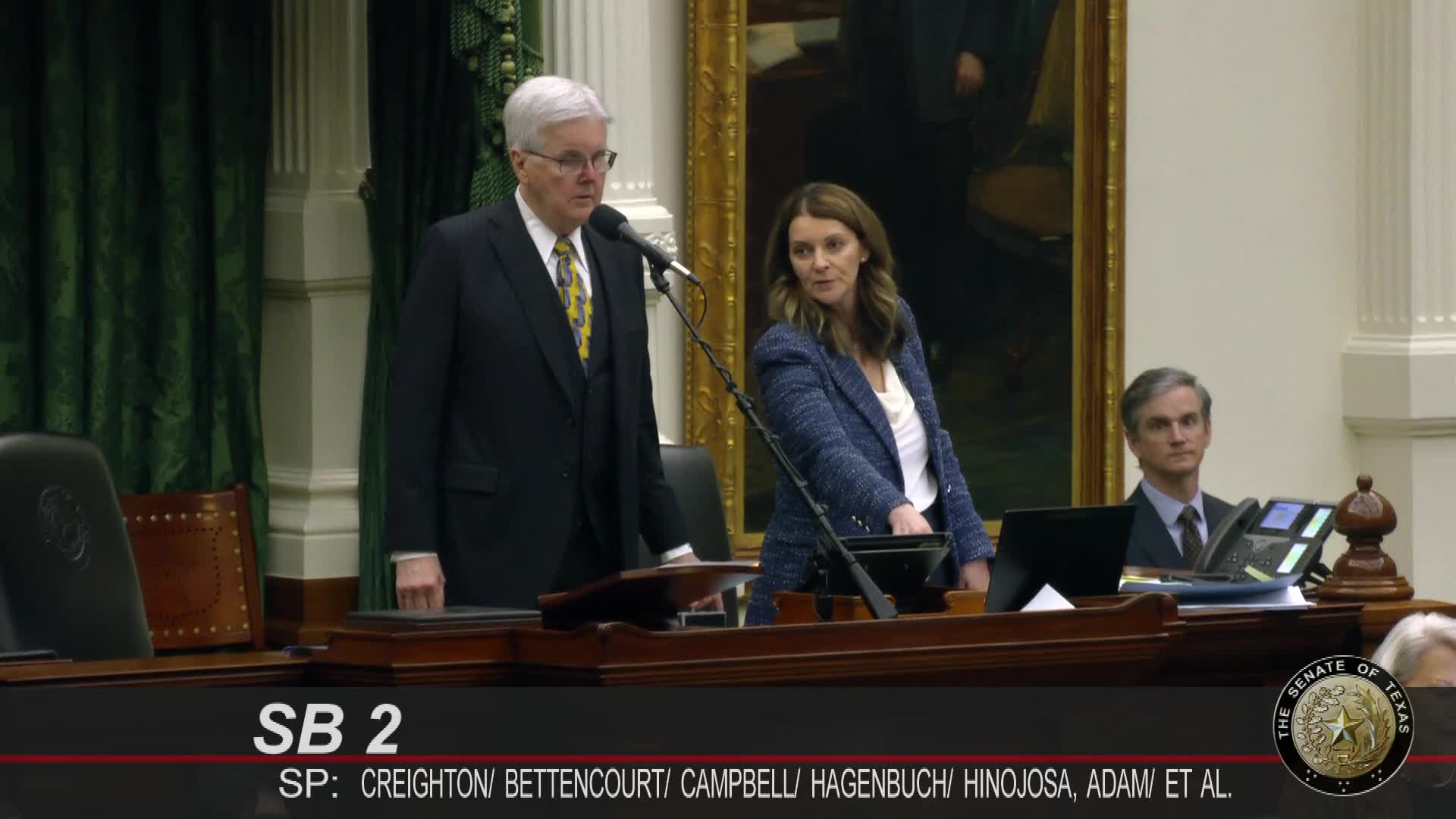
Senate passes education savings account bill after heated debate; 19-12
Summary
The Senate approved Senate Bill 2, creating an education savings account (ESA) program, on a 19-12 final passage vote after more than an hour of debate. Supporters said the bill expands options for vulnerable students; opponents said it diverts public dollars to private schools and would harm rural, English-learner and special‑education services.
The Senate approved Senate Bill 2 on final passage Tuesday, authorizing an education savings account program intended to allow some families to use public funds for private-school and other education expenses. The motion for final passage was made by Senator Creighton and the Senate recorded 19 ayes and 12 nays.
Why it matters: The bill would redirect a portion of public education funding into accounts that parents could use for private school tuition, tutoring and other education services. Supporters called the program a targeted tool to help special-needs and low-income students; opponents warned the program will siphon money from public districts, exacerbate racial and economic segregation, and leave English learners and students with disabilities without mandated services.
Supporters, led on the floor by Senator Creighton, argued the bill is focused on vulnerable students and expands family choice. Senator Creighton said the bill “weights 80% within a framework to help special needs kids and income vulnerable kids,” described what he said were national studies showing benefits of school choice and moved final passage: “I move final passage of senate bill 2.”
Opponents, including Senators Zaffirini, Johnson, Miles, Blanco, Eckhart and others, spoke at length against the measure. Senator Zaffirini said she would “respectfully vote against vouchers, which are referred to as education savings accounts in Senate Bill 2,” and argued the bill would “divert taxpayer dollars to private schools with little to no accountability.”
Senator Johnson used an analogy to toll-road vouchers to question who benefits, saying in part: “We could call them TSAs ... what would you think if you lived in a district that didn't have a toll road ... and yet your tax dollars were going to be used to subsidize somebody's comfortable ride?” He cited fiscal and enrollment estimates in arguing the program primarily helps families already using private schools.
Senator Miles placed the debate in historical context, warning that voucher programs have been used in the past to resist integration and saying, “If we pass this voucher bill ... it can happen and it will happen again.” He and other opponents cited data and examples from other states showing most voucher recipients were already enrolled in private schools.
Senator Blanco described the bill’s likely effect on rural districts and English learners: many communities “have no private schools” and public schools provide meals, special education, healthcare and other services. She said private schools accepting public funds would not be required to provide bilingual or special-education services and therefore the bill “does not expand real choices for Texas families.”
Senator Eckhart and others emphasized funding tradeoffs and state duties, arguing the Texas Constitution requires the legislature to “establish and make suitable provision for the support and maintenance of an efficient system of public free schools,” and that moving money to private schools would undermine that obligation.
Senator Campbell and other supporters countered that the bill is designed to target disadvantaged students and that repeated committees and study informed the bill’s design. Campbell said school choice can “provide opportunities for students from diverse backgrounds to access better educational options.”
Fiscal and program details discussed on the floor included a cited income eligibility threshold of 500% of the federal poverty level (mentioned in debate as roughly $160,000 a year) and a fiscal projection mentioned repeatedly by opponents: $4,600,000,000 per year by the date cited in debate. Opponents said the bill could reach a substantially larger share of students over time and that most of the funds would likely benefit families already using private schools.
Votes at a glance: The Senate first suspended rules to take up the bill (reported earlier as 20 ayes, 11 nays) and later recorded final passage on a roll call reported as 19 ayes and 12 nays. The transcript lists the roll-call names; the final tally reported on the floor is 19–12 in favor and the Chair announced that the bill “has passed” the Senate and will next be considered by the House.
What remains: Passage in the Senate sends the bill to the Texas House for consideration. Opponents on the floor urged reconsideration of funding priorities for public education, pointing to teacher pay, bilingual and special‑education needs, and the consequences for rural districts. Supporters said the bill is crafted to prioritize students with disabilities and income-vulnerable students and pledged to continue working to refine the measure.
The Senate debate and vote combined extended floor time and included multiple named speeches representing both detailed policy and broader historical arguments. The floor record shows the motion to take up the bill, extended debate from multiple senators, a rules suspension vote, and final passage.