Get Full Government Meeting Transcripts, Videos, & Alerts Forever!
Get email alerts on the Riverwatch Development topic
No spam. Unsubscribe anytime.
Council weighs revised RiverWatch Place agreement amid contamination, floodplain and ethics concerns
Summary
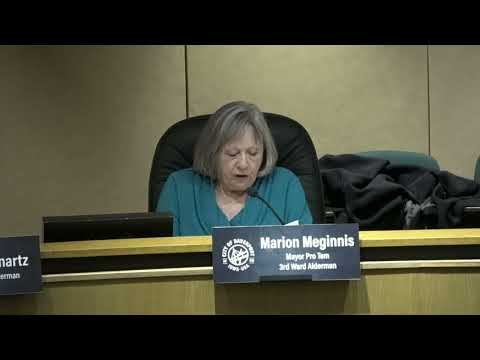
The Davenport City Council debate on a revised development agreement for the RiverWatch Place project centered on new environmental safeguards, a hotel‑motel tax allocation for parks and a request from Alderwoman McGinnis for a formal determination on whether prior consultancy work creates a conflict of interest.
Davenport City Council members debated a revised development agreement for the RiverWatch Place project on Jan. 8, 2025, after council leadership circulated proposed amendments requiring both lots in the subdivision to enroll in the Iowa Department of Natural Resources land recycling program, adding a recorded flood‑risk disclaimer, and dedicating a portion of hotel‑motel tax revenue to park maintenance.
The council heard about contamination and flood risks from multiple public commenters, received economic projections from city staff and a developer presentation that said the partners had invested millions of their own funds, and considered process questions after Alderwoman McGinnis invoked the council’s new code of conduct and asked for a formal determination whether prior paid consulting work for other projects created an appearance of conflict.
The amended agreement circulated to council would require both parcels (Lots 1 and 2 of the RiverWatch subdivision) to satisfactorily complete the Iowa DNR land recycling program; record a covenant disclaiming any city obligation to provide private flood protection and requiring the covenant run with the land; and allocate a scheduled share of hotel‑motel tax revenue from the property to park maintenance (25% for years 1–10 and 50% for years 11–15, with reporting requirements and a statement that the funds are intended to supplement, not replace, existing park maintenance funding).
Why it matters: The proposal would permit a multi‑building riverfront development on a site that public speakers and records indicate is within the regulated floodplain and has a history of soil and groundwater contamination. The amendments are intended to address environmental cleanup and public‑use impacts while directing a share of the hotel tax receipts toward local parks. The agreement also carries tax‑revenue implications for the city’s budget over the coming 15 years.
What council and the public said
Alderwoman McGinnis (public statement, Jan. 8): “Historic tax credit projects are limited to existing buildings listed or potentially listed in the National Register of Historic Places. The developer . . . had hired me to write state and federal historic tax credit applications for other projects. He has never consulted me on this project.” McGinnis said she had consistently abstained from votes that directly involved projects for which she provided historic tax‑credit consulting and asked the council to make a formal determination whether an appearance of conflict exists under the city’s code of conduct.
Corporate counsel (Huff) explained the legal framework for conflicts of interest and how direct and indirect conflicts are evaluated, saying the factors include whether a prior business relationship would reasonably affect a member’s impartiality or whether a member’s financial livelihood depends on the relationship. Counsel advised that a council vote is the mechanism the code envisions if a member seeks a determination.
Public commenters raised environmental and flood‑risk concerns. Judith Lee (Second Ward) cited DNR and EPA records and argued contamination from a former Quad‑City Times site overlaps the RiverWatch parcels, recommending both lots be enrolled in DNR’s land recycling program and that the city investigate how past federal cleanup funds were used. Another resident, David Ezra Sidram, urged the council not to provide incentives for a hotel in the floodplain. Pete Stokulos, identified in public comment as the developer, said he and partners “have spent millions of dollars acquiring this site of our own money” and estimated they would invest “probably another $6,000,000” in the project, and he projected hotel‑ and property‑tax revenue for the city if the project proceeds.
Economic staff (Burshberger) summarized the city’s projection that taxing jurisdictions would collect an estimated $4.3 million in new property taxes during the 15‑year assistance period and that the city itself would net about $1.5 million in new property tax revenue in that time frame; staff also noted an estimated $1.9 million in hotel‑motel tax revenue attributable to the development over the same period. (These numbers were presented in the staff memo provided to council.)
Procedure and votes
Council discussion focused on process, public‑safety and environmental risk, and whether the item should remain on the consent calendar. After debate, council voted to place the RiverWatch Place development agreement (item 2) on the regular discussion calendar rather than the consent agenda so it can be considered in full at the next cycle. That motion passed (council recorded one abstention). No final vote on the development agreement itself occurred during the Jan. 8 meeting.
Alderwoman McGinnis also invoked section 2 of the council’s newly adopted code of conduct and requested a council determination whether an appearance of conflict exists concerning her ability to vote on the RiverWatch matter. A separate procedural motion to suspend the rules and take up that request immediately failed on a roll call. The council chair and corporate counsel indicated the code provides multiple avenues — the member may request a determination from the full council or the matter may be referred to the code‑of‑conduct committee if a formal complaint is filed.
What stays unresolved
No final action on the RiverWatch Place development agreement occurred Jan. 8; council scheduled further consideration. The public record and DNR/EPA sampling referenced by speakers remain outstanding issues for council to weigh. Alderwoman McGinnis’s request for a formal conflict determination was not resolved on Jan. 8 because council declined to suspend rules to take up the request immediately; the request can be brought again by motion or handled through the code‑of‑conduct committee process.
Ending note: Council members repeatedly framed the item as important to downtown redevelopment and future city revenues but also acknowledged environmental and floodplain constraints that could affect feasibility and long‑term liability. Council members and staff said they expect further briefings and documentary follow‑up before any final vote.