Get Full Government Meeting Transcripts, Videos, & Alerts Forever!
Get email alerts on the Homestead Exemption Hb92 topic
No spam. Unsubscribe anytime.
House panel advances HB 92 with technical fixes to homestead "floating" exemption and notice rules
Summary
A Georgia House subcommittee unanimously approved a substitute to House Bill 92 that adjusts notice timing, fallback calculations for tax assessment notices and adds a five‑acre cap and other technical changes to the proposed floating homestead exemption; the bill moves to the Rules Committee.
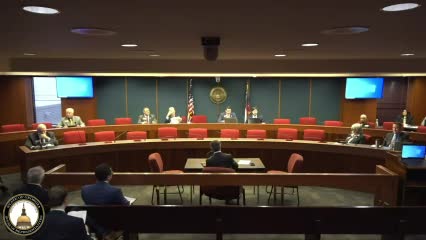
A Georgia House subcommittee voted unanimously to approve a substitute to House Bill 92, forwarding the measure to the House Rules Committee with technical changes to the proposed floating homestead exemption and related notice requirements.
The bill as amended adjusts notice language and timelines, establishes a fallback for tax-assessment notices when a local levying authority does not provide an estimated rollback rate, clarifies that a surviving spouse would not have to reapply for a homestead exemption, allows a limited 45‑day relief window for taxpayers appealing assessments to still obtain homestead status, and adds a five‑acre cap on the acreage eligible for the homestead exemption.
Why it matters: HB 92 implements cleanup language to a measure that affects how local governments present estimated tax liabilities on assessment notices and how homeowners and local governments manage a new, optional floating homestead exemption. The changes influence local notice timing, taxpayer appeals, and the geographic scope (acreage) of the exemption; county and municipal officials said the technical fixes address questions raised during implementation planning.
Key provisions and committee discussion
- Notice and estimated rollback rate fallback: The substitute includes a fallback mechanism so that when a levying authority does not provide an estimated rollback rate to assessors in time for the assessment notice, the notice will show the previous year’s millage rate and calculate the tax estimate using that rate. Dante Bridal of the Association County Commissioners of Georgia (ACCG) said this fallback “is an incentive to get the local governments to participate in good faith in that estimated rollback rate.”
- Opt-out and timeline changes: The bill keeps the opt‑out process for local governments but adjusts the opt‑out window. Committee discussion noted the opt‑out was moved to March 31 for the current year and that the bill extends the opt‑in/opt‑out construction through March 30, 2029. Committee members debated whether a jurisdiction that initially opts in could later opt out and whether citizens would lose benefits if a government later rescinded the floating exemption.
- Surviving spouse and appeals: HB 92 would allow a surviving spouse to retain a homestead exemption without reapplying. The draft also permits taxpayers who are under assessment appeal to obtain homestead status after April 1 if they are still under appeal, within a specified appeal window (committee discussion referenced a 45‑day detail).
- Five‑acre limit: ACCG requested—and the substitute incorporates—a five‑acre cap on acreage eligible for the homestead exemption. ACCG said the language is intended to limit the exemption’s acreage to levels common in many local homestead exemption ordinances so it does not apply to very large tracts in rural counties; the county association clarified that an owner of a larger tract could still be eligible for homestead but would be limited to claiming five acres for the exemption.
- Procedural hearing timing amendment: The committee adopted an amendment changing language about the timing of required community hearings from “prior to the adoption of such resolution” to “prior to the effective date of such resolution,” to ensure hearings are held close in time to when an opt‑out would actually take effect. Office of Legislative Counsel Christie Farhuti explained the change: “I recommended changing adoption to effective date … to ensure that the hearing would be close in time to the effective date of the opt out.” Committee members debated whether the change could cause confusion about when hearings must occur; supporters said it clarifies that hearings must be held within 30 days of the resolution’s effective date so the public has timely notice of an imminent change.
Other points raised
- Department of Revenue timing: Committee members and local officials noted that some assessment timing and value adjustments depend on actions by the Georgia Department of Revenue (DOR). A committee member said DOR uses the CPI‑U for calculating 2026 values, and presenters confirmed the department’s role in those determinations.
- Local outreach: GMA (Georgia Municipal Association) and ACCG representatives told members they have prepared guidance, webinars and resources for local governments and are available to do further outreach in districts that request assistance.
Votes and outcome
The committee adopted the Williamson amendment (technical changes to timing language) and then approved the substitute to HB 92 as amended by voice votes. The chair announced both the amendment and the bill passed unanimously and that the bill would move to the House Rules Committee.
Ending
With the committee’s unanimous approval, HB 92 as amended will go to the Rules Committee for further consideration. Committee members and local government representatives said they will continue outreach to local officials and taxpayers to explain notice changes and the optional floating homestead exemption.