Get Full Government Meeting Transcripts, Videos, & Alerts Forever!
Get email alerts on the Small Business topic
No spam. Unsubscribe anytime.
Georgia panel hears proposals to boost small-business culture, access to capital and workforce while members flag housing pressures
Summary
Presenters at the Small Business Development Committee emphasized changing attitudes toward failure, new financing tools and workforce training to grow tech and other small businesses, and several speakers linked declining homeownership and investor purchases of houses to reduced pathways for entrepreneurship.
Members of the Georgia House Small Business Development Committee heard Thursday from entrepreneurs, industry representatives and lawmakers who urged steps to change the state’s business culture, improve access to growth capital and address workforce and housing barriers that speakers said limit small-business formation.
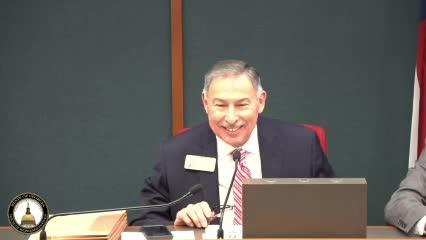
Chairman Todd Jones, speaking to the committee about the tech sector, framed the conversation around three priorities: culture, finance and workforce. "We need to be looking at what we can do to change the way that the state... view failure," Jones told members, arguing that tolerance for early failure fuels later success. He also said, "We got about 3,000,000,000 sitting on the sidelines," and warned that only about "10 to 15%" of early-stage companies reach the revenue levels that require larger, growth-stage capital.
The finance discussion focused on a perceived gap between early-stage investors (angels, seed and Series A) and later-stage lenders. Jones said traditional bank underwriting can penalize fast-growing tech firms because of billing cycles and long accounts receivable, calling for public or private mechanisms to provide credit support or otherwise bridge growth-stage funding needs.
Speakers proposed practical outreach to attract capital. Jones suggested organized "road shows" to show out-of-state investors the state’s deal flow and asked committee members to consider modest pooled sponsorships to fund regular investor introductions. "Let them see just how brilliant the minds are in Georgia," he said.
Panelists also urged attention to workforce preparation. A presenter who identified himself as a registered professional engineer told the committee that small businesses struggle with regulatory uncertainty and a talent pipeline that, in his view, underemphasizes critical thinking. He urged stronger, clearer entry points for young entrepreneurs and better vocational pathways so graduates can choose entrepreneurship or technical careers.
Several speakers tied the state of housing to small-business opportunity. A small-business owner and former trucking-company founder said many families once started businesses using home equity; he warned that rising prices and investor purchases of single-family homes are closing that route. "If we wipe out the middle class, America's done," one presenter said, urging attention to ownership models such as condominiums that can be affordable entry points to homeownership.
Lawmakers in the room noted existing and proposed legislation. One lawmaker told the committee he plans to file legislation addressing private equity purchases of single-family homes; he framed the bill as a starting point and said it was not final. Committee members also mentioned prior housing bills and asked colleagues to rework imperfect proposals rather than drop the issue.
Committee members and speakers highlighted education and local supports as complementary levers: restoring or expanding career-path advising, investing in technologies that can boost basic literacy and offering clearer, one-stop guidance for compliance so new owners know how to stay within regulatory requirements.
The committee did not record a formal vote or adopt any measures at the meeting. Members said they would take the ideas under consideration and follow up in later meetings.
Ending: The session closed after a period of public and member commentary; several members asked staff to continue compiling ideas on credit support, investor outreach and housing measures for future committee discussion.