
Committee hears concerns about extending leases on public lands; bill to restrict extensions deferred
Get AI-powered insights, summaries, and transcripts
Subscribe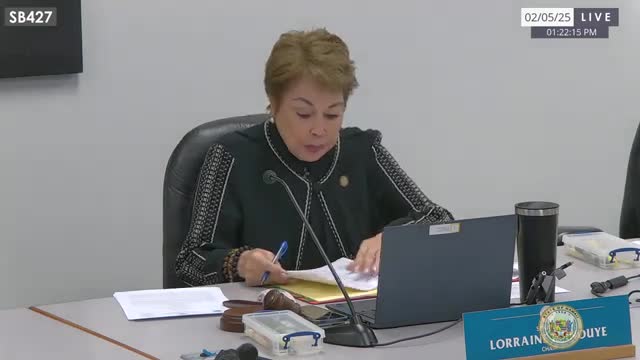
Summary
SB 427, which would bar the state from leasing or extending leases of public lands to entities not in good standing with the state (including arrears, noncompliance, or criminal convictions), was deferred after testimony that existing statutes and Board of Land and Natural Resources (BLNR) protocols already address compliance and cure periods.
The Senate Committee on Water and Land deferred SB 427 on Feb. 5 after hearing testimony from DLNR Land Division and environmental advocates. The bill would prohibit the state from leasing or extending leases of public lands to individuals, corporations or federal agencies that are in arrears on payments, noncompliant with remediation agreements, or convicted of a crime; it would also require certification by the governor's office for federal leases.
Russell Tsuji, speaking for DLNR's Land Division, said the department submitted comments and believes existing statute and BLNR protocols provide adequate authority to assure lease compliance before extensions are granted. "Under the leases, we're required to provide official notice to the lessee about the violation and a time to cure, a minimum time to cure by statute," Tsuji said, noting that the board has discretion to terminate or extend cure periods.
Environmental advocates urged stricter scrutiny. Dave Volek of Greenpeace Hawaii urged lawmakers to proceed, citing long-term contamination at sites such as Red Hill and other locations where complainants say environmental cleanup has lagged. "There are a lot of toxic things that have happened ... the military is not cleaning up the messes that they make," Volek said, urging the legislature to advance the bill.
Committee members asked DLNR whether the department's existing lease review practices consider environmental cleanup and whether older leases include less protective provisions. Tsuji acknowledged older leases (some dating to the 1960s) may lack modern cleanup language, but said the board generally evaluates compliance and would inform the board of outstanding issues before an extension. The chair recommended deferral, and the committee deferred the measure.
Why it matters: The bill would increase statutory bar to leasing or extending leases to lessees not in compliance and could affect large institutional lessees, including some federal lessees with long-standing leases. Deferral leaves existing board discretion and statutes in place while sending the issue back for further review.