
Lawmakers defer SB 782 after wide testimony on free prison phone services and victim‑notification funding
Get AI-powered insights, summaries, and transcripts
Subscribe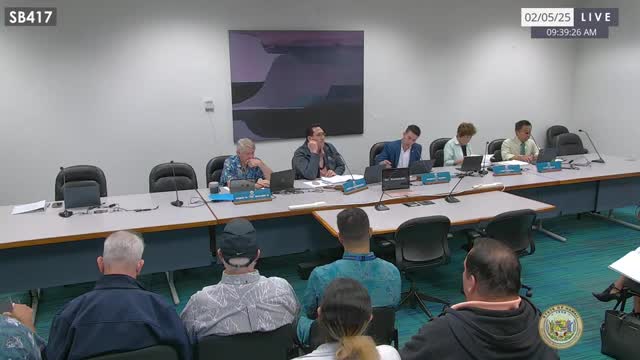
Summary
Lawmakers heard hours of testimony for and against SB 782, which would provide free voice communications for incarcerated people and prohibit agencies from profiting from communications; the committee deferred decision to gather more information, including on funding for the SAVIN victim‑notification program under new FCC rules.
The Senate Committee on Commerce and Consumer Protection and its joint committees heard extensive testimony on SB 782, a measure that would require free voice communication services for persons confined in the state’s youth and adult correctional facilities and prohibit state agencies from deriving revenue from those services.
Witnesses for and against the bill described competing priorities: public defender advocates and civil‑liberties groups argued that free communications are vital to maintain family ties and assist reentry, while several victim‑service witnesses warned that the bill could imperil the SAVIN victim‑notification program’s funding stream.
Edward Aquino, deputy public defender, told the committee the Office of the Public Defender “strongly supports SB 782,” saying current telecommunication arrangements in state facilities impose steep costs on incarcerated people and their families and that free calls would align adult facilities with existing juvenile practices. “The high cost of jail and prison communication services is a significant economic drain for incarcerated persons and their families,” Aquino said.
Representatives of the Victim Compensation Commission and the SAVIN governance committee urged the committee to defer the bill so that agencies could confirm whether new Federal Communications Commission regulations prohibit use of telephone revenue to fund the SAVIN program and to avoid creating a funding gap. Pam Ferguson Bray, executive director of the Victim Compensation Commission, said the SAVIN program’s special fund had provided stable long‑term funding and that eliminating the dedicated revenue source could weaken victim notification and safety systems.
The Department of Corrections and Rehabilitation opposed the bill in part, saying the department currently provides calls at rates at or under federal caps and offers five minutes of free calls per week. Deputy Director Donna Munoz noted the department’s current per‑minute costs and said written testimony explained their position.
Advocates including the ACLU of Hawaii and Worth Rises urged passage and supported the bill’s appropriation language to replace commission revenue with state funding. The ACLU’s testimony argued free calls reduce recidivism and improve reentry outcomes.
After extended public testimony from victims’ advocates, defense attorneys, corrections officials and nonprofit groups, the committee deferred SB 782 for further consideration. Committee members recorded the recommendation to defer; the transcript shows the committee agreed to defer decision making so agencies could provide clarifying information on the funding and regulatory questions raised during testimony.