Get Full Government Meeting Transcripts, Videos, & Alerts Forever!
Get email alerts on the Criminal Justice topic
No spam. Unsubscribe anytime.
El Dorado County district attorney outlines prevention, fentanyl response and AI plans
Summary
District Attorney Bert Pearson told the El Dorado County Board of Supervisors that the DA’s office is doubling down on threat-assessment prevention, fentanyl-focused responses and a limited AI pilot while keeping staffing near its current level.
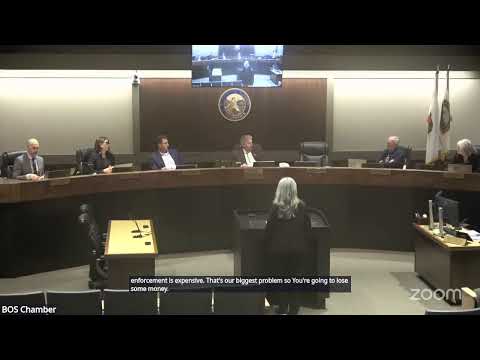
District Attorney Bert Pearson told the El Dorado County Board of Supervisors on Feb. 5 that his office is balancing traditional prosecution with prevention and new technology while keeping staffing and budget near status quo.
Pearson described a multi-part approach that emphasizes threat assessment and prevention — working with law enforcement, schools and the county’s child advocacy center — alongside science-based interviewing (SBI) for detectives and expanded post-conviction integrity work. He cited recent high-profile cases that informed those efforts and said the office is treating fentanyl-related incidents as poisoning rather than simple “overdose,” and is preparing a narrower draft of a harm-reduction needle-exchange ordinance after state litigation challenged an earlier local measure.
Why it matters: Pearson said local voters demonstrated strong support for Proposition 36 and for “tough on crime” expectations, which he said drives local practice. He argued threat assessment can prevent incidents before they reach the criminal-justice stage and highlighted investment in SBI training the county’s detectives are using statewide.
What the DA said: Pearson described recent work on “conviction integrity” cases and two high-profile reinvestigations, and said some cases have revealed additional crimes that took place in the county. He said the county’s nationally accredited child advocacy center and expanded SBI methods have changed how interviews and investigations are conducted.
Fentanyl and harm reduction: Pearson said fentanyl is properly characterized as a poison and that current harm-reduction approaches have limits. He said the county will return with a narrower, revised needle-exchange / harm-reduction ordinance following a productive meeting with county counsel, outside counsel and the sheriff after state-level litigation challenged the prior ordinance. He said Narcan (naloxone) remains important but should not be the sole strategy.
AI and organizational change: Pearson discussed using artificial intelligence and other innovation to change how the office accomplishes outcomes — not merely to make existing tasks faster. He proposed creating a limited-term “chief of innovation” position to pilot AI-driven case-review and administrative tools, and said he expects any such role to be cost-neutral in the general fund by reassigning existing positions and planning around retirements and attrition.
Budget and staffing: Pearson presented an organizational chart and budget summary, saying salary and benefits are the bulk of his costs and noting some increases from PERS and salary negotiations. He said he would not ask for additional staff specifically because of Prop 36 and urged the board to scrutinize future staffing requests from departments tied to realignment or new mandates.
Ending: Pearson closed by urging continual internal review and by offering to answer supervisors’ questions.