Get Full Government Meeting Transcripts, Videos, & Alerts Forever!
Get email alerts on the Open Records Transparency topic
No spam. Unsubscribe anytime.
Committee debates Senate Bill 12 to clarify where public-record requests must be filed for contracted services
Summary
Sen. Ginn presented a substitute to the Open Records Act that would channel requests to government agencies and clarify the custodian definition after a Georgia Supreme Court decision. Municipal and transparency groups asked for edits to avoid shielding contractor-held records or removing private enforcement remedies.
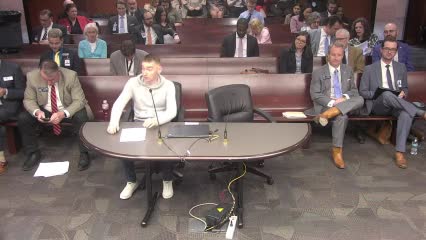
Sen. Ginn presented Senate Bill 12 (LC473296S) to the Judiciary Committee, saying the bill is intended to clarify where open records requests must be directed after a Georgia Supreme Court decision that, in the sponsor’s view, left a gap in the law.
"I want to make sure that the record request goes to the public agency that that is responsible for those records, and that they can't go hide them," Sen. Ginn said, describing the bill's primary purpose as channeling requests to government custodians rather than to private contractors.
The bill would revise the statutory definition of a custodian and the definition of public record so that records "transferred to a private person or entity by an agency for storage or for future governmental use" remain public but that the custodian responsible for responding to requests is the public agency. Sponsor and municipal witnesses said the change responds to a recent Supreme Court interpretation that treated private contractors holding government records as custodians for open-records purposes; they said municipal staff are trained to manage open-records requests while private companies typically are not.
Harushi Patel, representing the Georgia Municipal Association, told the committee the bill aims to restore the obligations of public agencies to obtain and provide records even when a private party stores or processes them. "The records request needs to go to the government, for the very specific reason of our government officials get training on this," Patel said.
Witnesses from transparency organizations opposed the bill as drafted. Richard Griffiths of the First Amendment Foundation said the proposed edits, if left unchanged, would "blow up" four decades of practice that treats contractor-produced records about taxpayer-funded work as public. He warned the bill could let agencies hide contractor activity and cited historical examples where private intermediaries delayed disclosure of large incentives and contracts.
Sarah Brewer Palmer, the foundation’s president and an attorney, flagged a separate drafting problem in the substitute that could remove private civil-enforcement tools under the Open Records Act. She said current law allows private plaintiffs to pursue civil fines against individual officers who negligently or willfully violate the act; the substitute's jurisdictional language, she said, could unintentionally narrow remedies and make civil enforcement against individuals more difficult.
Committee members probed how requesters would proceed if the agency outsourced a function. Chairman Tillery and other senators asked whether a requester who sends a request to an agency should expect the agency to contact the contractor and retrieve responsive records. The municipal representative and the sponsor said yes: the agency should be the point of contact and must take steps to obtain records held by contractors; committee members suggested adding explicit language to require agencies to seek records from private contractors and to preserve existing private-enforcement mechanisms if an agency fails to produce.
Several members urged the sponsor to hold the bill for further redrafting. "Let's hold the bill and get it right in committee so you won't have this filed on the floor of the Senate," the chairman said. Senator Ginn agreed to work with the First Amendment Foundation, GMA and legislative counsel on substitute language intended to channel requests to agencies while preserving remedies and preventing contractors from using the law to shield records.
No final committee vote was taken on SB 12. The sponsor said he would refile a substitute after meeting with stakeholders.