Get Full Government Meeting Transcripts, Videos, & Alerts Forever!
Get email alerts on the Land Use topic
No spam. Unsubscribe anytime.
Council rejects proposal for Northeast Regional Development Review Board, citing duplication and cost concerns
Summary
A proposal to create a Northeast Regional Development Review Board — modeled on downtown’s DDRB — was defeated 7-0 after councilmembers and planning staff questioned duplication of existing processes and potential administrative costs.
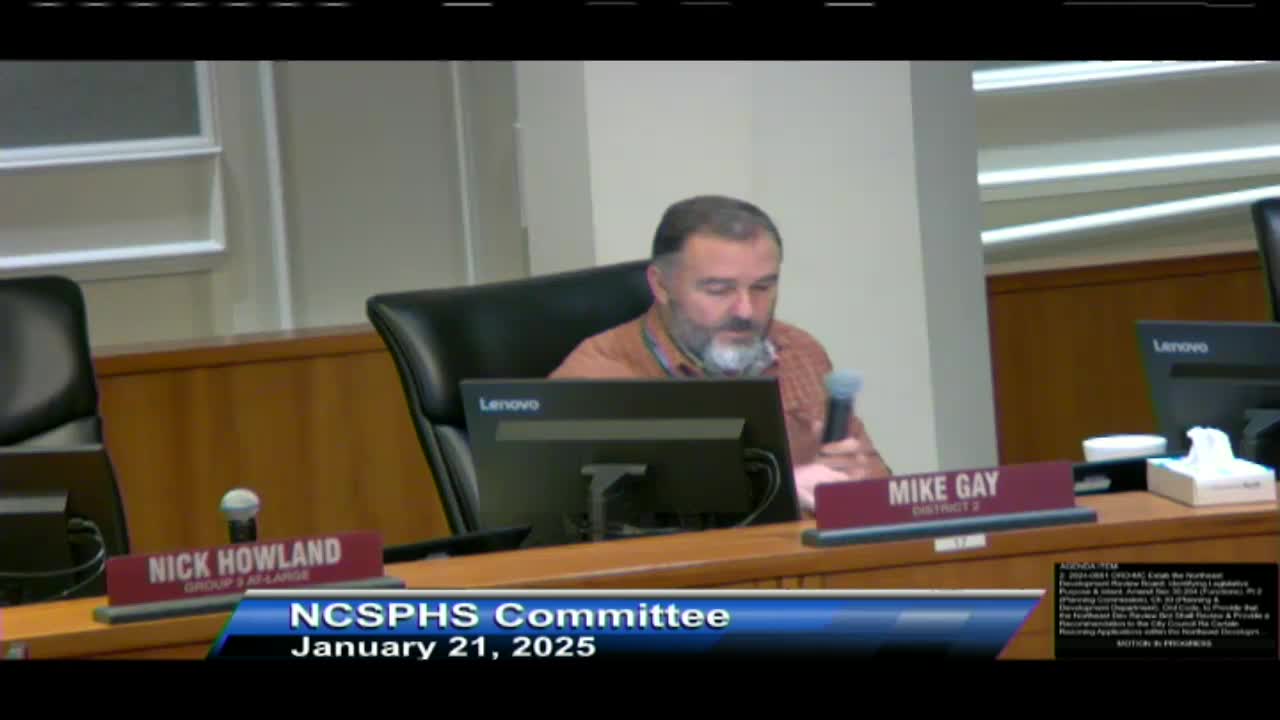
Councilmember Mike Gay’s proposal to create a Northeast Regional Development Review Board (an area-specific review board patterned after the Downtown Development Review Board) was denied by the Neighborhoods Community Services Public Health and Safety Committee on Jan. 21 by a roll call of 0 yeas and 7 nays.
Gay framed the proposal as a way to account for unique features north of the St. Johns River — a mix of parks, islands, shipyards and industrial facilities that he said merit specialized review and stronger community engagement. “This is to bring the citizens, to bring the the city, and bridal the developers together,” he said.
Planning Director Brett James and other members of the administration raised objections, saying the proposal duplicated the work of the planning commission, risked adding administrative churn, and could produce inconsistent decision-making across the city if similar boards were created for other districts. James suggested that if the planning process is missing local concerns, the city should consider updating the community plan for the area rather than creating a new review board.
Several council members echoed concerns about expanding government and creating parallel review pipelines. Councilmember Chris Miller said he preferred improving the existing planning process and working with the planning director to fix shortcomings rather than add a new board. Council member Palouseau and others suggested using existing CPAC (Citizen Planning Advisory Committee) structures or strengthening industrial-preservation tools like industrial sanctuaries and buffer zones instead of creating a new board.
The committee voted 0–7 against the ordinance. The sponsor and several supporters said they would continue working with planning staff and neighborhood groups on alternate approaches, including improved outreach, updated planning-area goals and more frequent, targeted briefings to the planning department and council.