Get Full Government Meeting Transcripts, Videos, & Alerts Forever!
Get email alerts on the Right Of Way topic
No spam. Unsubscribe anytime.
Council delays vote on right-of-way permitting after debate over bonds, notices and inspections
Summary
A proposed ordinance to add surety, notice and inspection requirements for private work in city rights-of-way drew extended debate. Industry representatives and councilmembers raised questions about bond amounts, third-party inspection requirements and telecom exemptions; the item was deferred for more analysis.
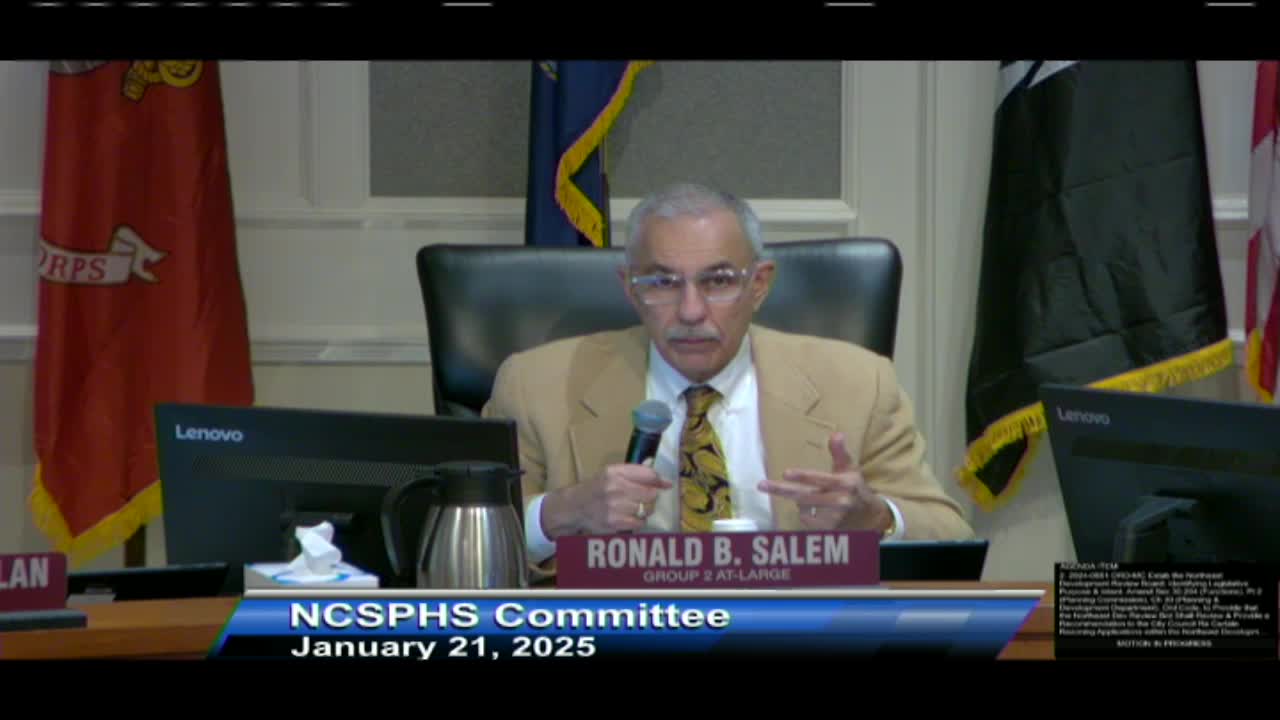
A city ordinance proposed to tighten rules for private work in the public right-of-way — adding a surety requirement, notice to abutters and a requirement for independent inspection of restoration work — drew prolonged debate at the Neighborhoods Community Services Public Health and Safety Committee and was deferred for further staff work.
Jason Teal of the Office of General Counsel explained the two technical amendments initially offered by auditors: replacing the undefined phrase “required improvements” with “permitted improvements” tied to a permit and clarifying that surety requirements apply to each permitted project rather than a single annual permit. Teal said the larger policy questions then in play included whether surety should be a flat annual amount or a percentage of project value, the radius and timing of required owner notices, and whether utilities or other public agencies should be exempt.
Industry representatives asked for major changes. An attorney representing utilities said the industry preferred a substitute that would (among other changes) keep different bonding and inspection regimes and argued some items would “slow down permitting even more.” Amy Busby (representing utility interests at 400 East Bay Street) told the committee industry partners were prepared to negotiate but opposed the two amendments as drafted and preferred the substitute.
Councilmembers and staff debated several trade-offs: Councilmember Mike Gay, the bill sponsor, said the requirement for independent third-party inspection would protect neighborhoods and save city staff time in enforcement. Planning Director Brett James and others warned about duplication of roles, additional administrative costs, and the potential for many single-district review boards if the city creates ad-hoc local bodies for other planning work (this was a parallel debate during an earlier agenda item).
Administration staff said they had been in conversations with utilities and were comfortable with some substitute language but supported a coordinated staff comparison of the bill as filed and the industry substitute. Public Works staff said the city currently lacks inspector capacity to monitor every repair and that enforcement has been handled in practice through Development Services; they also noted the city’s typical first-year warranty posture for newly constructed road work.
Key disputed policy points that the committee asked staff to return with clear comparisons on included: whether surety should be a flat annual bond (the substitute proposed $20,000) or a percentage tied to project cost; whether residential driveway projects should face the same bond and inspection rules as larger projects (the substitute narrowed a driveway category and proposed a $10,000 threshold for individual driveways); whether telecom providers are exempt under Florida law from some local notice and inspection requirements; the radius and lead time for property-owner notice (committee discussion cited 350 feet and a proposed five-business-day notice); and whether enforcement should rely on a third-party construction inspector or a set of “three points of contact.”
The committee agreed there was not yet a single working text all parties supported; members asked staff and stakeholders to produce a side-by-side chart comparing the current ordinance language, the auditors’ technical amendments, and the industry substitute. The item was deferred to a future meeting to allow that work to be prepared for committee review.
Ending
Committee members asked for a concise comparison chart and for administration and industry to appear with proposed redlines and fiscal estimates of staffing and permit impacts before the committee takes further action.