Get Full Government Meeting Transcripts, Videos, & Alerts Forever!
Get email alerts on the Public Safety Police topic
No spam. Unsubscribe anytime.
SeaTac police report: third-quarter 2024 property crimes down, response times and staffing remain a concern
Summary
King County Sheriff's Office representatives presented SeaTac's Q3 2024 crime statistics: property crimes fell, auto thefts declined since a state law change, dispatch calls fell by about 300, and priority response times averaged about 5 minutes for highest-priority calls; councilmembers pressed for staffing and operational details.
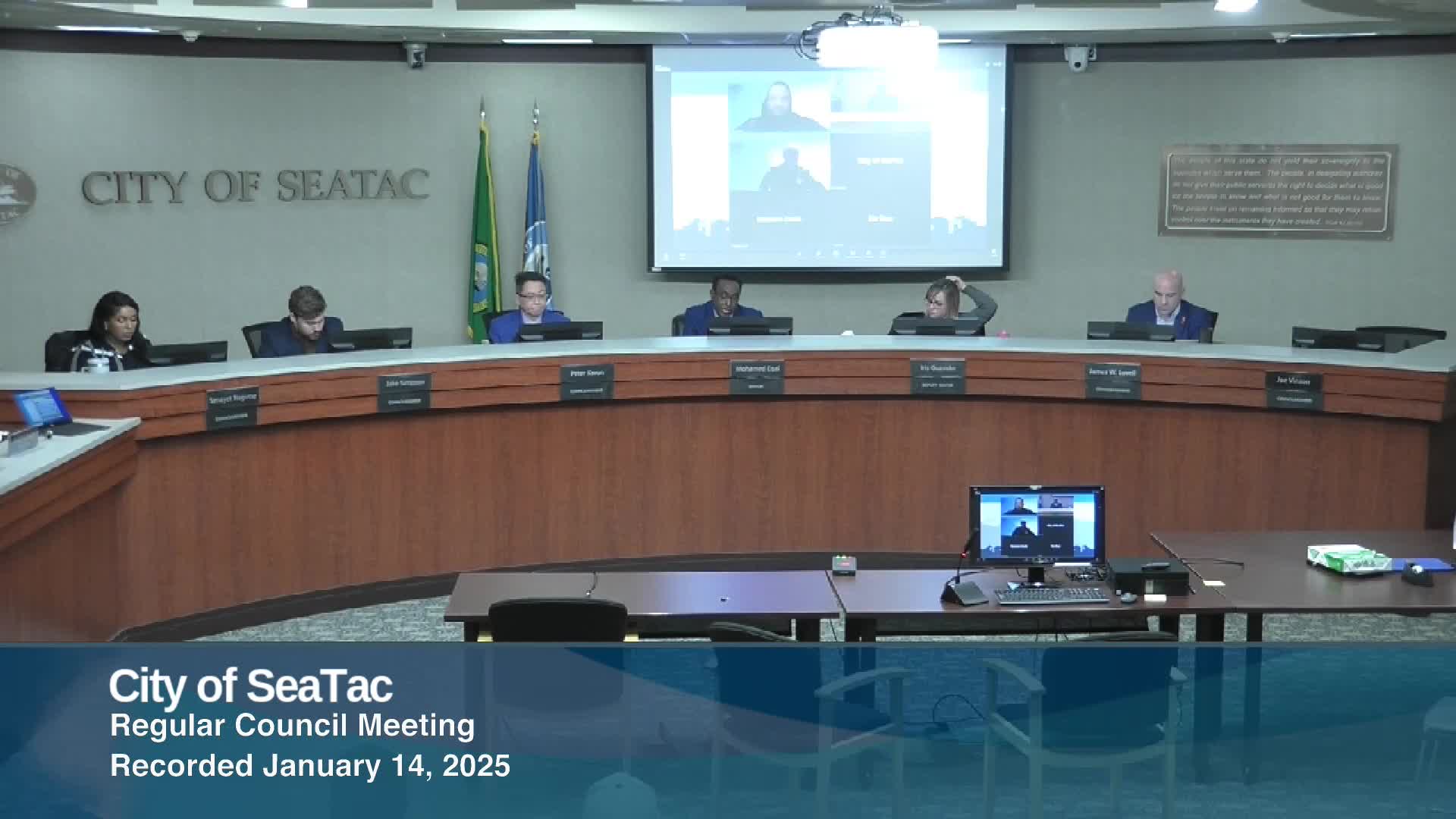
Chief Smithmeier delivered the SeaTac Police Department (King County Sheriff's Office contract) third-quarter 2024 report on Jan. 13, noting a decrease in crimes against property, a modest rise in crimes against persons driven largely by misdemeanor/simple assaults, and improvements in auto-theft numbers since a state law change last July.
The presentation showed that: crimes against persons increased slightly in Q3 2024 with 62 classified as simple assaults; two deaths are being investigated from a single August vehicle crash being handled as a homicide investigation; property crimes fell compared with the previous year and auto thefts decreased from a previous 41; dispatch calls for service fell by roughly 300 compared with prior quarters; priority X response times (highest-priority incidents) averaged about five minutes from dispatch to arrival; and priority 1 calls averaged about 10.41 minutes. The department reported 16 DUI arrests in the quarter, and mental-health-related calls increased by about 100; the department noted new mental-health-staff metrics will be available beginning in Q4 2024.
Councilmembers thanked the department for the reported declines but pressed senior staff on two themes: whether falling call volume reflects under-reporting (some residents report lengthy waits for the nonemergency line) and what can be done about long-term staffing shortages. Chief Smithmeier said the communications center faces staffing challenges similar to patrol and that average wait-time metrics (nonemergency vs. emergency) can be provided; he said the primary way to materially reduce response times and increase visible presence is more sworn officers on the street, but he and councilmembers discussed technology (additional cameras, data-driven emphasis patrols) and targeted detective work on recurring problem properties as interim approaches.
Councilmembers asked for expanded metrics, including attempted-suicide counts and domestic-violence statistics broken out separately, and the chief agreed to provide more detailed Q4/year-end reporting and follow up on dispatch wait-time averages. Several councilmembers and the mayor praised the department's mental-health responder and community engagement work and affirmed continuing support for public-safety investments.
No formal council action was taken during the presentation; councilmembers directed staff to return with additional statistics and operational details.