Get Full Government Meeting Transcripts, Videos, & Alerts Forever!
Get email alerts on the Water Fluoridation topic
No spam. Unsubscribe anytime.
Longview workshop hears medical, dental experts and residents split over water fluoridation; public hearing set for Feb. 27
Summary
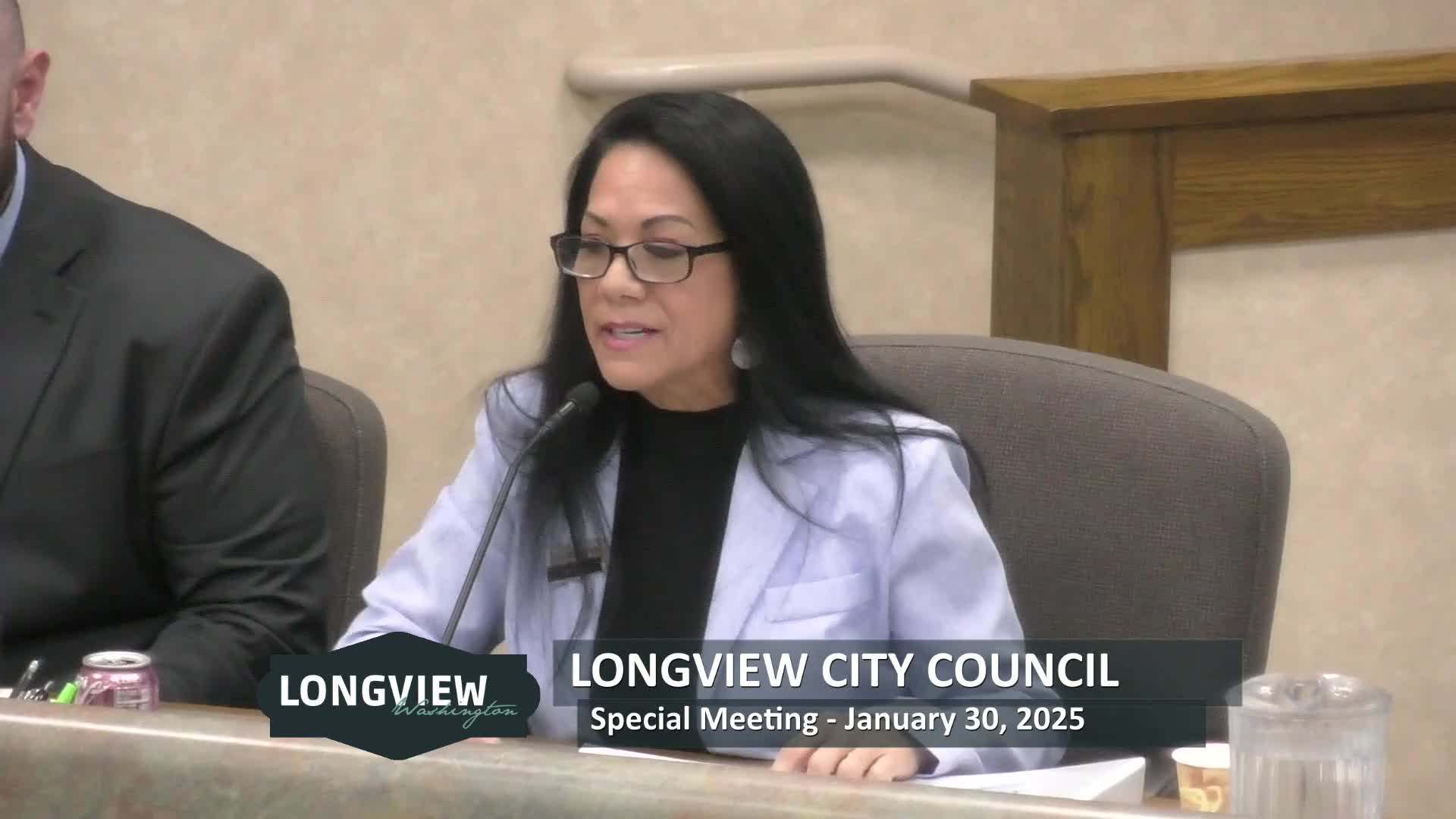
Longview held a city council workshop in January 2025 to gather public and expert comment on whether the city should continue adding fluoride to the municipal water supply.
Longview held a city council workshop in January 2025 to gather public and expert comment on whether the city should continue adding fluoride to the municipal water supply. Council members received roughly equal time from pro‑fluoridation medical and dental professionals and from opponents; no formal vote or ordinance was taken. The city previously passed Resolution 25‑14 directing staff to hold this workshop and a public hearing on Feb. 27, 2025.
The debate centered on two claims: proponents said community water fluoridation at the locally monitored level of 0.7 milligrams per liter is a safe, low‑cost preventive measure that protects children and low‑income residents from tooth decay; opponents said emerging toxicology studies and recent court filings raise concerns about possible developmental harms and about whether adding fluoride to drinking water is effectively mass medication without individual consent.
Why it matters: speakers representing local clinics, the Cowlitz Family Health Center and pediatric practices told the council that dental care capacity in Cowlitz County is limited and that removing fluoride would likely increase cavities, school absences and emergency dental visits among children. Opponents, including visiting dentists and public‑health critics, urged the council to consider recent National Toxicology Program material and court rulings, and to weigh ethical and legal questions about informed consent and federal jurisdiction.
Pro‑fluoridation testimony: Erin Hanish, identified in the meeting as a community pediatrician practicing in Longview, said the city’s fluoride concentration is maintained at 0.7 mg/L and that the treatment is “safe and effective” at that level. Hanish told the council that she and local dentists provided more than 45 letters supporting continued fluoridation and said the expected local effect of stopping fluoridation would be roughly a 25 percent increase in cavities. David Myers, dental director for the Cowlitz Family Health Center, described dental infections he has treated and said community fluoridation is “one of the top 10 most important public‑health achievements of the 20th century.” Several pediatricians and social‑service providers emphasized equity, saying fluoridated water provides baseline preventive care for families who face barriers to accessing dental services.
Anti‑fluoridation testimony: Dr. Bill Osmondson, introduced to the council as a dentist who now opposes water fluoridation, argued the body of evidence includes studies that show possible developmental and endocrine effects at higher exposures and that the National Toxicology Program review and recent litigation raise unresolved safety and regulatory questions. Osmondson said adding fluoride to public water raises “freedom of choice” and consent issues and repeatedly characterized community fluoridation as the deliberate addition of a drug to water; he recommended prescription‑based approaches and individual choice instead.
Costs and monitoring: witnesses offered differing cost estimates for the municipal program. Erin Hanish told the council the cost of fluoridation is about 64¢ per person per year; in another presentation David Myers said optimal fluoridation has been estimated at roughly 38¢ per person per year. Sean Moriarty (who described himself as experienced with water‑treatment operations) explained that modern metering pumps and alarmed monitoring systems keep fluoride dosing consistent and that plant systems can shut off pumps if levels were to exceed safe setpoints.
Process and timeline: city staff advised the council that the Feb. 27 public hearing is the next formal step; if the council later directs staff to draft an ordinance removing fluoride, any ordinance could not take effect until at least 90 days after final action, per the timeline described at the workshop. Moderators and staff emphasized that the workshop was informational and that no decision would be made that night. City staff said they are accepting written comments and emails ahead of the hearing.
Council response: council members asked technical and ethical questions, including whether agricultural uptake of fluoride was a pathway to exposure (panelists said plant uptake is limited and that tea is among the higher sources) and whether public water additions are a proper role for municipal government. Several council members noted the workshop’s purpose was to gather information and public comment prior to the scheduled hearing.
What’s next: the Longview City Council will hold a public hearing on Feb. 27, 2025, where further testimony will be taken before any staff direction or ordinance drafting. The workshop record and written comments received by staff will form part of the council’s public file for that agenda item.
Ending note: no ordinance or formal vote occurred at the workshop; the council left the program in place pending the scheduled public hearing and any subsequent staff or council action.