Get Full Government Meeting Transcripts, Videos, & Alerts Forever!
Get email alerts on the Border Security topic
No spam. Unsubscribe anytime.
Guatemala, U.S. agree to strengthened northern‑border task force, emphasize fentanyl and transnational crime
Summary
Guatemala’s president and U.S. Secretary of State said the two governments will establish a combined border protection force along Guatemala’s nearly 300‑kilometer northern border and reauthorize law‑enforcement programs to combat narcotics trafficking including fentanyl.
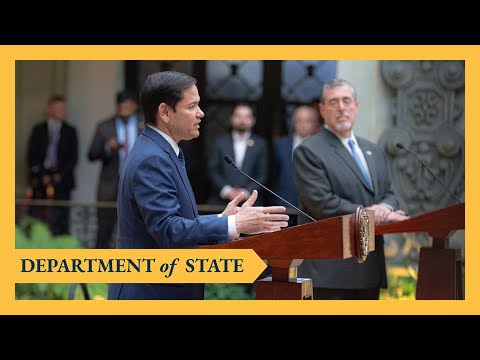
The president of Guatemala said his government and U.S. Secretary of State Marco Rubio discussed creating a “protection for border control and protection task force in the northern border of our country along the almost 300 kilometers of border, a combined force of the National Civil Police and the National Armed Forces that will protect and combat all forms of transnational crime.”
Both officials said combatting drug trafficking — including the trafficking of fentanyl — and human trafficking are priorities for renewed cooperation. The president thanked Secretary Rubio for a letter, delivered that day, expressing U.S. support for a partnership on priority infrastructure and security programs; Rubio said he would sign waivers on foreign‑assistance programs to continue certain State Department partnerships.
Rubio framed narcotics trafficking as a transnational threat that not only moves drugs to the United States but “creates corruption” that “compromises institutions and makes it harder to govern a country.” He said U.S. law‑enforcement cooperation with Guatemala is “very strong” and that Washington will reauthorize programs that support joint operations.
The president cited prior cooperative operations in Petén and other initiatives and said the combined force will target “all forms of transnational crime” and “combat the trafficking of fentanyl, the trafficking of persons, border security, and prevent the conditions that produce the Guatemalan's migration.”
Officials did not provide an operational timeline, a budget, or a list of U.S. programs to be reauthorized. Rubio said his office is issuing daily waivers on State Department programs; he contrasted that with USAID, where he described less cooperation from some personnel on program reviews. The president said details on coast, air, and rail infrastructure and security priorities would be considered as part of the bilateral discussions.
Questions from reporters asked whether Guatemala would accept convicted criminals or gang members on repatriation flights; Rubio and the president said there has been no discussion of receiving “convicted criminals” and that repatriation procedures and responsibilities will be defined in the binational working groups.