Get Full Government Meeting Transcripts, Videos, & Alerts Forever!
Get email alerts on the Migration Reintegration topic
No spam. Unsubscribe anytime.
Guatemala announces 40% increase in deportation flights and a return‑home reintegration plan
Summary
Guatemala’s president said the government will increase deportation flights by 40% and has a two‑phase “return home” plan that includes skills assessments, private‑sector placement talks and certification programs to help repatriated migrants rejoin the labor market.
President of the Republic of Guatemala told reporters that his government has agreed “to increase by 40% the number of flights of deportees, both connational returnees as well as deportees from other nationalities” and that details will be worked out in binational working groups with the United States.
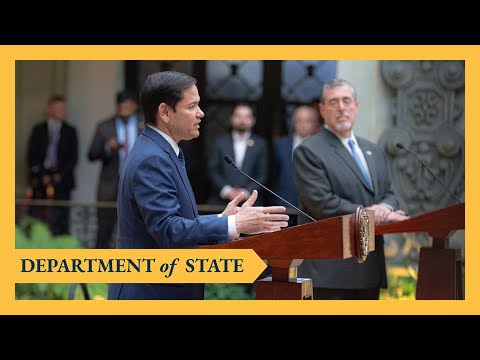
The announcement came during a joint press conference with U.S. Secretary of State Marco Rubio. The president said the move is part of a broader “return home plan” intended to facilitate dignified reintegration and create conditions that reduce the need for people to emigrate.
The plan, the president said, is in multiple phases. In its second phase, the Migration Institute and the Ministry of Labor will interview returnees to “identify precisely their qualifications, their capabilities, their skills” and to classify whether those skills are formal or informal. The government plans to refer people without formal certificates to training and certification programs such as INTCAP or the Ministry of Education so private employers can recognize their qualifications. “We will send them to a certificate program with INTCAP or the Ministry of Education that will recognize that skill,” the president said.
The president said the private sector has agreed to participate in reintegration efforts but did not name specific companies. He described a range of possible employment and investment paths, saying some returnees may bring savings that could be leveraged with credit programs. He pointed to tourism — which he said grew by 13.7% last year and exceeded 3,000,000 visitors — as one industry that could absorb workers who return with English or hospitality experience.
Secretary Rubio said the United States has “pledged our support with those efforts” and that the two governments will discuss the operational details in bilateral working groups. Rubio reiterated that Guatemala is a destination and transit country and thanked the Guatemalan private sector “who very firmly has said that this is an important part of bringing back their brothers and sisters and reintegrating them into the economic hopes and dreams as a labor force for the future.”
Both officials said the flight increase and reintegration work will be coordinated through technical binational teams; the president said the “details of this process will be discussed in binational working groups to groups to be established for that purpose.” He added that the permanent response to migration is to bring development to reduce pressure to emigrate.
The president and Rubio said some non‑Guatemalan nationals who are in Guatemala as part of repatriation flows would be assisted to continue to their countries of origin as part of coordinated repatriation efforts, but both said operational details remain to be negotiated in the binational forum. The president explicitly stated there has been no discussion of classifying Guatemala as a “third safe country.”
The government did not provide a list of private companies participating in reintegration programs, nor did it specify a timeline for when the 40% flight increase will begin. Officials said those items will be addressed in the working groups.
Less critical details: the press conference concluded after a question‑and‑answer period in which reporters asked about program staffing, private‑sector partners, and operational logistics.