Get Full Government Meeting Transcripts, Videos, & Alerts Forever!
Get email alerts on the Parks Rules topic
No spam. Unsubscribe anytime.
Trustees review major revisions to parks rules, including bow‑fishing exemption, firearms buffer and penalty framework
Summary
Natrona County trustees reviewed a draft rewrite of parks rules covering projectile use and bow fishing, camping distances and exclusions, drone permitting, abandoned-property penalties and fines. Trustees agreed to refine wording, defer some technical language to attorneys and keep enforcement and staffing concerns central to final rules.
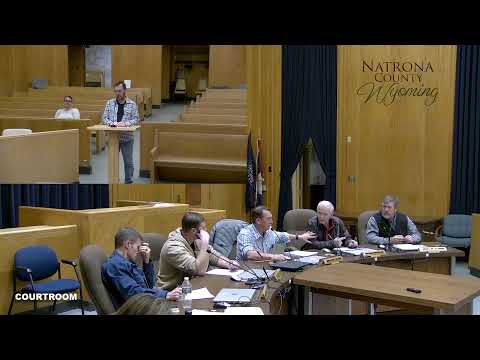
Natrona County Parks Board of Trustees members spent the bulk of a meeting reviewing proposed amendments to the county parks rules and regulations, focusing on exceptions for bow fishing, the definition and enforcement of buffer distances for projectile use, penalties for abandoned property and the practical limits of enforcement given current staffing.
The board discussed a change to section 13 to explicitly allow bow fishing and spear fishing “where and when permitted by the Wyoming Game and Fish Department,” and to add an exclusion that would permit bow fishing beyond a shorter buffer distance around developed public‑use facilities. Parks Director Michael Brown said the draft aims to “adopt what [Game and Fish] regulate and reformulate” to avoid internal contradiction between sections that both prohibit and allow bow fishing. Brown added the department would rely on Game and Fish distances unless the board decides a different yardage applies.
Trustees pressed over the right buffer size. One trustee recommended keeping the 400‑yard buffer used elsewhere for firearms but allowing a smaller buffer for bow fishing; the group agreed to a working compromise to authorize bow fishing “within 200 yards of developed public‑use areas” as a placeholder to be refined by legal staff and through further drafting.
Why it matters: The proposed change attempts to reconcile state Game and Fish rules with local park safety and enforcement needs. Trustees said the wording must be clear to avoid contradictory rules that would be hard for staff and law enforcement to apply in the field.
Other substantive edits reviewed
- Projectiles/firearms: Trustees recommended changing instances of “projectiles” to singular/plural phrasing for clarity and removing duplicative provisions that appear in both general park rules and a specific camping subsection.
- Drones/UAS: The draft would require permits, insurance and discontinuance of use if an operator interferes with public health, safety or quiet enjoyment; trustees asked the county attorney to add that standard language in subsections H and I to provide a legal basis for a parks director or peace officer to order a stop if a drone becomes a nuisance.
- Fire, hazardous materials and penalties: Trustees discussed adding clearer civil penalty language and cleanup cost recovery for hazardous‑material disposal, and whether to retain the existing criminal fine cap referenced to county code. The county attorney noted statutes that already impose criminal penalties and suggested adding a civil penalty structure for permittees similar to other county programs.
- Abandoned vehicles and impoundment: Trustees asked legal staff to simplify the abandoned‑vehicle language. The group agreed to clarify a five‑day hold for untagged or otherwise abandoned vehicles that lack county permission, and to remove or relocate confusing 30‑day language tied to prior written consent. Trustees discussed charging the county’s direct recovery costs (equipment, staff time) when county personnel must move or store abandoned property; Parks Director Michael Brown described a proposed $250/hour recovery fee as intended to recoup overtime, equipment and staff time when county crews must intervene.
- Enforcement and interagency limits: Brown and trustees repeatedly noted enforcement depends on staffing and sheriff’s office capacity. Brown said full enforcement would require additional seasonal or contracted staff or stronger, enforceable permit conditions that allow staff to identify the responsible party. Several trustees said written, definite yardages and explicit exclusions (boat ramps, swimming areas, picnic areas, concession facilities) will help law enforcement and parks staff apply the rules consistently.
What the board directed next: Trustees generally authorized staff and county attorneys to clean up wording, add explicit exclusion language for bow and spear fishing to avoid internal contradictions, and to return a consolidated draft with the agreed buffer language and penalty clarifications for further review. Several trustees emphasized the rules must be enforceable with existing staff or show the additional resources required to enforce them.
Ending: Trustees said they will post a clean draft for public comment before final adoption and will bring more precise buffer distances and civil‑penalty language back to the board after the county attorney drafts suggested statutory language.