Get Full Government Meeting Transcripts, Videos, & Alerts Forever!
Get email alerts on the Mill Pond Restoration topic
No spam. Unsubscribe anytime.
Valley Stream weighs $695,000 share for Army Corps study of Mill Pond dredging
Summary
Village officials heard US Army Corps of Engineers staff outline a feasibility process for Mill Pond that would cost $1.39 million; the Corps is seeking a 50% cost-share from the village ($695,000) to move into a detailed alternatives study.
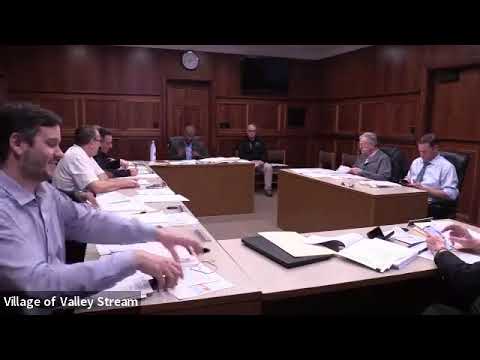
The Valley Stream Board of Trustees heard a detailed presentation on a potential army corps-led restoration of Mill Pond and a Corps request that the village pay 50% of a proposed $1.39 million feasibility study.
Village staff member David said the Army Corps has already completed a federal interest determination and is proposing a study under the Corps’ Section 206 program. The Corps estimated the study at $1.39 million and asked the village to cover half — $695,000 — to proceed. David told trustees the study could take 18 to 24 months, followed by one to two years for design and another one to two years for construction depending on the preferred solution.
The study phase would identify and compare alternatives — including stream or wetland restoration, a sediment forebay, aquatic plant management, pond deepening or dredging, adjustable weirs and erosion control — and select measures that deliver the best net benefit for the federal program and the local sponsor. David said the Corps had already funded a federal interest determination with about $100,000 and that the Section 206 framework guides eligibility and cost-sharing.
Seth Greenwald, project manager with the U.S. Army Corps of Engineers, New York District, told the trustees, “We’re here to work with you folks at the village. If you don't can't do it, I don't wanna, you know, rush you. It's just an internal mark on the wall, March,” and added that the Corps was willing to accommodate the village schedule. Daniel, another Corps representative, also participated in the discussion.
Trustees and staff discussed alternatives the village has already examined, including biological remediation (pending DEC approval), mechanical aquatic-plant removal under a county contract, and the possibility of a full dredge. Village staff estimated more than 10,000 cubic yards of sediment in parts of the pond; mechanical removal numbers discussed were on the order of $1 million for limited removal, while full dredging and disposal could be far higher because of contamination-handling and disposal costs. David warned that disposal costs could drive a multimillion-dollar total project cost: trustees cited a possible $6 million example and noted the nonfederal sponsor’s share after the study could be roughly 35% of the total construction cost, a commitment that would be decided later.
Trustees also discussed grant and legislative avenues to offset the study cost. David and trustees noted an earlier state grant of roughly $880,000 for work at Hendrickson Park and said the village could seek help from the assemblywoman, congresswoman or state senator. Seth emphasized that signing the cost-share agreement for the study would not commit the village to construction: “You don't have to go through if you decide, oh, thank you very much, Army Corps of Engineers. We don't wanna go anymore,” he said, while encouraging the village to use the study to identify durable, long-term solutions.
Board members raised questions about the consequences of inaction, including the expansion of invasive aquatic plants and loss of pond classification under DEC rules if the waterbody becomes too shallow. Staff noted historical studies dating to the early 2000s that showed the larger drainage system north of the village contributes sediment and flow issues.
The board did not vote on the Corps cost-share at the meeting; staff said they would follow up with partners, review the Corps’ financial cost-share agreement, and return to the board with options.
Ending
Trustees asked staff to continue discussions with the Army Corps and to seek possible grant support and legislative assistance before deciding whether to sign the cost-share agreement. No formal commitment to pay the $695,000 village share was made at the meeting.