Get Full Government Meeting Transcripts, Videos, & Alerts Forever!
Get email alerts on the Opioid Coresponse Grant topic
No spam. Unsubscribe anytime.
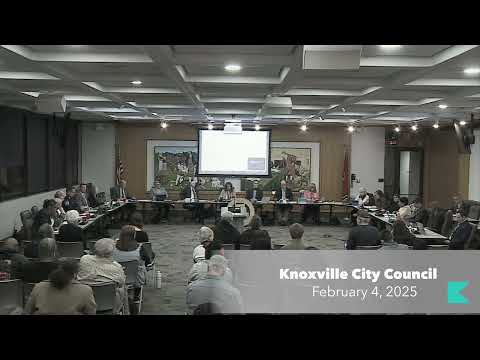
Council approves application for opioid-abatement grant to expand co-responder teams amid debate over alternative response
Summary
Knoxville City Council authorized the mayor to apply for a Tennessee Opioid Abatement Council grant to expand co-responder teams and related services. The move passed after lengthy debate about transparency, long-term city funding obligations and whether police-led co-response could sideline non-police alternative response options.
Knoxville City Council voted to authorize the mayor to apply for a Tennessee Opioid Abatement Council grant to expand co-responder teams and related services after a protracted public and council debate over program design, transparency and overlap with proposed alternative response models.
The resolution authorizing application and acceptance of a grant (item 11i) passed with the tally announced by the mayor as "motion carries seven-one-one" after extended public comment and Council discussion.
Speakers from community groups raised transparency and policy concerns. Elizabeth Rowland of Knoxville Heart said the application period for the Tennessee Opioid Abatement Council communities grants had closed in October 2024 and that the council had been told the next cycle opens March 2026; she also said the agenda packet showed a submission date in December 2024 and pushed for greater transparency. "Hart is concerned that a trenching co response is a strategy by the administration to prevent establishment of alternative response," Rowland said, asking council to commit to funding an alternative, non-police response model.
Community youth speaker Christopher Winton, a youth ambassador, urged a public-health approach and harm-reduction strategies focused on treatment and services rather than law enforcement. "Harm reduction isn't about punishment. It's about reducing the dangers associated with the drug," Winton said.
City and KPD leaders described the grant plan as an expansion of existing co-responder work that, they said, diverts people from arrest and connects them to services. Chief Noel detailed the program's outcomes, saying co-responder teams had handled roughly 4,000 calls since their start, with "0 uses of force by co-responder officers" and that about 97% of calls did not result in arrest. Chief Noel and other staff said the proposed grant would fund three additional co-responder teams, a drug-diversion advocate, vehicles and training; the grant would cover a three-year period and could allow growth from the current six teams to nine teams in 2026-2028.
Council members voiced disagreement over whether expanding police-involved co-response risks entrenching a policing approach to behavioral health that could preclude the creation of non-police alternative response services. Councilmember Amelia Parker opposed the proposal on those grounds and questioned whether police officers should be trained as drug-recognition experts whose observations might feed narcotics investigations. "How can you and also ... identify drug-impaired individuals and gather intelligence for narcotics investigators?" Parker asked.
Supporters, including Councilmember Roberto and Vice Mayor Smith, said co-response addresses urgent calls today and that the city can pursue alternative response designs in parallel. Roberto emphasized that current co-responder calls have diverted many people from the criminal system and said the city should continue grant-seeking to expand capacity.
City finance staff explained that departments sometimes submit time-sensitive grant applications before returning to council for approval of the application and acceptance of funds, an infrequent but permitted practice to meet external deadlines.
The motion to authorize application and conditional acceptance passed; council also heard several requests to ensure the alternative-response task force completes its work and to consider formal city funding commitments if grant funding lapses.