Get Full Government Meeting Transcripts, Videos, & Alerts Forever!
Get email alerts on the Sustainability Plan topic
No spam. Unsubscribe anytime.
Kirkland presents year‑4 sustainability report; staff call for resilience steps as climate effects intensify
Summary
City staff reported progress on the 10‑year Sustainability Strategic Plan, emphasizing community resilience, energy decarbonization, building electrification, urban forestry and waste reduction. Council members praised the work and urged continued regional cooperation and funding.
KIRKLAND, Wash. — City staff presented the fourth‑year implementation report for Kirkland’s Sustainability Strategic Plan, highlighting completed actions and recommending next steps to increase community resilience to heat, smoke and other climate impacts.
Senior planner David Barnes told the joint meeting that the city’s ambitious 10‑year plan contains 96 actions; many early actions were “low‑hanging fruit,” while later years will require larger investments. He framed the work as aiming to increase community resilience in addition to emission reductions.
Key takeaways from the report - Energy and emissions: The presentation noted state progress in electricity decarbonization and the importance of programs such as Puget Sound Energy’s Green Direct and the local EnergySmart Eastside initiative. Staff said the city is promoting heat‑pump adoption and working to ensure equitable access for residents who need financial assistance to replace fossil‑fuel systems. - Buildings and infrastructure: Staff recommended factoring climate resilience into housing and building design, noting that new housing will remain in place for decades and should be built for heat and smoke events. The city is participating in programs to improve energy management in municipal facilities. - Transportation and land use: The report reinforced concentrating future growth in urban centers and increasing multimodal connections; staff flagged multifamily charging infrastructure as an obstacle to widespread EV adoption. - Natural systems and urban forestry: Staff reported progress on tree‑team efforts and integration of public tree data into management software; an updated urban‑forestry plan is scheduled for 2025. - Sustainable materials and businesses: Initiatives such as a "bring your own cup" campaign and repair/recycling events reduced single‑use waste; staff urged continued legislative support for extended producer responsibility. - Healthy community and adaptive reuse: Staff highlighted temporary reuse at the Houghton Park‑and‑Ride (Park and Play, skate park, pickleball) and pointed to examples of mixed‑use projects that combine housing, services and on‑site solar.
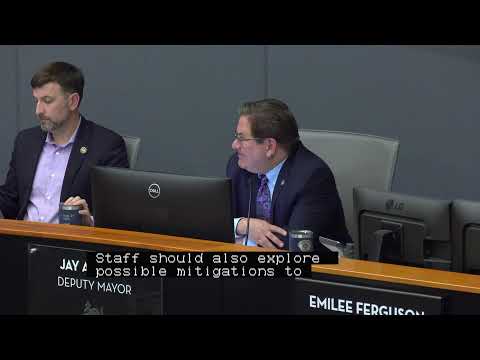
Council response and next steps Council members praised Barnes’s presentation and urged continued regional partnerships to leverage funding and program scale. Several councilors asked staff to seek additional funding and staffing in future budgets to maintain implementation momentum and to consider adding “sustainability” to the city’s operational values.
Ending Staff said they will continue implementing the plan and will work with subject‑matter experts to prioritize additional items for possible action in 2025, including measures to embed climate‑resilient landscape design and building upgrades.