Get Full Government Meeting Transcripts, Videos, & Alerts Forever!
Get email alerts on the Planning Work Program topic
No spam. Unsubscribe anytime.
Kirkland council and planning commission begin setting 2025–27 planning work program, prioritize station-area housing and state law implementation
Summary
Councilors and planning commissioners met in a joint study session to review completed work from 2024 and to set priorities for the 2025–27 planning work program. Members emphasized activating the station-area plan and meeting state housing and permit-review requirements while reserving staff capacity for other projects.
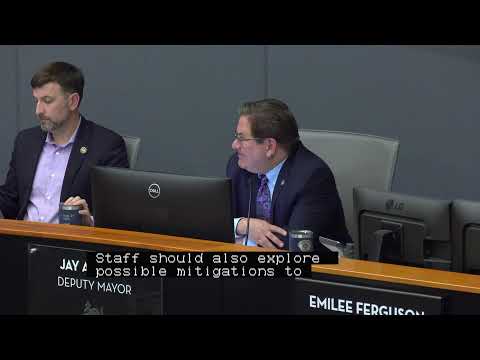
KIRKLAND, Wash. — Kirkland’s City Council and Planning Commission met in a joint study session to begin shaping the 2025–27 planning work program, with members front‑loading station‑area work and state‑mandated housing law implementation.
Staff outlined what the city completed in 2024, including the comprehensive plan update and neighborhood plan updates, and listed projects already in progress: sustainability strategic plan implementation, urban forestry work, code‑enforcement policy work, planning actions related to East Link and the Eastrail/CKC fiber strategy, and several rounds of miscellaneous code amendments. Planning staff said some projects that had been expected to finish in 2024 — such as Houghton Park‑and‑Ride zoning and Houghton Village work — rolled into 2025. Staff also flagged several state laws that require local action this year, including adjustments to permit timelines and design‑review reforms.
Why it matters: Councilors and commissioners repeatedly said housing production is the top civic priority. Activating the station‑area plan, finding ways to increase residential capacity at identified sites in the Juanita neighborhood, advancing a Totem Lake subarea plan and finishing Houghton Village were the most frequently cited near‑term priorities.
Discussion highlights - Station area activation: Multiple councilors and commissioners urged prioritizing the parts of the plan that enable housing and mixed use near the Kirkland station, citing the risk that individual sites will redevelop as lower‑density townhouses if not guided toward higher‑capacity projects. Council member Tim Chisen and others specifically urged work to prevent “a domino effect” of townhouse development on key parcels along 80th/80th‑5th streets. (Councilor Tim Chisen; Council member Black.) - Middle‑housing optimization and state compliance: Staff recommended breaking middle‑housing optimization into phases to allow the city to meet minimum state compliance first and then pursue an optional Phase 2 to “optimize” middle housing. Commissioners and councilors supported continuing and refining that phased work. (Allison Zike, deputy director of planning and building; Adam Weinstein, planning director.) - Site‑specific implementation: Councilors asked staff to work sooner on policy implementation directed by the comprehensive plan for two Juanita sites (referred to in the meeting as the Michaels and Goodwill sites) and to scope a Totem Lake southern industrial subarea plan consistent with adopted comprehensive plan policies. - Neighborhood plan amendment process: Several council members, including Council member Black, asked staff to develop a straightforward process (sometimes referred to in the meeting as an “in‑par” process) for neighborhoods to request targeted plan amendments between comprehensive plan updates. Staff said the idea is to reserve annual work‑program capacity for neighborhood‑initiated requests while preserving the in‑depth comprehensive review at the next periodic update. - Housing strategy and pilots: Multiple members asked staff to pursue a refreshed housing strategic plan that bundles actions such as universal design regulations, affordable‑housing incentives, and inclusionary standards. Commissioners recommended piloting regulatory or incentive approaches — including targeted station‑area pilots — to spur near‑term housing production. - Permitting and process improvements: Several councilors asked staff to keep working on permit review times and internal process improvements to reduce carrying costs and delays for developers; a few members suggested the city manager’s office lead an after‑action review of the comprehensive plan process rather than make that a planning work‑program item. - Other items debated: staff flagged minor potential tasks (short‑term rental policy review, multifamily tax‑exemption evaluation, sign‑code updates, parking and curb management). Councilors suggested prioritizing or deferring some of those based on staffing capacity and state actions.
What staff will do next Staff told the joint meeting they will sort and prioritize the list of potential projects and present a refined work‑program recommendation to the Planning Commission on Feb. 13. If the commission is ready, it could forward a recommendation to council in March or April; otherwise, staff will return when commission refinement is complete.
Ending Commissioners and councilors left the meeting generally aligned on three ideas: finish high‑priority items started during the comprehensive plan update; prioritize housing and station‑area implementation; and preserve staff time to meet new state requirements. Staff said it would return with a refined work program and timelines for commission review.