Get Full Government Meeting Transcripts, Videos, & Alerts Forever!
Get email alerts on the Budget Salary Savings topic
No spam. Unsubscribe anytime.
Budget committee presses departments on use of salary savings, seeks clearer rules
Summary
A Budget & Finance human-resources working group reviewed how multiple Metro departments used salary savings from vacancies and urged clearer, standardized guidance on when salary savings may be applied to operating and capital costs.
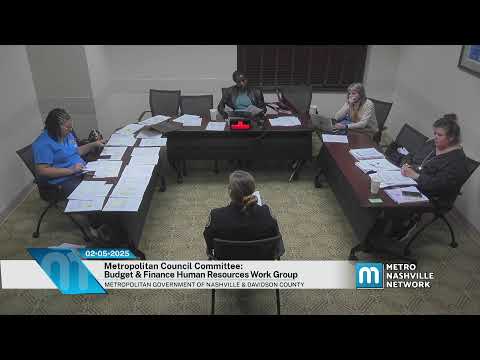
The Budget & Finance Committee’s Human Resources Working Group spent a large portion of its meeting reviewing how Nashville departments have used salary savings produced by unfilled positions and asking for clearer rules and greater transparency.
The committee convened the working group to examine departments with the largest pools of salary savings and probe whether the money was being spent in ways the public would consider clear and appropriate. Members said they wanted to understand practices across departments and whether consistent guidance from Finance or the mayor’s office would reduce the need for ad-hoc decisions.
“The purpose of the human resources working group has been to look at department vacancies,” the committee chair said at the start of the meeting. Committee members told department leaders they were not judging operations but seeking to understand recurring practices, such as departments using salary savings to cover recurring costs like utilities or contract services.
Department leaders described a mix of reasons they have leaned on salary savings. Susan Dry, assistant director for administrative services at Nashville Public Library, told the group that utilities rose sharply and that the library used salary savings in some years to keep branches open and to avoid cutting services while recruitment remained difficult. Dry said the library had averaged roughly mid‑40s vacancies in the fiscal years under review and that many were full‑time roles difficult to fill.
Other departments described similar tradeoffs. Metro Health officials said grant funding patterns and reimbursement timing can force the department to continue services before grant monies flow. Diana Alarcone, director of the Department of Transportation and Multimodal Infrastructure, said NDOT adjusted recruiting and pay structures midstream in recent years and that hiring pipelines had improved, reducing pressure to rely on vacancy savings.
General Services and Fleet leaders said they sometimes use salary savings to contract for repairs when skilled mechanics are not available in house. Gerald Smith, director of General Services, and his staff told the committee they are implementing recruitment and retention changes and that the city has also budgeted a planned fleet study in the Capital Spending Plan (CSP) to better define replacement needs and funding. The CSP line item to fund a fleet study was mentioned during the meeting as already included in the capital plan.
Committee members repeatedly asked whether departments would spend more of their operating requests up front rather than relying on salary savings to be repurposed later; department leaders replied that budget constraints, timing and uncertainty about recruitment outcomes complicate that approach. Several directors said they prefer to demonstrate sustained staffing need to justify new positions rather than reallocate funds away from headcount in a single year.
The working group did not adopt formal rules at the meeting but members concluded they would compile the information collected and reconvene to present findings and possible recommendations to the Budget & Finance Committee. Several departmental speakers said they would provide follow‑up documents by email where staff-level details were requested.
The committee indicated it expects to continue the review with at least one more meeting and to produce a report of findings and options for giving departments clearer guidance on allowable uses of salary savings and on how operating budgets should reflect recurring non‑personnel needs.