Get Full Government Meeting Transcripts, Videos, & Alerts Forever!
Get email alerts on the Geoengineering Airsafety topic
No spam. Unsubscribe anytime.
Committee advances SB 126 to ban certain atmospheric geoengineering releases; debate centers on evidence, enforcement and felony penalty
Summary
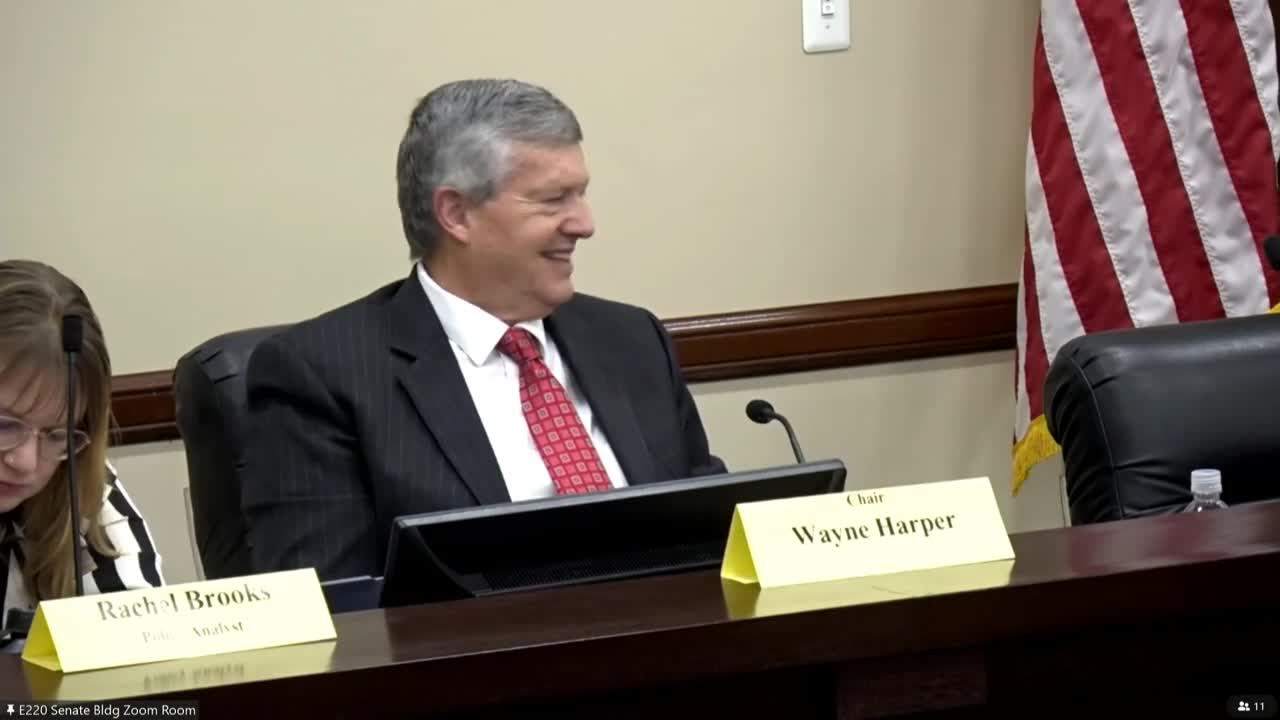
The Senate Transportation Committee voted 4–2 to advance a second substitute to SB 126, which would ban aircraft releases for solar‑radiation modification over Utah, set up a public reporting mechanism and include an airport liability waiver; committee debate centered on scientific evidence and enforcement penalties.
The Senate Transportation Committee voted 4–2 to advance a second substitute of Senate Bill 126, which would ban aircraft from releasing substances for the purpose of solar‑radiation modification and create a public reporting mechanism for suspected instances.
Sponsor Senator Winterton described the bill as a preventative measure aimed at solar‑radiation modification (a form of geoengineering) and said the substitute exempts customary state cloud‑seeding programs while banning high‑altitude releases that the sponsor characterized as stratospheric aerosol injections. The second substitute also includes a liability waiver provision for airports and directs the Department of Transportation to provide a publicly accessible reporting mechanism for credible reports of suspected geoengineering activity.
Committee discussion focused on scientific evidence, enforcement and penalties. Several senators expressed concern about the bill’s enforcement mechanics and the stringency of penalties included in the substitute; Senator Reby and others pointed to language in the draft that would make certain violations a third‑degree felony. The sponsor said the felony language was included to provide enforcement “teeth” but agreed to consult further with legal counsel and the Attorney General’s office about appropriate penalty levels.
A substantial portion of the hearing was public comment. Dozens of residents and community advocates testified in favor of the bill, describing sky observations and citing research and reports they contend show elevated particulates such as aluminum and sulfate in environmental samples. Witnesses included local residents who provided anecdotal observations of lingering contrails and described health and ecological concerns; organizations represented included Utah Legislative Watch. Jason Curry (Utah Division of Outdoor Recreation) and UDOT provided procedural input — UDOT said it would host a simple web form or Google‑Docs‑style form (estimated at about $2,000) for public reports, not an automated monitoring system.
Opponents on the committee argued the science is not settled and that an outright ban could impede responsible research. Senator Kwan and Senator Riebe said the bill is premature without further study; both recorded “nay” votes on the committee motion advancing the substitute (the clerk recorded the committee’s final roll as 4–2 in favor). The sponsor said he would pursue additional briefings and consult with counsel about penalty language and enforcement before floor action.
Votes at a glance: Second substitute, SB 126 — committee favorable recommendation to the floor (4–2; Senators Kwan and Riebe recorded as opposed).