Get Full Government Meeting Transcripts, Videos, & Alerts Forever!
Get email alerts on the Petroleum Storage Tanks Cleanup topic
No spam. Unsubscribe anytime.
Committee clears petroleum storage tank cleanup and loan changes; places bill on consent
Summary
House Bill 18 (first substitute) was favorably recommended and put on consent; the measure aligns above- and below-ground tank rules, expands loan eligibility to above-ground tank owners, raises the Petroleum Storage Tank fund cap and authorizes a $4 million transfer to cleanup funding.
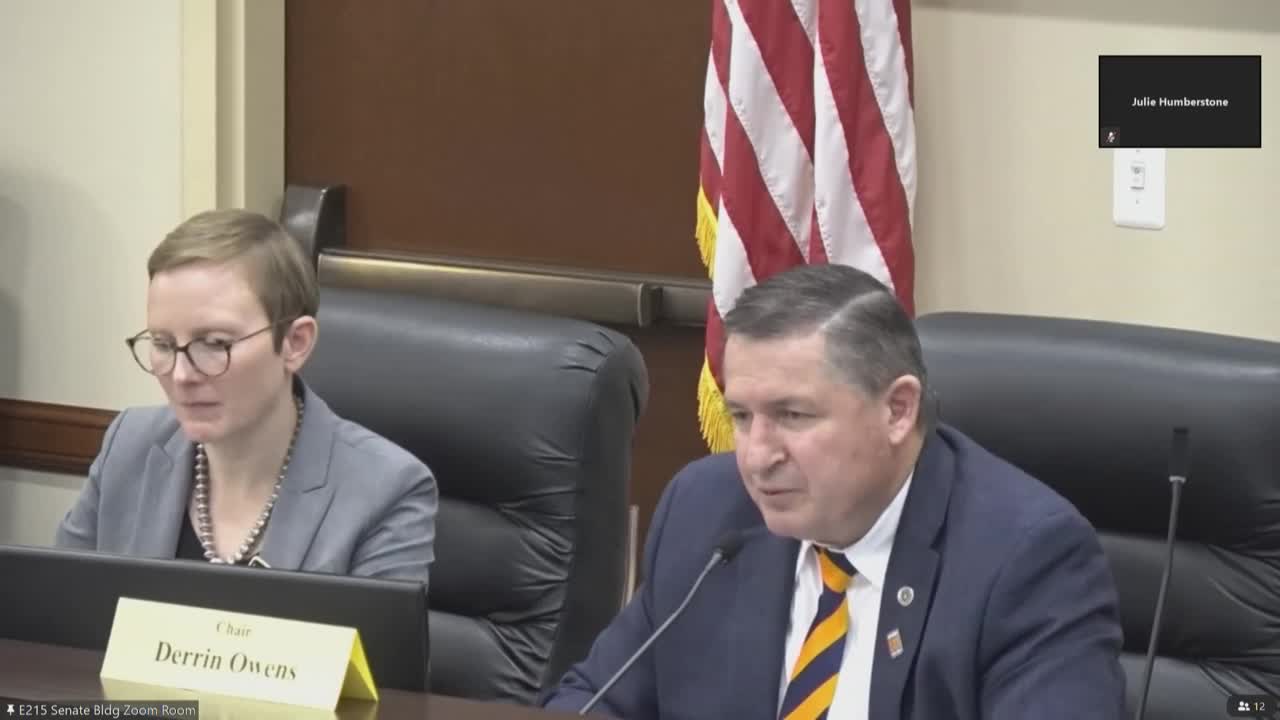
The Natural Resources, Agriculture and Environment Standing Committee on Feb. 5 favorably recommended the first substitute of House Bill 18, a cleanup and technical bill that aligns regulation for above-ground and underground petroleum storage tanks and adjusts the state Petroleum Storage Tank (PST) funding structure.
Representative Lisonbee, sponsor of the bill, said the measure allows owners of above-ground storage tanks (ASTs) to participate in the loan fund previously limited to underground tank owners. "We're just trying to treat these consistently," he said, adding that the change will allow above-ground tank owners to access interest-free loans for upgrades.
The substitute also authorizes a transfer of $4,000,000 from the PST fund to the Petroleum Storage Tank Cleanup Fund to address orphaned sites where no responsible owner can be identified. The bill raises the PST fund cap from $50,000,000 to $60,000,000 and provides that the surcharge rate will reinstate to 0.065 per gallon if the PST fund balance drops below $20,000,000. The measure contains installer-permit technical changes and authority for the director to exempt certain tanks that do not meet program criteria.
Brent Everett, director of the Division of Environmental Response and Remediation at the Department of Environmental Quality, told the committee the changes correct inconsistencies identified since the above-ground program was implemented and that adding AST owners to the loan program will help stakeholders upgrade systems. "We have it based on risk...and they can improve their risk profile and actually get a refund," Everett said about the surcharge rebate mechanism.
There was no public opposition during the hearing. Senator Hankins moved the bill with a favorable recommendation; the committee unanimously approved the substitute and, at the sponsor’s request, placed the bill on consent for the next stage.
Why it matters: The substitute expands financial tools for tank owners to remediate or upgrade petroleum storage systems, provides funding to address orphan releases, and updates program administration to be consistent across AST and UST programs.
The bill will move forward on a consent calendar as the legislature continues its session.