Get Full Government Meeting Transcripts, Videos, & Alerts Forever!
Get email alerts on the Dmv Services Funding topic
No spam. Unsubscribe anytime.
Committee advances SB 210 to add per-registration fee to fund county-run DMV services and establish state office in Cache County
Summary
Senate Bill 210 would add a statewide per-registration fee (proposal discussed as $1.25 in committee) to create a redistribution to 20 counties that operate motor-vehicle services for the state and to fund a new state-run DMV office in Cache County; committee passed the bill 6–1 after detailed testimony from county associations and the sponsor.
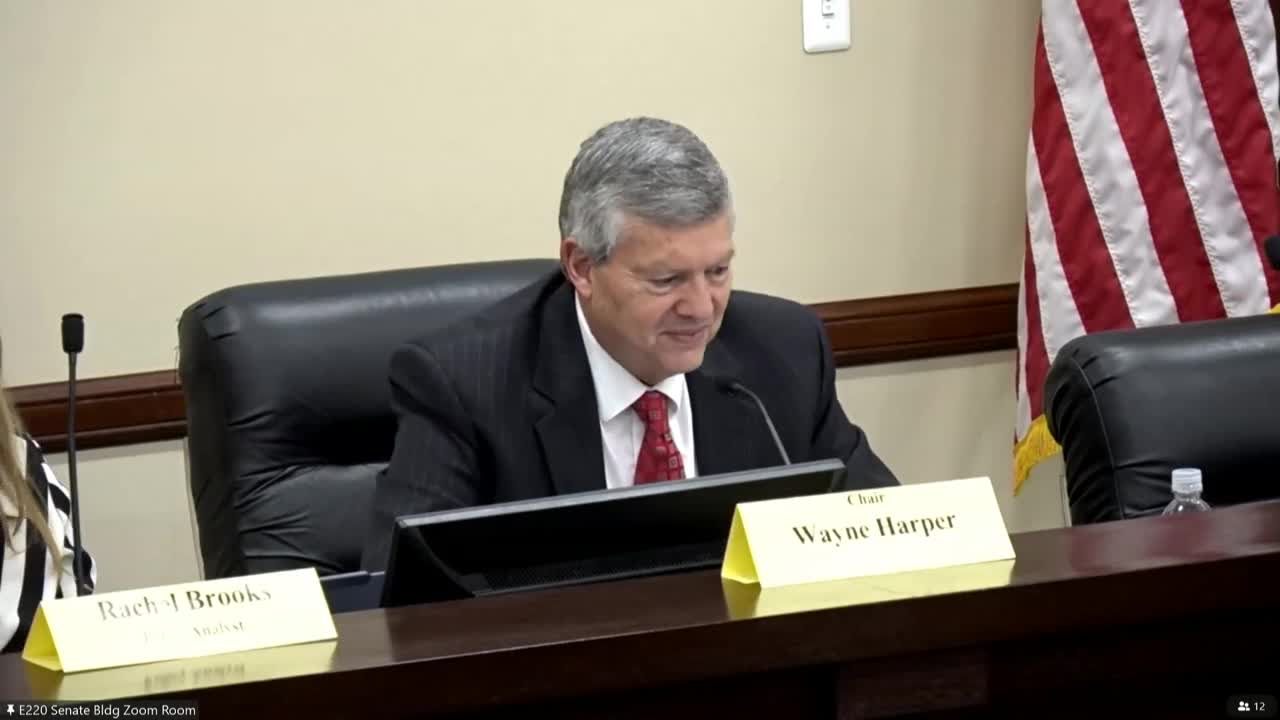
The Senate Transportation Committee voted 6–1 to send Senate Bill 210, Motor Vehicle Registration Services Amendments, to the Senate floor with a favorable recommendation. The bill establishes a per-registration funding mechanism to sustain county‑run motor‑vehicle services and funds a state office in Cache County.
Sponsor Senator Wilson said many county contracts that let counties provide DMV services for the state have not been updated for decades and that county reimbursement has not kept pace with rising personnel and operating costs. Testimony from Lincoln Shirts (Association of Counties) and county officials described an average county subsidy of about $100,000 per year to operate DMV services under the old contract; the sponsor said Cache County’s anticipated costs to transition to a state-run office (start‑up and ongoing) were estimated in committee testimony at about $1.8 million, paid from the additional fee revenue the bill would collect.
Under the bill as discussed in committee, every vehicle registration in the state would be charged an additional fee (committee testimony discussed a $1.25 figure) and funds collected statewide would be redistributed by formula to the 20 participating counties that administer DMV services for the state. The sponsor and Lincoln Shirts said the goal is to replace ad‑hoc, 25‑year‑old contracting arrangements with a stable funding stream for counties that currently provide the service on behalf of the Tax Commission. Committee members sought clarification about how the new line items would appear on registration bills and whether the fee would increase charges for residents; witnesses testified that the collection would be statewide but redistribution would be limited to participating counties so individual total registration charges would rise modestly (example testimony said roughly $1.25 on a typical ~$100 registration).
Multiple county examples were given to illustrate service patterns: Spanish‑speaking employees drawing clients from nearby counties, walk‑in appointment policies that attract out‑of‑county customers, and convenience for out‑of‑state watercraft registration in lake counties. The Association of Counties testified that the redistribution categories (some numbers of dollars in testimony for differing county classes) reflected how the funds would be distributed to make participating counties whole.
On the committee motion, Senator Reby moved to pass SB 210 with a favorable recommendation; the motion passed 6–1. The sponsor said stakeholders will continue to refine details as the bill proceeds.
Votes at a glance: SB 210 — committee favorable recommendation (6–1).