Get Full Government Meeting Transcripts, Videos, & Alerts Forever!
Get email alerts on the Electricity Markets Large Loads topic
No spam. Unsubscribe anytime.
Panel advances bill letting utilities negotiate directly with very large customers while protecting existing ratepayers
Summary
Senate Bill 132 (first substitute) was favorably recommended after sponsors said the measure allows utilities to contract with customers drawing 50 MW or more under protections designed to prevent cost shifts to existing customers; industry and large-user representatives urged changes on timing and resource requirements.
Senators on the Natural Resources, Agriculture and Environment Standing Committee on Feb. 5 favorably recommended the first substitute of Senate Bill 132, a measure sponsors said is intended to let the incumbent utility respond to very large new electrical loads — such as data centers and large manufacturers — without shifting costs to existing customers.
Sponsor Senator Sandel explained the substitute would let Rocky Mountain Power (the incumbent regulated utility) negotiate individual contracts with new customers whose demand is 50 megawatts or greater. Applications would be aggregated twice a year, and the utility would have up to six months to respond. If Rocky Mountain Power cannot reach agreement, a third-party producer could propose service; the Public Service Commission (PSC) would review whether a proposed contract prevents cost shifts to current ratepayers.
"What we've given is...a process where Rocky Mountain Power can go out and contract individually with new customers at 50 megawatts or greater," the sponsor said. The substitute removed a prior blanket prohibition on intermittent resources and allows resources such as solar plus storage if the system can meet continuous operation standards.
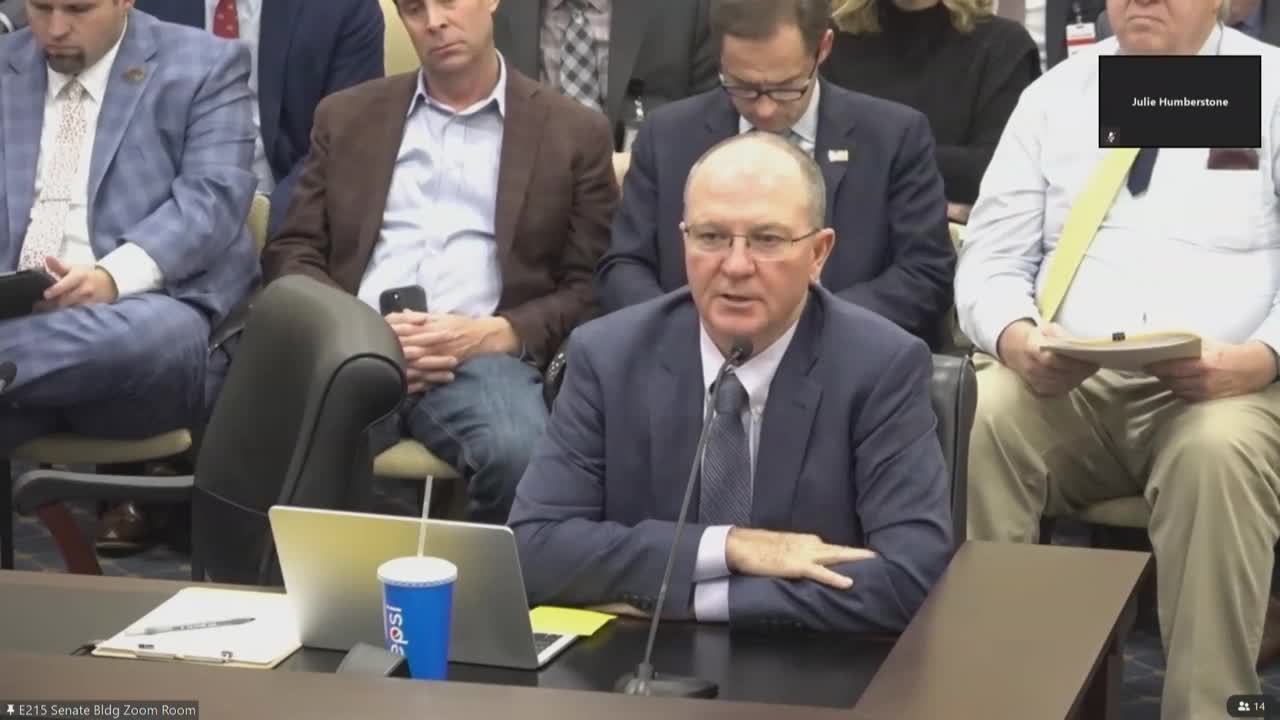
Public commenters included Brian Black, CEO of Nodal Power, who said he supports market restructuring that would spur investment: "Opening up our power markets ... will do that," Black testified. Philip Russell, an attorney representing the Utah Association of Energy Users (a coalition of large institutional and industrial customers), welcomed protections for existing customers but warned that timing and certain contract and resource restrictions may impede investment. He noted the feasibility study and negotiation timelines could delay projects that have already been in discussion for years. "One of my clients submitted its load request back in 02/2022," Russell told the committee, and he urged that the bill avoid forcing existing prospective customers to restart processes.
Reid Page of Summit Energy urged flexibility for loads that are islanded or primarily behind the meter. He also flagged prescriptive items in the substitute — including an insurance requirement quoted in committee — that he said could be excessive where a load is fully islanded from the grid.
Committee members raised technical questions about what qualifies as "continuous operation" and whether required resource standards are applied symmetrically to utilities and third-party providers. Sponsor’s supporters said the bill aims to create a competitive pathway without imposing costs on existing customers.
Senator Hankins moved that the committee favorably recommend the first substitute of Senate Bill 132; the committee approved the motion by voice vote recorded in the hearing as unanimous. Committee members said some issues raised in testimony may be addressed later on the floor.
Why it matters: The bill creates a process intended to attract large, energy-intensive customers while insulating existing ratepayers from new-customer costs. Witnesses praised the potential to spur new investment but warned that timing, resource and transparency provisions may disadvantage nonutility providers or slow projects already in progress.
The substitute now advances to further consideration in the legislature.