Get Full Government Meeting Transcripts, Videos, & Alerts Forever!
Get email alerts on the Micro Mobility Ebikes topic
No spam. Unsubscribe anytime.
Committee approves SB 212 substitutes to classify high-powered e-motorcycles, add helmet rule for youth and clarify where devices are prohibited
Summary
The Senate Transportation Committee unanimously advanced a second substitute to SB 212 that distinguishes high‑powered electric motorcycles from pedal‑assisted e‑bikes, adds helmet requirements for riders under 21 and tightens rules about passengers and yielding to pedestrians.
The Senate Transportation Committee unanimously recommended the second substitute for Senate Bill 212, a package of changes that distinguishes electric bicycles from higher‑powered electric motorcycles and adds safety requirements for motorized personal devices.
Sponsor Senator Plumb told the committee the substitute removed a speed cap from earlier drafts, clarified device definitions, and added safety provisions after consultations with recreation, public‑safety and law‑enforcement stakeholders. The substitute defines motorcycles as motorized devices that lack pedals (devices with foot pegs) or that exceed 750 watts of motor power or can travel more than 20 miles per hour under motor power alone; those devices would be classified as motorcycles rather than e-bikes.
The substitute also: prohibits carrying excess passengers on e-bikes, mini motorcycles, motor‑assisted scooters and mopeds; requires those devices to yield to pedestrians and to obey traffic controls and “just and prudent” speeds; and includes a helmet requirement for riders under age 21. Sponsor Plumb said the helmet age language was added back into the second substitute and that staff would refine statutory cross-references on age numbering before floor action.
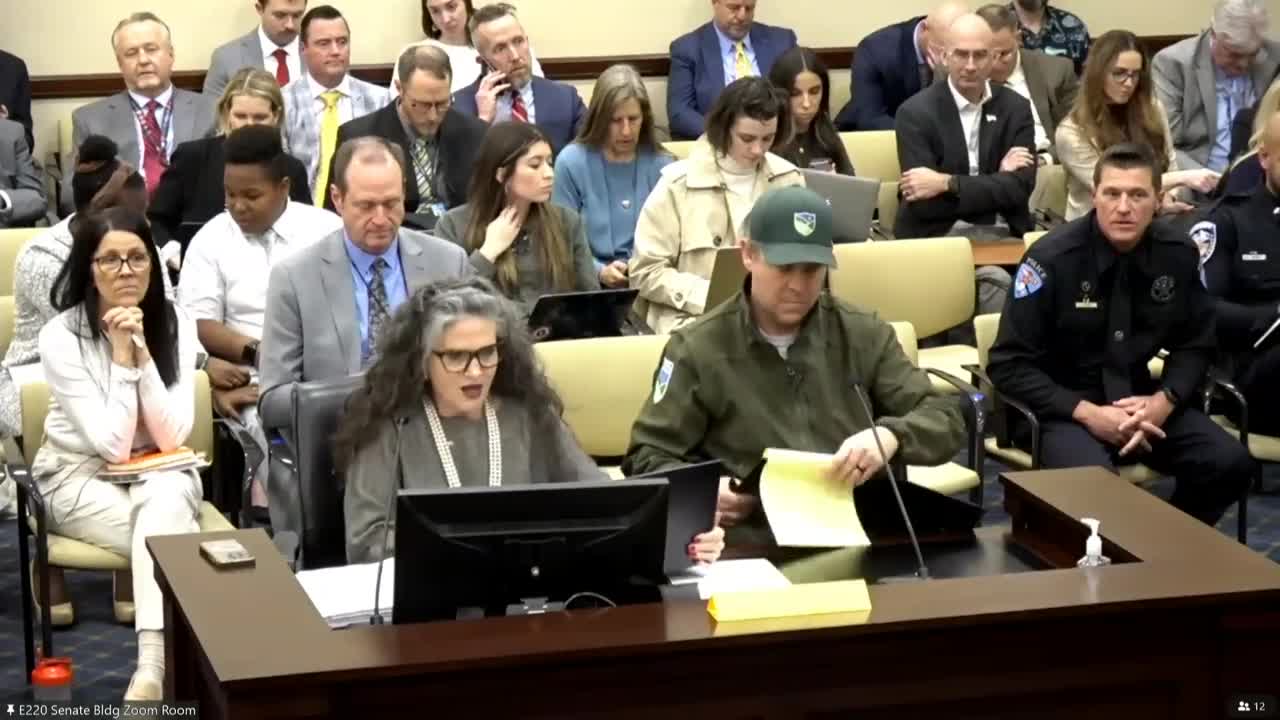
Multiple witnesses supported the substitute. Aaron Williams, ranger supervisor with Basin Recreation, told the committee that high‑powered electric motorcycles can reach 70–80 mph on some equipment and that classifying them as motorcycles helps agencies manage use. Jason Curry, director of the Utah Division of Outdoor Recreation (Department of Natural Resources), said the substitute clarifies a regulatory gray area and helps law enforcement and messaging — and he noted that some competitive mountain bikers routinely exceed 20 mph, which is why the speed limitation was removed.
Public commenters raised operational concerns. Joshua Jorgensen, testifying online, said his scooter‑style device is used as a daily commute and asked for clearer language about how permitted passenger counts will be determined in enforcement stops. Law‑enforcement witnesses including Casey Bates (Summit County Sheriff’s Office) and Officer Jason Rose (Park City Police) supported the safety provisions and described an enforcement approach that emphasizes education prior to citations.
Senator Kwan moved the committee’s favorable recommendation; the motion passed unanimously. The sponsor said she will continue to consult with enforcement and recreation stakeholders to ensure the bill does not impede sanctioned events and that statutory cross‑references are consistent prior to floor debate.
Votes at a glance: Second substitute, SB 212 — committee favorable recommendation (unanimous).