Get Full Government Meeting Transcripts, Videos, & Alerts Forever!
Get email alerts on the Public Lands Outdoor Recreation topic
No spam. Unsubscribe anytime.
Committee backs bill to keep some federal recreation lands open during shutdowns
Summary
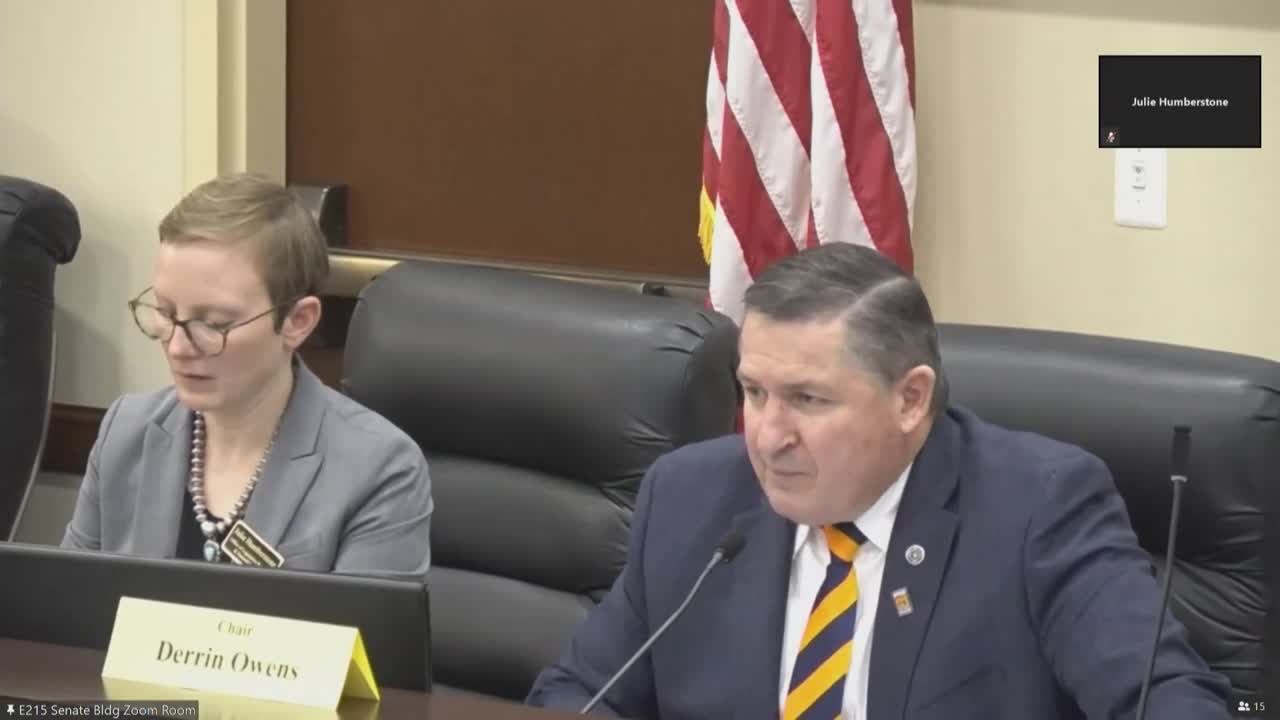
The Natural Resources, Agriculture and Environment Standing Committee favorably recommended House Bill 200 to allow certain U.S. Fish and Wildlife Service lands to be prioritized to remain open during a federal government shutdown and to change the report recipient for the Division of Outdoor Recreation.
Representative Cutler urged the Natural Resources, Agriculture and Environment Standing Committee on Feb. 5 to approve House Bill 200, which would add lands managed by the U.S. Fish and Wildlife Service — including the Bear River Migratory Bird Refuge — to a list of public lands that the state could prioritize to remain open in the event of a federal government shutdown.
The bill also changes where the Division of Outdoor Recreation submits its annual report: it would now go to the Natural Resources, Agriculture and Environmental Quality Appropriation Subcommittee. Supporters said the changes are designed to reduce local economic disruption if federal staffing lapses force closures.
"This bill will add the lands managed by the U.S. Fish and Wildlife Service, areas like the Bear River Migratory Bird Refuge, to potential lands that could be kept open in the event of a government shutdown," Representative Cutler said. Division of Outdoor Recreation Director Jason Curry added, "The impacts to our local communities by closing or allowing the federal government to close these facilities would be huge."
Representative Cutler and Director Curry cited economic impacts tied to previous shutdowns. Representative Cutler said earlier closures cost the state money to keep sites open; he mentioned both a $1,000,000 figure related to past actions and an economic impact estimate "more than $10,000,000" from related closures. The committee did not provide an independent estimate during the hearing; speakers cited those figures when explaining why the state should be able to prioritize keeping some federal recreation sites accessible.
There was no public testimony on the bill during the committee hearing. Senator Hinkins moved that the committee favorably recommend House Bill 200 to the full Senate; the committee approved the motion by voice vote, recorded in the committee as unanimous.
Why it matters: Many Utah communities rely on recreation-based tourism and services tied to federal lands. Supporters framed the bill as a contingency tool to reduce local economic harm during federal staffing interruptions and to improve state oversight of outdoor recreation reporting.
The bill now goes to the full Senate for further consideration.