Get Full Government Meeting Transcripts, Videos, & Alerts Forever!
Get email alerts on the Building Codes topic
No spam. Unsubscribe anytime.
Committee adopts first substitute for state construction and electrical standards, including 2023 NEC and local exemptions
Summary
Representative Tom Peterson presented the first substitute to HB 313 to adopt updated state electrical and construction standards, and the House committee adopted the substitute and recommended it favorably to the House.
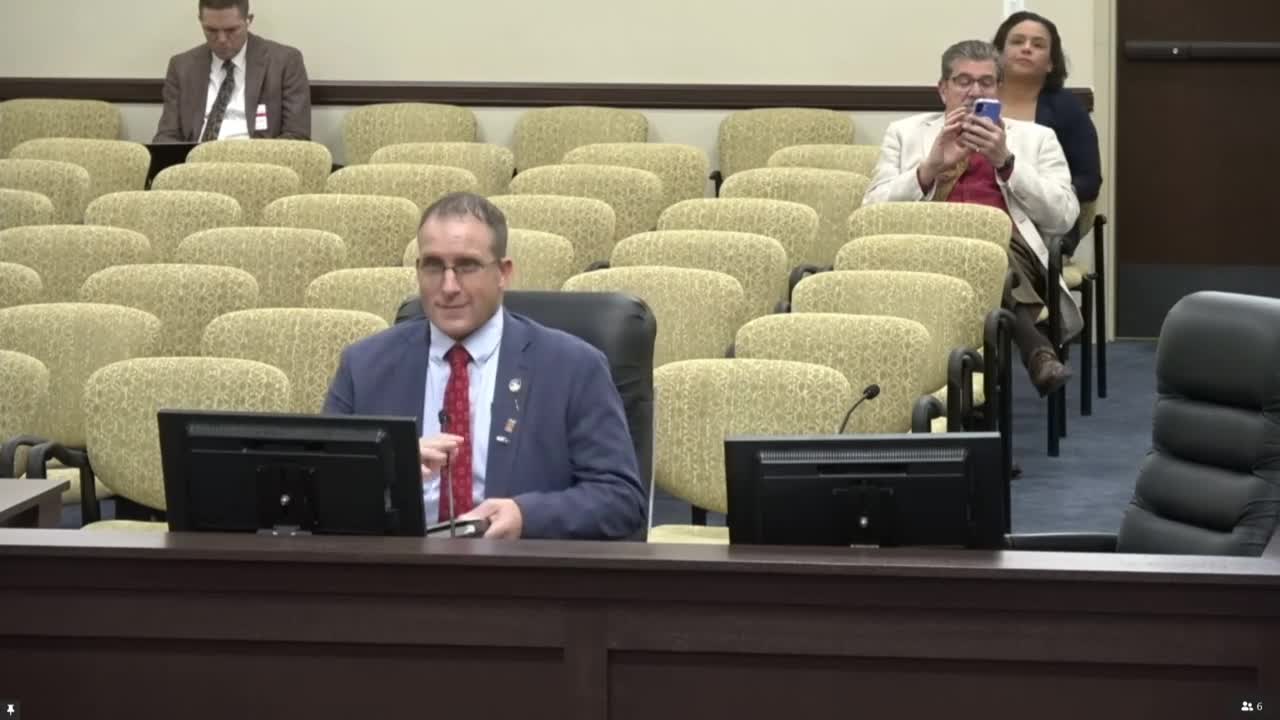
Representative Tom Peterson presented the first substitute to HB 313 (State Construction and Electrical Standards Amendments) to the House Economic Development Workforce Services Committee; the committee adopted the substitute and then voted to recommend the substitute favorably to the House.
The substitute updates Utah’s construction code references to adopt the 2023 National Electrical Code (NEC) and implements technical clarifications recommended by the Uniform Building Codes Commission and the Electrical Advisory Committee. Representative Peterson said the substitute preserves a long-standing state practice that does not require elevators in residential buildings up to three stories; the sponsor said the 2021 International Building Code language unintentionally inserted a broader elevator requirement, so the substitute restores the prior Utah approach (accessible units must still be provided on the main floor).
Representative Peterson also described an amendment removing an unusual requirement that forced ampacity derating when more than two NM (nonmetallic) cables penetrate a top plate in residential construction; the sponsor and electricians said the existing rule produced technical confusion and an unnecessary constraint. The substitute adds a provision allowing more than two NM cables through a top plate without derating. The bill also clarifies allowable deck framing materials, permitting non-pressure-treated lumber when an appropriate top-side water-resistant barrier (for example, metal flashing or a field-applied weather membrane) is installed to prevent standing water on structural members.
On countertop and island receptacles, the substitute follows the NEC approach that does not mandate outlets below countertops in every case but requires prewired or other provisions if an outlet will be added later; Utah’s existing state amendment continues to allow an outlet at the countertop edge in many installations. Representative Peterson and committee members said the changes reflect national code updates and state-specific amendments to keep costs reasonable while maintaining accessibility and safety.
Ross Ford of the Utah Home Builders Association testified in support and thanked the sponsor and the code committees for multi-stakeholder work. After discussion, the committee adopted the first substitute by voice vote and recommended the bill favorably to the full House. Representative Peterson requested further floor discussion about the elevator provision and withdrew a motion to place the bill on the consent calendar to allow that conversation on the floor.
The committee approved the substitute and sent HB 313 (first substitute) to the House with a favorable recommendation.