Get Full Government Meeting Transcripts, Videos, & Alerts Forever!
Utah House clears package of bills on fiscal transparency, EMS, consumer protections and water rights
Summary
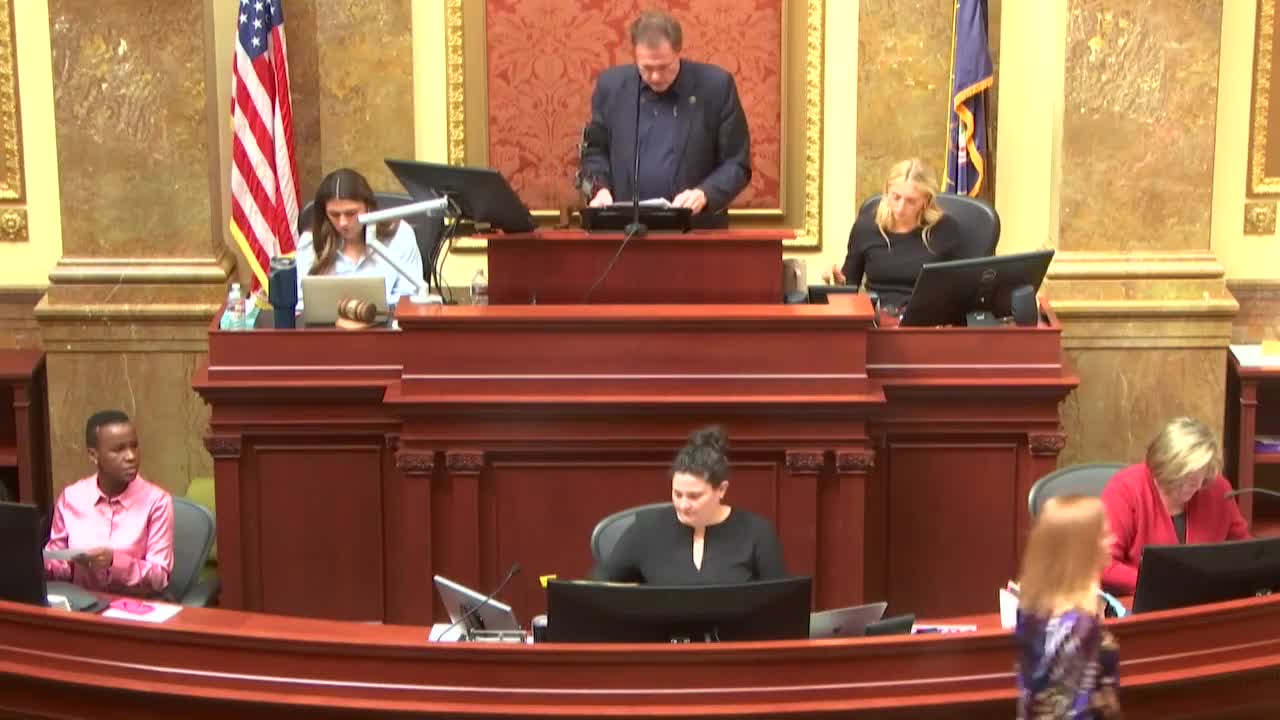
On Feb. 4, 2025, the Utah House of Representatives approved a slate of bills and committee reports, including a joint rules resolution on fiscal-note transparency and measures on emergency medical services, consumer protections, water-rights recording and other items. Several bills were transmitted back to the Senate for further action.
SALT LAKE CITY — The Utah House of Representatives on Feb. 4, 2025, passed a group of bills and committee measures covering fiscal-note transparency, emergency medical services, consumer protections, water-rights recording and housing policy, among other topics. Lawmakers adopted the bills largely by voice or recorded votes and sent multiple measures back to the Senate for final action.
Representative Daley Provo, sponsor of a refiled joint rules resolution, said the measure was meant to "provide us as legislators and decision makers a little bit more transparency in the fiscal note process." HJR 2 passed the House 71-0.
The day’s actions also included measures on supervision language for emergency medical services, an amendment clarifying license use for volunteer and paid EMTs, a consumer-protection bill, updates to water-rights recordings to allow grantors and grantees to sign electronically, and changes to multiple statutes tied to housing and elections. Representative Thurston described House Bill 14 as "the EMS bill that relates to paramedics and EMTs." The concurred substitute of HB 14 passed 67-0 and will be sent to the Senate.
Why it matters: the package affects state administrative processes (fiscal notes), public safety workforce rules, consumer remedies, housing incentives and property-rights paperwork. Some measures change how agencies implement programs or how citizens interact with state processes — for example, the fiscal-note…
Already have an account? Log in
Subscribe to keep reading
Unlock the rest of this article — and every article on Citizen Portal.
- Unlimited articles
- AI-powered breakdowns of topics, speakers, decisions, and budgets
- Instant alerts when your location has a new meeting
- Follow topics and more locations
- 1,000 AI Insights / month, plus AI Chat