Get Full Government Meeting Transcripts, Videos, & Alerts Forever!
Get email alerts on the Legislative Actions topic
No spam. Unsubscribe anytime.
Utah House clears package of bills on fiscal transparency, EMS, consumer protections and water rights
Summary
On Feb. 4, 2025, the Utah House of Representatives approved a slate of bills and committee reports, including a joint rules resolution on fiscal-note transparency and measures on emergency medical services, consumer protections, water-rights recording and other items. Several bills were transmitted back to the Senate for further action.
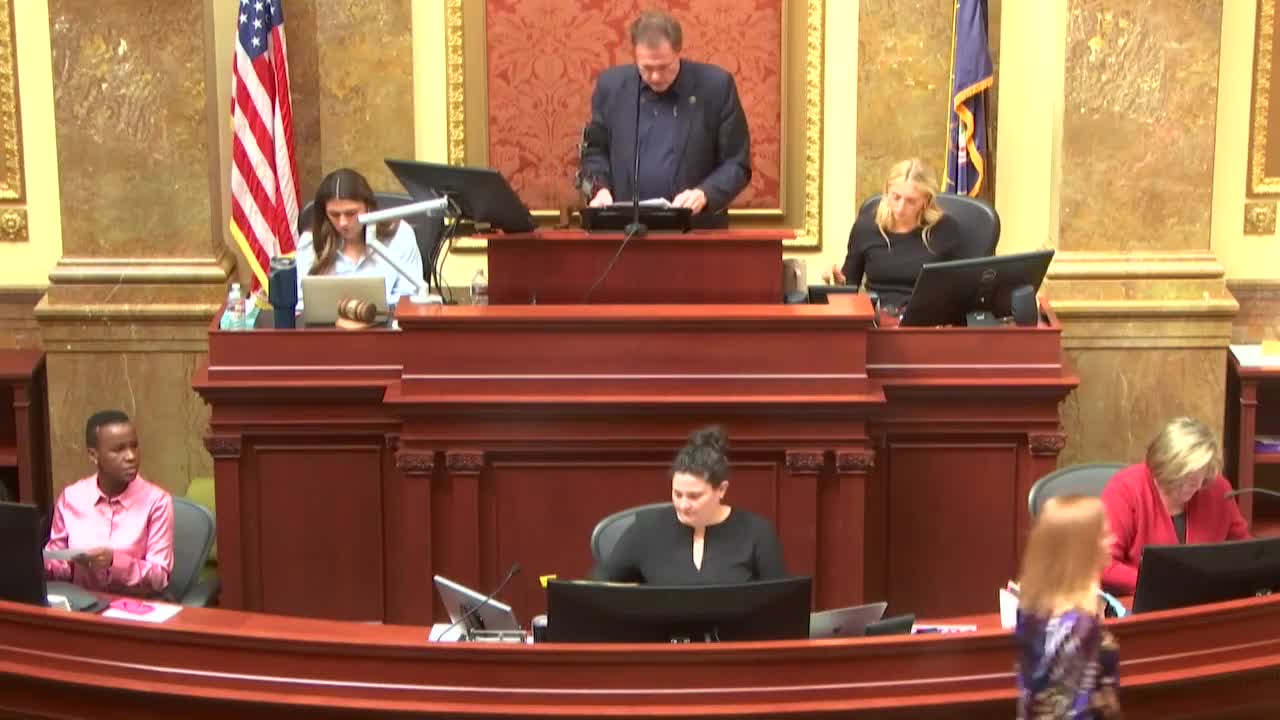
SALT LAKE CITY — The Utah House of Representatives on Feb. 4, 2025, passed a group of bills and committee measures covering fiscal-note transparency, emergency medical services, consumer protections, water-rights recording and housing policy, among other topics. Lawmakers adopted the bills largely by voice or recorded votes and sent multiple measures back to the Senate for final action.
Representative Daley Provo, sponsor of a refiled joint rules resolution, said the measure was meant to "provide us as legislators and decision makers a little bit more transparency in the fiscal note process." HJR 2 passed the House 71-0.
The day’s actions also included measures on supervision language for emergency medical services, an amendment clarifying license use for volunteer and paid EMTs, a consumer-protection bill, updates to water-rights recordings to allow grantors and grantees to sign electronically, and changes to multiple statutes tied to housing and elections. Representative Thurston described House Bill 14 as "the EMS bill that relates to paramedics and EMTs." The concurred substitute of HB 14 passed 67-0 and will be sent to the Senate.
Why it matters: the package affects state administrative processes (fiscal notes), public safety workforce rules, consumer remedies, housing incentives and property-rights paperwork. Some measures change how agencies implement programs or how citizens interact with state processes — for example, the fiscal-note resolution aims to give legislators clearer access to the data behind budget estimates, and the water-rights change permits electronic signatures by more parties.
Notable floor presentations and votes
- HJR 2 (Joint rules resolution — fiscal note process): Representative Daley Provo said the bill clarifies collaboration between the Office of Legislative Research and General Counsel and the legislative fiscal analyst to ensure legislators can access the information behind fiscal notes. Vote: 71-0; passed and transmitted to the Senate.
- First substitute House Bill 14 (Emergency services personnel amendments): Representative Thurston said the Senate asked clarifying language about supervision and that the change eases implementation. Vote to concur with Senate amendments and pass: 67-0; forwarded to the Senate.
- First substitute House Bill 112 (window tinting; penalties): Representative Lisenby described the bill as a consensus measure that removes registration or license suspension for tint violations while preserving citation authority. Vote: 69-1; passed and transmitted to the Senate.
- Senate Bill 12 (Board of Tourism Development sunset extension): Representative Carol Moss said the board’s marketing work produced substantial traveler spending over five years. Vote: 55-15; bill passed and returned to the Senate.
- First substitute Senate Bill 46 (Youth e-cigarette, marijuana and other drug prevention program — sunset extension and funding priorities): Representative Daley Provo summarized changes driven by the Utah State Board of Education and noted anticipated declines in ecigarette-tax revenue after recent legislative changes; the bill sets a priority (waterfall) of funded activities. Vote: 72-0; passed and returned to the Senate.
- Senate Bill 30 (Forest fire resources compact amendments): Representative Shelley said the bill clarifies pre-negotiated agreements for sharing resources across states during fires. Vote: 73-0; passed and returned to the Senate.
- Senate Bill 19 (Utah Retirement Systems amendments for military personnel): Representative Val Peterson said the bill allows service members and spouses on permanent-change-of-station orders to automatically vest defined-contribution accounts; she framed it as aligning with earlier legislative changes. Vote: 70-0; passed and returned to the Senate.
- Senate Bill 53 (Election code amendments): Representative Musselman’s bill cleans up language after courts struck down in-state signature-gathering requirements and adjusts municipal-district timelines; it also gives signers three days to remove a petition signature. Vote: 67-0; passed and returned to the Senate.
- First substitute Senate Bill 23 (First Home Investment Zone amendments): Representative White said the bill cleans up definitions and clarifies occupancy requirements to support homeownership programs. Vote: 68-0; passed and returned to the Senate.
- Senate Bill 42 (Consumer protection amendments): Representative Malloy described the bill as strengthening the Division of Consumer Protection’s tools to hold bad actors accountable and to return money to harmed Utahns. Vote: 70-0; passed and returned to the Senate.
- Senate Bill 33 (Water rights recording amendments): Representative Shipp said the change lets grantors, not just grantees, sign water-rights transfers by fax or electronic signatures; the change was described as an oversight fix prompted by a title company. Vote: 73-0; passed and returned to the Senate.
Committee and procedural actions
The House also adopted several standing-committee reports and the Rules Committee’s recommendations assigning bills to committees for further consideration. Representative Jordan Tesher presented the Rules Committee report listing committee referrals; the House adopted that report by voice vote.
What was not on the floor: ceremonial recognitions and guest introductions were offered during the session (for example, veterans and students were recognized), but those items were not part of the day’s legislative votes and are not covered here.
Ending: Most measures approved by the House were transmitted to the Senate for signature or further action. Several bills reflected short, bipartisan floor presentations and limited debate; a handful (notably SB 12) drew larger recorded opposition. Further committee-level or Senate action could alter final implementation or effective dates.