Get Full Government Meeting Transcripts, Videos, & Alerts Forever!
Get email alerts on the State Legislation Votes topic
No spam. Unsubscribe anytime.
Utah Senate advances a slate of bills; veterans’ free state-parks proposal fails after close vote
Summary
On day 16 the Utah Senate approved a package of bills covering refugee services codification, liability for dogs, family law arbitration, school and public-safety measures, and local-option sales tax authority for high-tourism areas. A proposal to extend free state-park access for a broader group of veterans failed 15–13 after extended debate.
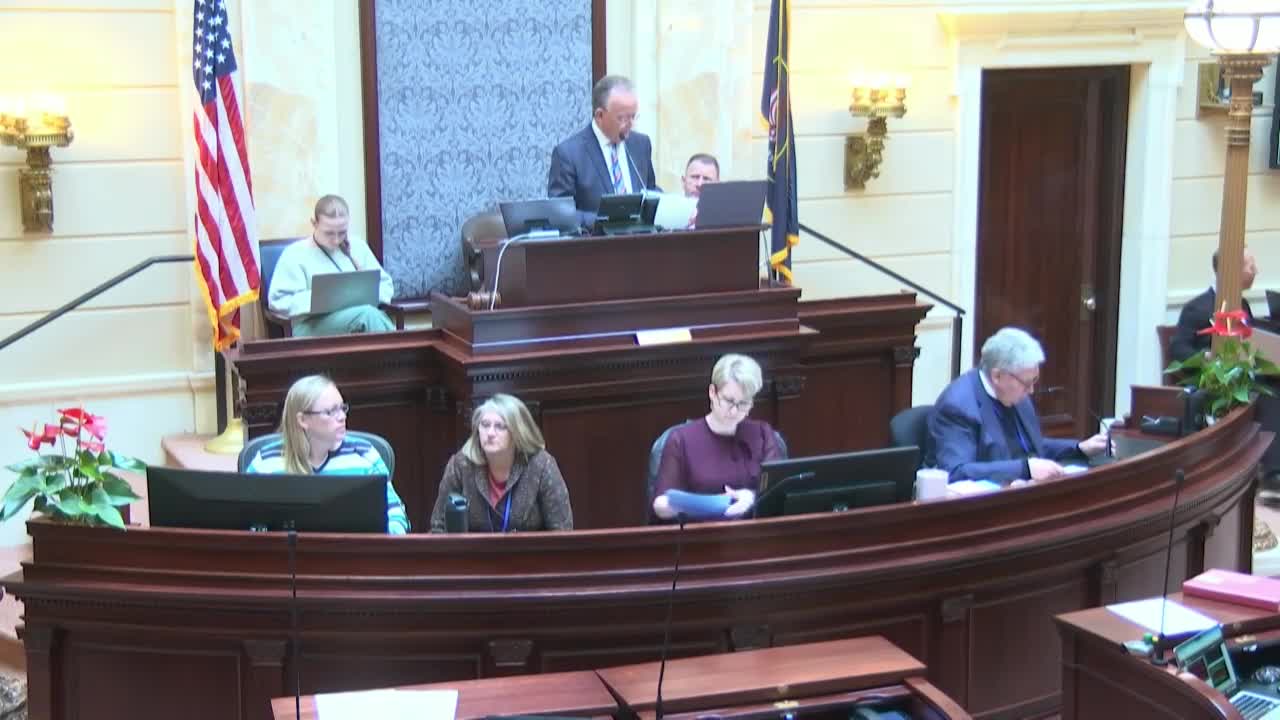
The Utah State Senate on day 16 moved a string of bills to the House and adopted several resolutions, while narrowly rejecting a proposal to extend free state-park access for some veterans.
The Senate approved measures ranging from codifying refugee services practices and clarifying dog-related liability to creating a statutory arbitration framework for family-law cases and authorizing a local-option sales tax in designated high-tourism areas. After debate and a roll-call, the chamber rejected a second substitute of Senate Bill 114, the veterans’ state-park access measure, 15–13; sponsors said the bill included a three-year sunset to allow data collection, while opponents warned the change could undercut State Parks’ fee authority.
The votes advance multiple bills to the House for further consideration and return resolutions that will be signed and transmitted, while the failed veterans measure will be returned to staff for filing.
Votes at a glance (selected items)
- House Concurrent Resolution 1 (Grand County Water Conservancy District): Passed by unanimous recorded vote of senators present (29–0). Sponsor: Senator Hinkins. The resolution asks the federal delegation to leave a six-inch water line installed near Crescent Junction in place for local water development related to remediation work tied to uranium tailings removal.
- House Joint Resolution 4 (joint rules amendments): Passed by unanimous recorded vote of senators present (29–0). Sponsor: Senator Fillmore. The resolution adds staff to the body’s nondiscrimination protections and updates a committee name in the rules.
- Senate Bill 118 (Political Party Procedures Amendments): Passed (20–0, 1 absent). Sponsor: Senator Brammer. The bill clarifies locations universities and other public venues may make available for party caucuses and similar gatherings.
- First Substitute Senate Bill 31 (Refugee Services Amendments): Passed by roll call (28–0, 1 absent). Sponsor: Senator Winterton. The bill codifies practices performed by the Division of Workforce Services related to refugee support into statute.
- Senate Bill 101 (Dog-Related Liability Amendments): Passed by roll call (28–0, 1 absent). Sponsor: Senator Kwan. The bill adjusts liability where a criminal trespasser is bitten on private property.
- Second substitute Senate Bill 114 (Veteran Access to State Parks): Failed after roll call (13–15, 1 absent). Sponsor: Senator Kwan. The second substitute included a three‑year sunset so agencies could gather data; sponsors said the Department of State Parks and the Department of Veterans and Military Affairs collaborated on the proposal. Opponents warned that expanding free access risks undermining State Parks’ ability to remain self-supporting.
- On the floor, Senator Kwan said the second substitute “gives a sunset date of 3 years and thinking that that will give us enough data to see if this is a project that… State Parks can move forward on.”
- Senator Sandle, opposing, said: “When we start down this road… it’s really hard to undo that and… for that reason I’m still not going to be able to support this.”
- Senator Reby (Reedy on the roll call) urged support: “Our veterans deserve to have any type of benefit we can give them. They showed up. They put their lives on the line.”
- Senate Bill 117 (Uniform Family Law Arbitration Act): Passed (28–0, 1 absent). Sponsor: Senator Mackell. The bill provides a statutory framework for arbitration in family-law matters when parties elect arbitration instead of mediation or court.
- Senate Bill 147 (Youth Service Organizations Amendments): Passed (28–0, 1 absent). Sponsor: Senator Grover. The bill adjusts background-check language for adults working with youth to avoid practical barriers for volunteers without photo ID.
- First Substitute Senate Bill 92 (Golf Course Amendments): Passed (22–4, 3 absent). Sponsor: Senator McKay. The bill exempts privately owned golf courses; sponsors said they will work with the House on publicly owned courses operated privately.
- Senate Bill 146 (Glucagon Amendments): Passed (27–0, 2 absent). Sponsor: Senator Plumb. The bill establishes a standing order and training protocol to allow schools to administer lifesaving glucagon for students with diabetes or other conditions that cause low blood sugar.
- Senate Bill 76 (Marriage Amendments): Passed (25–0, 4 absent). Sponsor: Senator Plumb. The bill clarifies juvenile-court procedures for marriage authorizations, including a 72‑hour waiting period and a four‑year age-difference limit for court-authorized marriages.
- First Substitute Senate Bill 67 (Local Option Sales Tax Amendments): Passed (26–0, 3 absent). Sponsor: Senator Owens. The bill allows a special district with high tourism (defined criteria including national and state parks) to seek voter approval for a local option sales tax to offset impacts from heavy visitation.
- Senate Bill 80 (Drinking Water Amendments): Passed (26–0, 3 absent). Sponsor: Senator Sandall. The bill creates fee authority tied to consumption for the state drinking-water program to supplement federal funding and to include a conservation component, according to sponsor remarks.
What mattered
The veterans‑park proposal drew the most sustained floor debate. Sponsors described a collaborative plan with State Parks and the Department of Veterans and Military Affairs and added a three‑year sunset to produce implementation data; opponents argued the measure could erode fee revenue and compel future expansions to other groups (police, firefighters). The Senate’s 15–13 vote against the measure reflects that division.
Several health- and safety-focused bills moved unanimously or with large majorities, including the glucagon protocol for schools and statutory clarification for family-law arbitration.
Meeting context and procedure
President Adams presided over roll-call votes, committee reports were adopted and placed on the calendars, and the chamber recessed after the agenda items and announcements. Multiple bills were circled (set aside) earlier in the session and later uncircled for votes.
Ending
Bills that passed the Senate will be transmitted to the House for further consideration or returned to the House as adopted resolutions. The failed veterans’ parks measure will be returned to staff for filing; sponsors said some agency collaboration and data collection will continue outside of floor action.