Get Full Government Meeting Transcripts, Videos, & Alerts Forever!
Get email alerts on the Veteran Protection topic
No spam. Unsubscribe anytime.
Committee backs bill giving state consumer division authority to enforce rules protecting veterans from unaccredited agents
Summary
The committee unanimously passed House Bill 248 to let the Division of Consumer Protection investigate and enforce prohibitions on unaccredited agents who charge fees or make deceptive claims when assisting veterans with initial VA benefit claims.
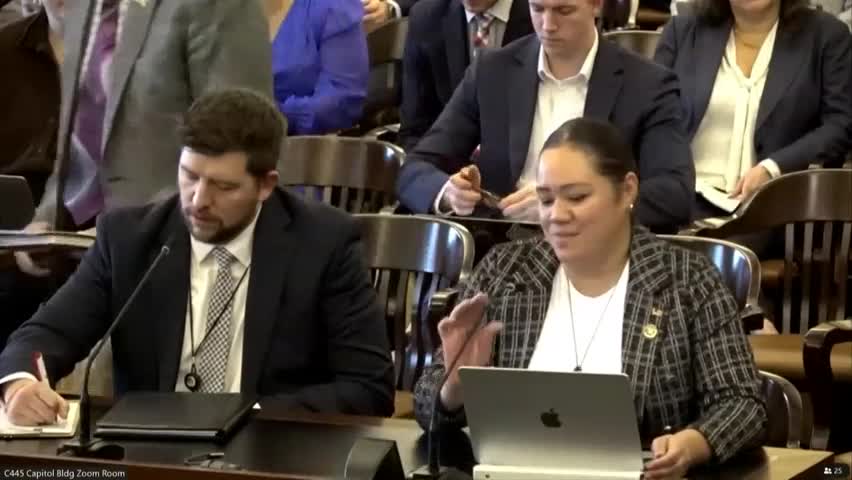
Representative Melga (sponsor of HB 248) and Department of Veterans and Military Affairs staff presented the bill to the Business, Labor and Commerce Committee. The measure seeks to protect veterans by prohibiting unaccredited individuals from charging fees or engaging in deceptive practices when helping veterans file initial claims for Department of Veterans Affairs benefits.
Nut graf: The bill expands state consumer-protection enforcement by giving the Division of Consumer Protection authority to accept complaints, audit businesses, and pursue enforcement actions against actors that charge prohibited fees or make false promises when assisting veterans with initial VA claims.
Corey Pearson, deputy director for the Utah Department of Veterans and Military Affairs, explained the federal accreditation routes — attorneys, agents and veteran service organizations — and that federal rules already prohibit fees for initial claims but enforcement gaps remain. "Only VA-accredited agents or attorneys can charge fees, and only after the veteran receives an initial decision on their claim," Pearson said. The bill would not change federal law but would create an in-state enforcement path for violations of those federal prohibitions and for deceptive practices under Utah consumer law.
Blake Young, Assistant Director for Consumer Protection, told the committee the division would treat violations as consumer-sales-practices matters and open investigations when referred. Young said the division has investigators and auditors able to examine deceptive practices and would welcome the authority to pursue cases in this area.
Public testimony included veterans-service and advocacy representatives who described predatory practices by unaccredited agents. Terry Scow of the American Legion said veterans should never pay for help filing initial claims. Matthew Berry, a disabled Army veteran, described private companies that took substantial percentages of disability awards; he urged approval.
The committee adopted language to clarify enforcement and voted by voice to pass the bill out favorably. Representative Matthews moved that the committee pass HB 248 favorably; the motion carried unanimously on a voice vote.
Ending: The bill passed the committee with unanimous support and will proceed to the next step in the legislative process; sponsors said the statute is intended to channel complaints to the Division of Consumer Protection while leaving federal accreditation rules intact.