Get Full Government Meeting Transcripts, Videos, & Alerts Forever!
Get email alerts on the Right To Repair topic
No spam. Unsubscribe anytime.
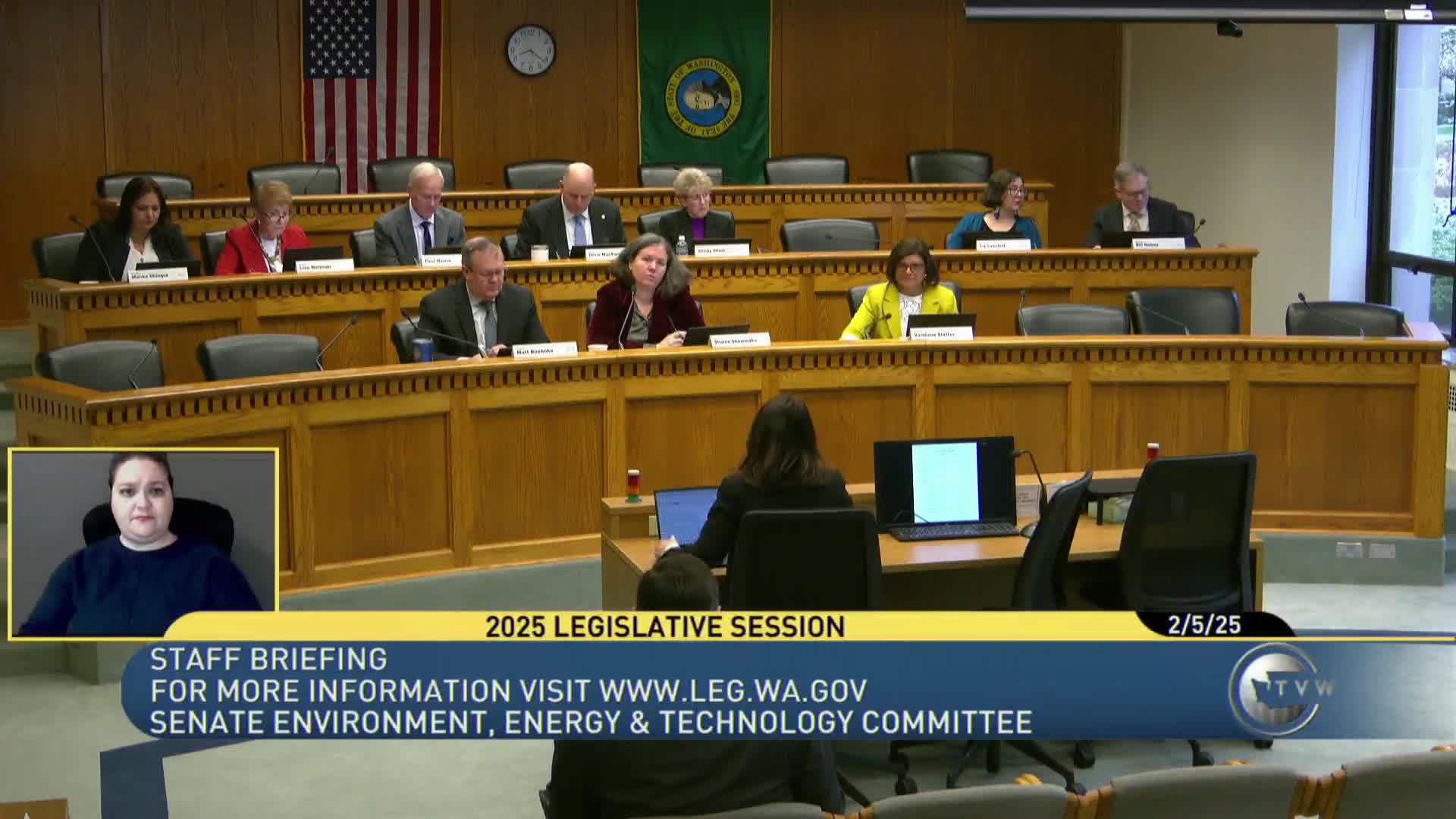
Wide public testimony at Senate hearing on Right to Repair; industry divisions focus on security, parts pairing and recyclers’ ability to refurbish devices
Summary
Senate Bill 54-23 would require manufacturers of digital electronic products sold in Washington to make parts, tools and repair documentation available to owners and independent repair providers on fair and reasonable terms beginning Jan. 1, 2026.
Senate Bill 54-23 would require original manufacturers of digital electronic products first manufactured or sold in Washington to make parts, diagnostic tools and repair documentation available on fair and reasonable terms to independent repair providers and owners beginning Jan. 1, 2026.
Derek Stanford, sponsor and state senator for the 1st District, told the Environment, Energy & Technology Committee the bill ‘‘is basically about fairness and competition’’ and asserted the measure would cut consumer costs and reduce waste. "Being able to take something to a local repair shop instead of having to deal with essentially a monopoly situation where the manufacturer controls everything about the repair of a device," Stanford said, "helps small local businesses and reduces waste."
Supporters included community groups, repair businesses and nonprofit recyclers. Catherine Horvath of Washington Public Interest Research Group (WashPIRG) said door‑to‑door canvassing found broad public support and cited an estimate that Washington households could save large sums annually if repairs substituted for replacements. Morgan Costello Hostetler of PCs for People described refurbishing constraints: his organization diverted over 700,000 pounds of e‑waste last year but refurbished less than 10% of collected devices because parts and repair information were not available.
Opponents, especially from device manufacturers and trade groups, focused on security and safety concerns. Amy Boss of NetChoice and representatives of the Repair Done Right Coalition argued that mandating broad access could compromise device security, citing risks such as unsafe batteries and unauthorized data access. CTIA, the wireless industry trade association, noted existing certified repair pathways and urged careful treatment of security and certification. Several witnesses and senators referenced Colorado’s language as a possible model to balance access with security requirements.
Key technical issues debated in testimony included: parts pairing (software or coding that associates a part with a device), data security and encryption, the definition of "fair and reasonable" pricing and terms, and carve-outs for categories such as motor vehicles and medical devices. The bill, as described by staff, includes an enforcement mechanism by the Attorney General under the Consumer Protection Act and referenced the Magnuson‑Moss Warranty Act regarding warranty antitying provisions.
The committee heard extensive, divided testimony: independent repair shop owners described successful use of right‑to‑repair laws in other states to obtain documentation and parts; industry representatives warned that third‑party repair could increase data breaches and safety hazards; recycling advocates emphasized e‑waste prevention and refurbishment opportunities. No committee vote was recorded in the transcript; staff presented a fiscal note estimating a general fund cost of $139,025.27 for implementation activities.
What the bill would (per staff summary): require parts/tools/documentation availability on fair and reasonable terms; prohibit parts pairing when it prevents replacement functionality; require disclosures about data security; exempt specified categories (motor vehicles, agricultural and power equipment, medical devices) and exclude trade secrets beyond what is necessary to comply. Enforcement would be through the Attorney General under the Consumer Protection Act.
Next steps: the bill remains in committee; senators asked for technical clarifications and comparisons with other states’ statutes during and after extensive public testimony.