Get Full Government Meeting Transcripts, Videos, & Alerts Forever!
Get email alerts on the Lea Reserves Ptif topic
No spam. Unsubscribe anytime.
State treasurer and auditor brief committee on rising PTIF balances and why local reserves are high
Summary
Utah State Treasurer Marlo Oakes and the State Auditor’s financial audit director, Jason Allen, told the Public Education Subcommittee that rising PTIF and LEA balances reflect federal inflows, tax timing, bond proceeds and local policy decisions, and urged a targeted study before policy changes.
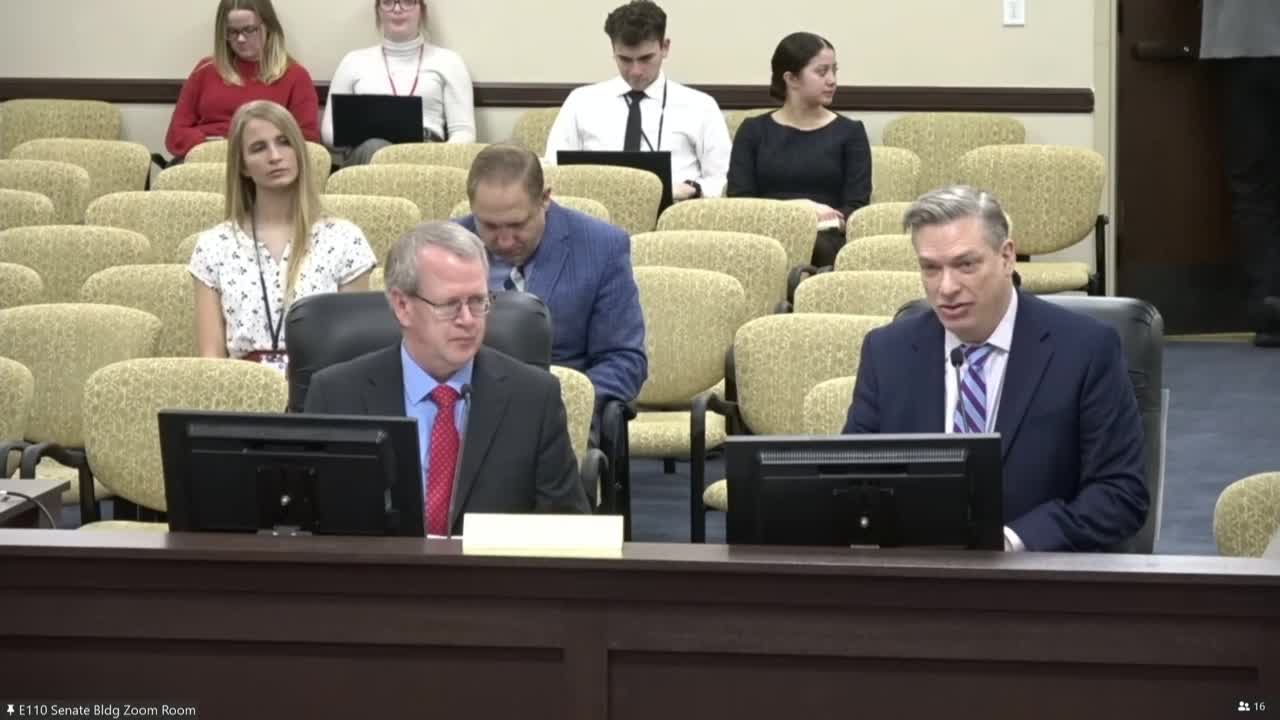
Marlo Oakes, Utah State Treasurer, and Jason Allen, financial audit director for the State Auditor’s office, briefed the Public Education Subcommittee on why local education agency (LEA) reserves and balances in the Public Treasurers’ Investment Fund (PTIF) have risen sharply.
Oakes said the PTIF functions as a short‑term money market vehicle used by the state and more than 700 local entities. She noted overall fund growth tied to pandemic‑era federal inflows and that many entities choose PTIF because it charges low fees compared with private managers: “The advantage of putting it in our fund is that we charge a half a basis point. Other outside entities may charge up to 10 basis points,” Oakes said.
Allen (State Auditor) explained that fund balances reflect a mix of good‑faith local policy decisions and statutory restrictions: districts hold property‑tax receipts (collected in November–December) that must fund operations through the next fiscal year, districts may self‑fund capital projects and thus accumulate bond or capital reserves, and some balances are held to meet bond rating and debt‑service coverage rules. The auditor’s office also noted that restricted or committed fund balances are disclosed in audited financial statements and that detailed reasons for balances appear in footnotes for each LEA’s financial report.
Committee members raised concerns about districts holding large unrestricted balances despite perceived local needs. Allen and Oakes urged that any policy changes should be targeted and that the auditor’s office and treasurer can provide audited footnote detail for specific entities. Senator Stratton indicated he is considering running an interim study bill to evaluate reserve practices across local governments.
Nut graf: PTIF and LEA cash balances have increased statewide for multiple legitimate reasons — federal stimulus and holdbacks, tax‑timing, bond proceeds, statutory or board rules to preserve reserve levels for debt and OPEB — and lawmakers asked for targeted study and more granular audited disclosures before proposing broad policy changes.
The committee did not take appropriation action during this briefing; staff offered to return district‑level audited footnote detail on request.