Get Full Government Meeting Transcripts, Videos, & Alerts Forever!
Get email alerts on the Embodied Carbon topic
No spam. Unsubscribe anytime.
Committee hears broad support — and some opposition — for bill requiring embodied-carbon reporting for large projects
Summary
House Bill 1458 would require embodied-carbon reductions for new construction, additions and renovations 50,000 square feet or larger via three compliance pathways; the bill drew technical testimony from architects, engineers, industry groups and researchers.
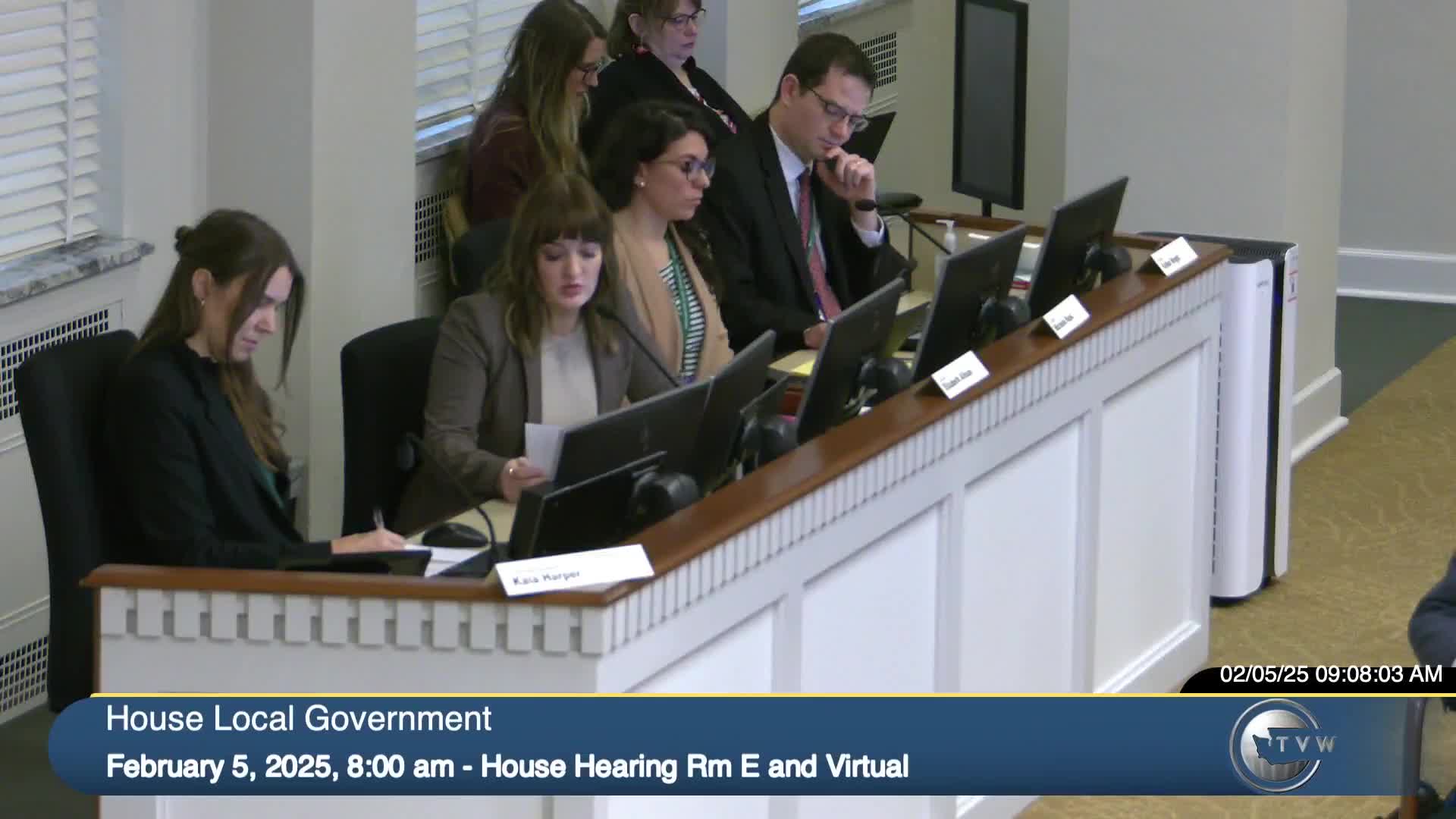
The Local Government Committee heard extensive testimony on House Bill 1458, which would direct the State Building Code Council to adopt embodied-carbon emissions reduction standards for large building projects and require reporting into a public database.
Staff explained the bill’s key elements: the State Building Code Council must adopt embodied-carbon standards applying to new construction, additions and renovations of 50,000 square feet or larger. Projects could comply through one of three pathways: (1) reuse at least 45% of an existing structure and envelope, (2) demonstrate covered products meet established embodied-carbon reduction requirements via environmental product declarations covering at least 90% of covered products, or (3) perform a whole-building life-cycle assessment compared to a functionally equivalent reference building. The Department of Commerce would maintain a public database for reporting and conduct random audits of projects.
Witnesses across the design, engineering and materials sectors provided technical testimony. Architects and researchers from the University of Washington’s Lifecycle Lab, New Buildings Institute and multiple architecture firms urged support, saying the methods and market tools already exist and that a staged timeline (the bill includes code cycle milestones and a 30% reduction target for certain code cycles) would push industry adoption. Chris Hellstern, an architect, told the committee “the technology is available” and said many firms already measure embodied carbon voluntarily.
Industry groups offered mixed input. The Washington Aggregate and Concrete Association opposed the bill as drafted, citing concerns about scalability and global material availability and urging amendments to rely on existing working groups. The Building Industry Association similarly opposed on cost and timing grounds. The American Wood Council supported the bill, noting mass timber and wood products can reduce embodied carbon and recommending technical amendments. Structural engineers testified that optimizing design and using different material strengths can reduce embodied carbon and sometimes lower cost.
Supporters argued embodied carbon is an urgent policy area because building materials account for a significant share of upfront emissions, and that waiting for later code cycles would delay broad action. Opponents urged additional technical work and highlighted concerns about supply chains and cost impacts for certain regions and building types. The committee received a large amount of technical testimony and closed the public hearing for the session; stakeholders provided written materials and said they would follow up with technical fixes.
Why it matters HB 1458 would add embodied-carbon reduction requirements into the state building code process, set compliance pathways and create required reporting and auditing. The policy would affect large commercial and institutional construction projects and drive market demand for lower-carbon materials, potentially affecting manufacturers, contractors and project budgets.
Next steps Committee staff and stakeholders signaled additional technical refinement and possible amendments; the committee closed public testimony and may consider bill language changes to address supply, reporting and timeline concerns.