Get Full Government Meeting Transcripts, Videos, & Alerts Forever!
Get email alerts on the Paid Family Medical Leave Grants topic
No spam. Unsubscribe anytime.
Bill would expand PFML employer grant eligibility to small (class‑2) school districts
Summary
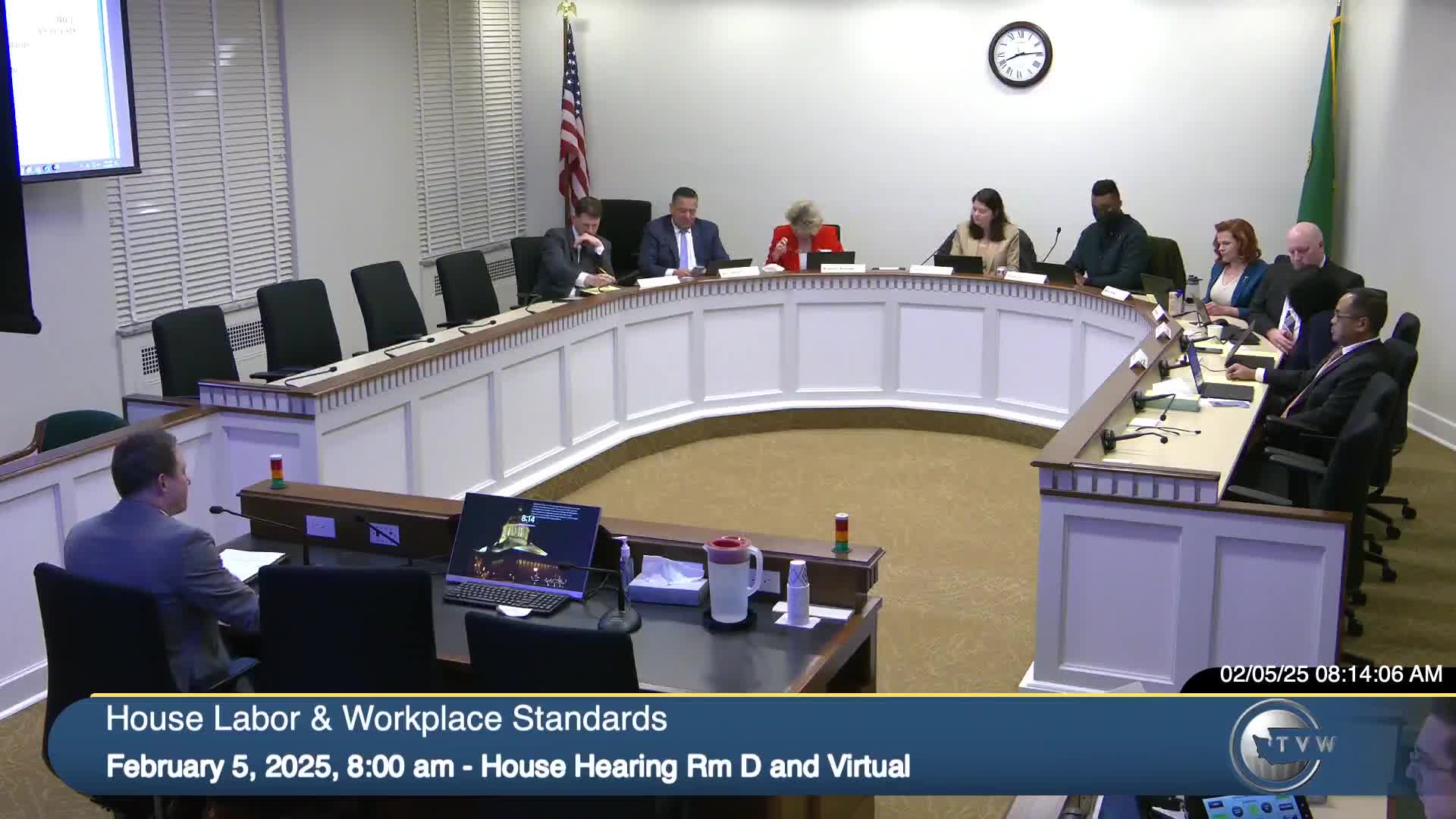
House Bill 16-26 would let small (class‑2) school districts apply for employer grants from the PFML insurance account to cover costs when employees take paid family and medical leave, witnesses said at a Feb. 5 committee hearing.
House Bill 16-26 would expand eligibility for employer grants under Washington’s paid family and medical leave (PFML) program so that school districts classified as "second class" — those with fewer than 2,000 students — could apply for grants to help cover replacement costs when employees take PFML, committee staff and witnesses said on Feb. 5.
Ben McCarthy, committee staff, reviewed current grant rules: an employer can receive $3,000 for hiring a temporary worker to replace an employee on leave for seven days or more, or $1,000 to cover significant additional wage‑related costs. Grants are paid from the PFML insurance account and current eligibility limits apply to employers with "150 or fewer" employees (staff language was inconsistent in the hearing transcript). The bill would let class‑2 school districts apply for the grants regardless of employee counts; staff said class‑2 districts are those with fewer than 2,000 students.
Superintendents and regional education service representatives told the committee that substitute costs are a recurring strain for small districts. "Last year, we had substitute costs of $39,000 when it came to this paid family and medical leave," Eric Sabota, superintendent of a small district, said, and he added the district also paid about $13,000 in premiums. Devin Gomboski of ESD 105 said small districts in South Central Washington routinely face substitute needs substantially longer than the four days the state funds for substitute teacher costs.
Business and labor witnesses disagreed on the proper funding source. Joe Kendo of the Washington State Labor Council said he supports small districts but opposes expanding the PFML grants program because the change would draw more from the PFML trust and that study of impacts was needed. The Association of Washington Businesses and private‑sector representatives argued the PFML trust was established to assist small private employers and that small school districts differ from private small businesses. Association witnesses suggested the general fund is a more appropriate place for K‑12 support.
Supporters said the change is a modest step to relieve substitute costs during extended leaves and would help small districts maintain instructional continuity; opponents warned of trust‑fund impacts and urged more study or use of existing review committees. No committee vote was recorded at the hearing.