Get Full Government Meeting Transcripts, Videos, & Alerts Forever!
Get email alerts on the Student Employee Unions topic
No spam. Unsubscribe anytime.
Bill would extend collective bargaining to operational student employees at regional universities and Evergreen
Summary
Supporters of House Bill 15-70 told the committee the bill would extend collective bargaining rights to student employees in operational roles (food service, residence life, parking, etc.) at Central, Eastern, and Western Washington Universities and The Evergreen State College; university leaders raised operational and fiscal concerns.
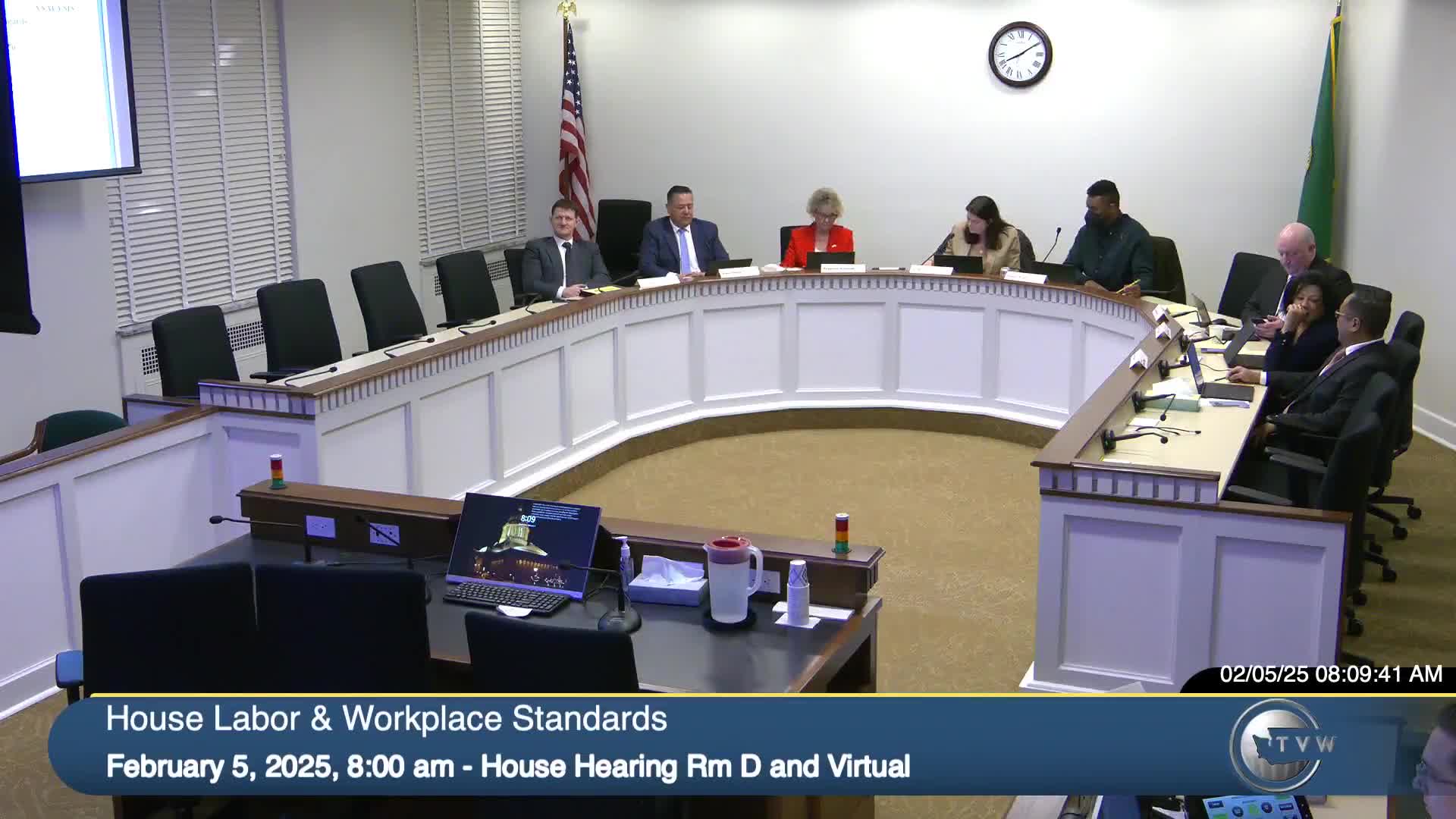
House Bill 15-70 would extend collective bargaining rights to operational student employees — the non‑academic student workers who staff food service, residence halls, parking and similar functions — at Central, Eastern, and Western Washington Universities and The Evergreen State College, committee staff and witnesses said on Feb. 5.
Ben McCarthy, committee staff, summarized the bill and said it would define "student employee" as an enrolled student who performs work and would designate a single appropriate bargaining unit covering employees at each institution (but not a combined unit spanning multiple institutions). The bill would exclude certain academic matters — for example, institutions could still set academic requirements and the academic calendar — and would limit compensation provisions in collective bargaining agreements to the amounts or percentages established by the Legislature; employers could voluntarily provide more than legislative amounts.
Student witnesses and union representatives said operational student workers perform essential functions for their campuses and face irregular schedules, delayed or incorrect paychecks, and financial precarity. "We work to barely make ends meet," Alexander Matheson, a student employee at Central Washington University, told the committee. Gabriel Diaz Kille, an operational student worker at Western Washington University, described repeated payroll problems including late and short paychecks that harmed his ability to pay bills.
University administrators voiced concerns about operational implications and fiscal exposure. David Burai of Eastern Washington University said administrators need clarity about how the bill would affect paid internships, stipends, and experiential learning programs and noted that partial state funding of salary increases at regional universities can create local tuition or levy impacts. University witnesses asked for specificity about which student roles would be covered and how bargaining units would be formed.
Supporters urged the committee to consider student organizing that is already underway on several campuses and said the bill would provide a statutory framework to avoid protracted unit‑determination litigation. No committee vote was recorded at the Feb. 5 hearing.