Get Full Government Meeting Transcripts, Videos, & Alerts Forever!
Get email alerts on the Paid Family Medical Leave topic
No spam. Unsubscribe anytime.
Bill would let Pacific Maritime Association collect paid‑leave premiums for dockworkers to avoid duplicate payments
Summary
Supporters told the Labor & Workplace Standards Committee that House Bill 16-19 would let the Pacific Maritime Association (PMA) act as a representative employer for longshore workers so PFML premiums are calculated on combined wages instead of per company, preventing premium overpayments for workers who work for many employers in a year.
House Bill 16-19 would let the Pacific Maritime Association act as a representative employer for longshore (dock) workers so paid family and medical leave (PFML) premiums can be aggregated across PMA member companies instead of charged separately by each company, supporters said at a Feb. 5 hearing of the Labor and Workplace Standards Committee.
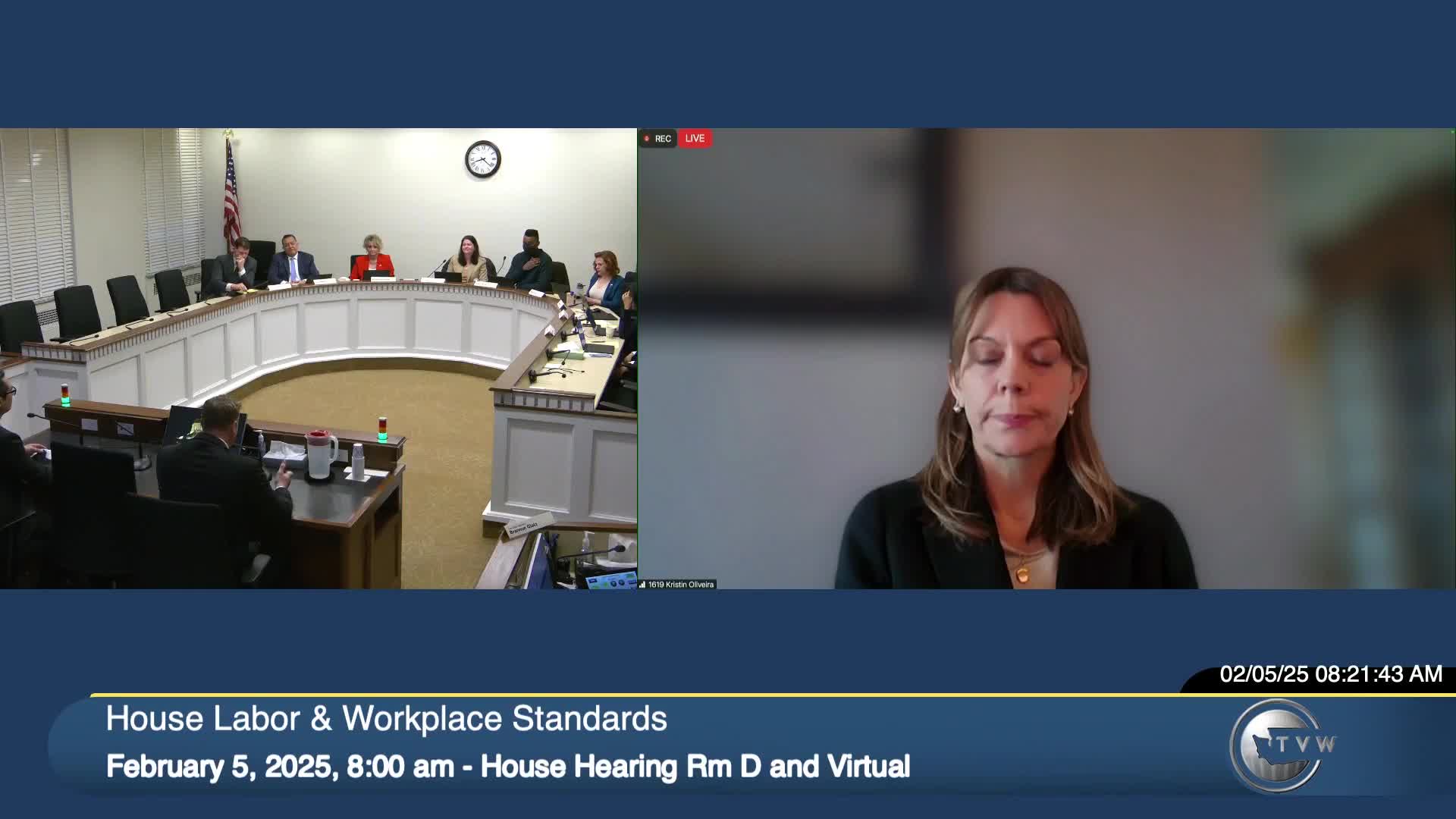
Supporters said the change responds to payroll realities in the West Coast maritime industry, where many longshore workers perform shifts for multiple employers and currently receive pay and tax reporting through PMA. "This proposed amendment would benefit the longshore workers by protecting them from making premium overpayments," Kristen Oliveira, representing the Pacific Maritime Association, told the committee. "PMA is not the employer of the longshore workers — its member companies are — and this amendment will not change that status."
The bill, as described by committee staff, modifies the statutory definition of employer for the PFML program to allow a representative for employers of dock workers who normally work for several employers under collectively bargained arrangements to collect and report PFML premiums for those workers. Kelly Leonard, staff to the committee, gave the staff briefing and said the program requires employers to notify employees of benefits, calculate and collect premiums, and remit them to the Employment Security Department.
Longshore union leaders and rank‑and‑file witnesses told the committee that many ILWU members regularly work shifts for multiple employers — sometimes five or more in a single week — and that under current practice a worker may exceed the Social Security wage cap for combined earnings but still be assessed PFML premiums separately by several employers, producing overpayments. "House Bill 16-19 corrects this by having the state recognize the Pacific Maritime Association as their single employer and aligns our members' earnings across all PMA companies," Brock Graber, vice president of ILWU Local 23, said. Douglas Dietz, representing ILWU Local 21, described the change as both a fairness and an administrative simplification.
PMA testimony to the committee described PMA as the multi‑employer bargaining and payroll agent that issues paychecks and W‑2s for many longshore workers, and said the bill would align PFML reporting with current Social Security reporting practices. Committee members asked few questions during the hearing and the committee moved on to other bills after testimony.
Because the bill would change which entity reports wages and collects PFML premiums, proponents said it would not change employer/employee status, only the administrative reporting unit used for premium calculations.
The hearing record included staff briefings and testimony from PMA and multiple ILWU locals; there were no formal votes recorded at the Feb. 5 hearing.