Get Full Government Meeting Transcripts, Videos, & Alerts Forever!
Get email alerts on the Psilocybin Regulation topic
No spam. Unsubscribe anytime.
Committee hears wide‑ranging debate over state regulation of psilocybin services; proponents urge access, opponents press for decriminalization
Summary
House Bill 1433 would create a regulated framework for supervised adult use of psilocybin, assign duties to the Department of Health and the Liquor and Cannabis Board, and set licensing, training and testing requirements. Proponents including veterans and community advocates described life‑changing results; medical and public‑health groups urged
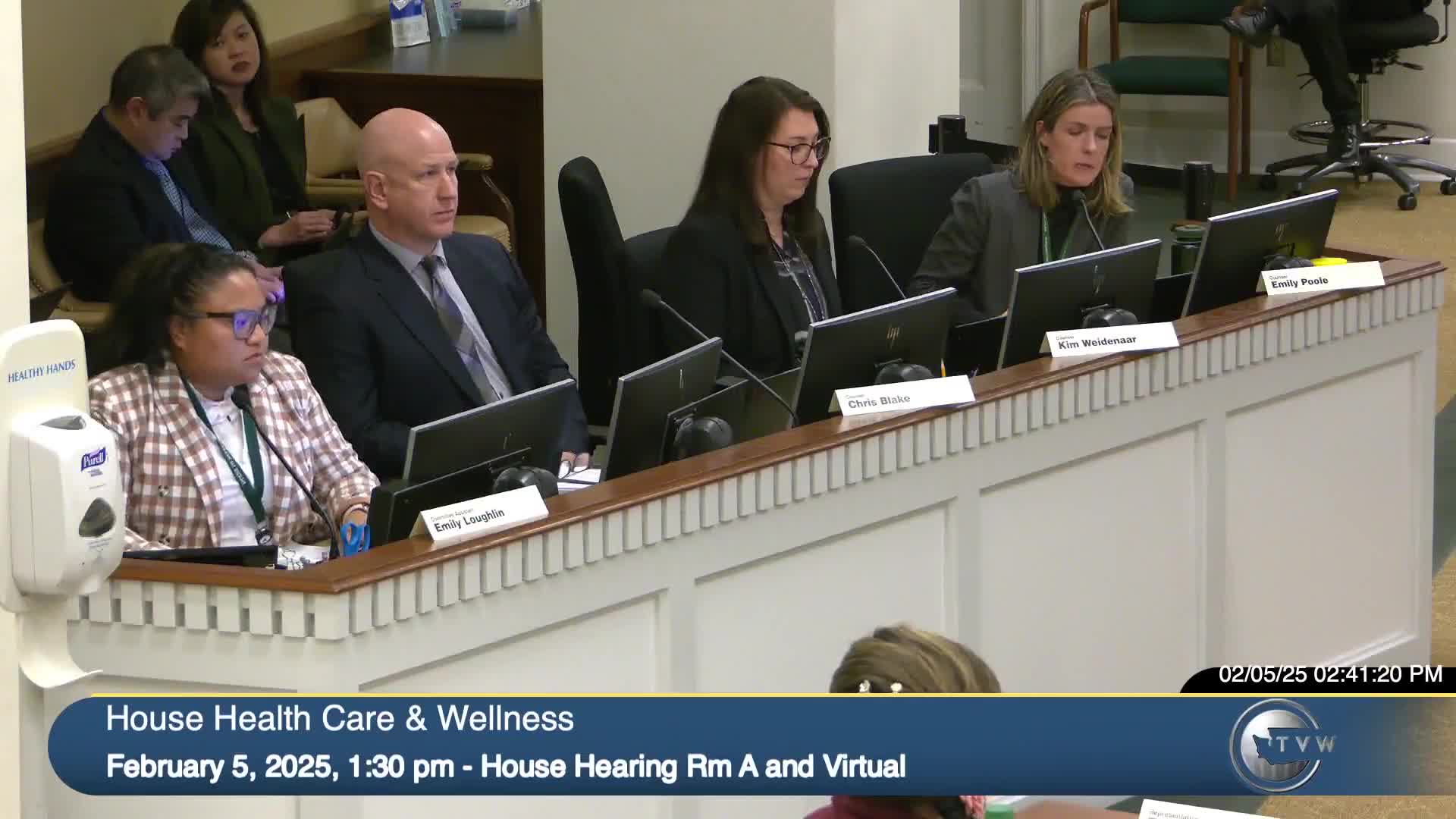
The House Health Care & Wellness Committee on Feb. 5 received more than three hours of testimony on House Bill 1433 (proposed substitute H116.1), which would create a statewide regulatory framework for the supervised adult use of psilocybin and assign regulatory responsibilities to the Washington State Department of Health and the Liquor and Cannabis Board.
Committee staff summarized the proposal: the bill would create a Washington Psilocybin Board to advise the Department of Health during the program's first two years, require the Department of Health to adopt rules for facilitator training, temporary location permits and service‑center operation, and require the Liquor and Cannabis Board to license cultivators and testing laboratories and to set packaging, labeling and potency limits. Facilitators would be licensed (clinical facilitators would also hold a health professional license), training and supervised hours would be required, and facilitators would be permitted to provide sessions in licensed service centers, registered health facilities, temporary permitted locations or a client's residence. The bill would also exempt psilocybin used according to the act from the state Controlled Substances Act and allow certain licensing information to be exempt from public disclosure.
Supporters included veterans and community members who told deeply personal stories. Paula Sardinas described a family case in which her former spouse, a Navy veteran, did not respond to conventional care and later remained clean and sober after psilocybin‑assisted therapy. Several speakers — including clinicians, researchers and program leaders with experience in Oregon and in clinical trials — urged regulated access to expand treatment options for PTSD, treatment‑resistant depression and substance use disorders.
Opponents or cautious witnesses raised several concerns. Medical organizations, including representatives of psychiatric and medical associations, said the bill effectively medicalizes psilocybin without sufficient phase‑3 efficacy and safety data and argued that clinical trials require licensed clinicians, medical monitoring and extended safety protocols that the bill did not fully require. The Department of Health signed in as "other" and asked for clarity on the board's authority, Uniform Disciplinary Act application, and several operational issues (including storage and temporary locations, clinical facilitator roles and how the program would align with missing efficacy data). Representatives from decriminalization advocacy groups said the bill would create a costly, regulated system that excludes people who cannot afford expensive sessions and would leave personal possession, home cultivation and gifting criminalized unless the legislature also decriminalizes.
Witnesses cited operational experience from Oregon's Measure 109, identifying costs and slow rollouts there; several former or current facilitators and advocates said training and licensing fees have been a financial burden. Other witnesses urged the committee to pair any regulated system with decriminalization or at least protections for personal cultivation and gifting to avoid creating a two‑tiered system in which only wealthier people can access supervised services legally.
Committee staff and members noted the bill's timeline — rulemaking and board formation, licensing beginning in November 2027 for some activities, and broad regulatory requirements — and raised implementation and safety questions. The committee did not vote on HB 1433 on Feb. 5.