Get Full Government Meeting Transcripts, Videos, & Alerts Forever!
Get email alerts on the Consumer Pricing Transparency topic
No spam. Unsubscribe anytime.
Committee weighs bill to bar rental companies from separately stating "vehicle license recovery" fees
Summary
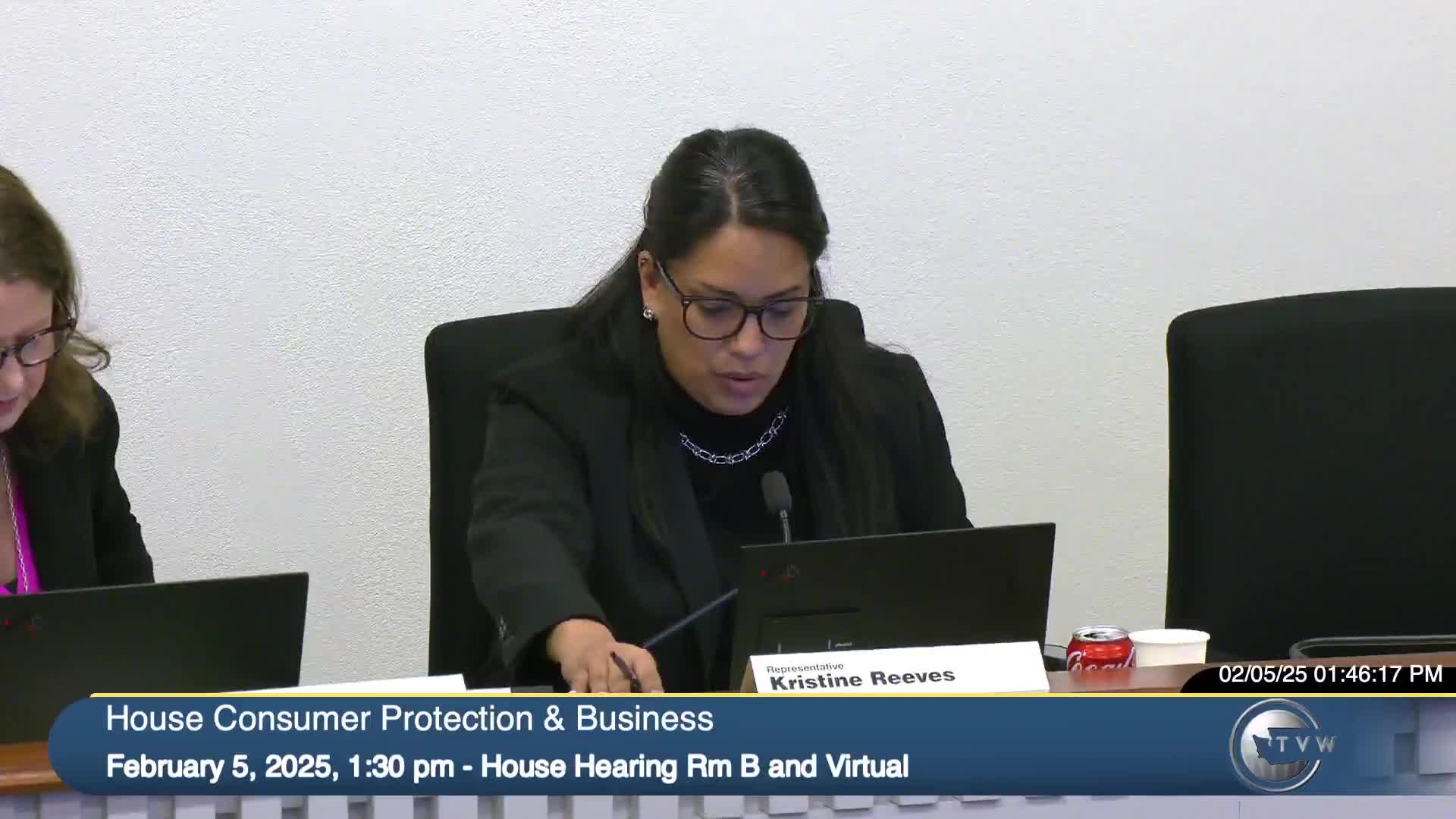
The Consumer Protection & Business Committee took testimony Wednesday on House Bill 1431, which would prohibit rental car companies from separately stating a vehicle license cost recovery fee and limit separately stated taxes and surcharges to those imposed directly by government.
The Consumer Protection & Business Committee took testimony Wednesday on House Bill 1431, a proposal that would stop rental car companies from separately stating a vehicle license cost recovery fee in rental agreements and limit separately stated surcharges to those imposed directly by governments.
Peter Clodfelter, committee staff, told members existing law allows rental companies to separately state fees that recover the firms’ costs to license, title, register and plate rental vehicles. "House Bill 1431 would limit the taxes and government surcharges that can be included and separately stated in a rental car agreement to those that are directly imposed on a rental car customer by a federal, state, or local government agency," he said. The bill would prohibit rental companies from stating or implying that Washington imposes a vehicle license cost recovery fee on customers.
Prime sponsor Representative Sharon Tomiko Santos said the change is intended to restore transparency. Santos reminded the committee that a 2009 law authorized rental companies to collect a per-day recovery estimate and reconcile it annually; she said the system has produced instances in which customers have been charged more than the actual cost. "This bill attempts to address that problem, by eliminating that declaration and not allowing the rental car fees to be collected in that fashion," she said, and added she is willing to work on language to perfect the proposal.
Industry witnesses urged caution. Robert Muse, vice president of government affairs for Avis Budget, said Avis Budget discloses the recovery fee as a company recovery and does not present it as a government-mandated fee: "We never say that it's mandated by the state." Muse said the recovery mechanism helps national-account customers compare base prices across jurisdictions. Brian Rothery of Enterprise Mobility said the companies present consumers the total price up front on their websites and that the per-day structure helps keep per-day pricing consistent for customers.
A tech industry trade group, the Chamber of Progress, testified in support of the bill. Robert Singleton told the committee the bill would "eliminate some of the deceptive fees charged by rental car companies" and said, according to his testimony, that consumers in Washington paid "over 10,200,000.0 per year in unnecessary vehicle license fees" (figure reported by the witness in testimony).
Committee members pressed rental-industry witnesses on how recovery accounting works and whether a recovery amount can ever reach zero during a year. Enterprise’s Rothery said companies monitor the aggregate amounts throughout the year and "the total amount that we're able to collect, yes, that gets down to 0" over an accounting period when reconciled, though the per-day charge to a customer does not become zero on a per-day basis.
No committee vote was taken during the hearing. Public testimony included industry groups opposing the bill and consumer or technology groups supporting greater transparency. The committee closed the public hearing and the bill remains under consideration.