Get Full Government Meeting Transcripts, Videos, & Alerts Forever!
Get email alerts on the Background Checks Fingerprint topic
No spam. Unsubscribe anytime.
Bill would clarify state fingerprint-check law to maintain FBI access for transitional care staff
Summary
House Bill 14 90 would revise Washington's fingerprint-based background-check statutes so the state can continue to access FBI criminal-history records for certain care positions, explicitly including staff at transitional care facilities for youth and other specified categories.
The committee received a staff briefing and public testimony on House Bill 14 90, which would revise state law governing fingerprint-based background checks to conform with federal requirements and preserve access to FBI criminal-history records for authorized state agencies. Staff explained that the FBI must approve state background-check statutes before a state can receive certain nationwide records and that the current Washington statute has language the FBI has flagged as overly broad or unclear.
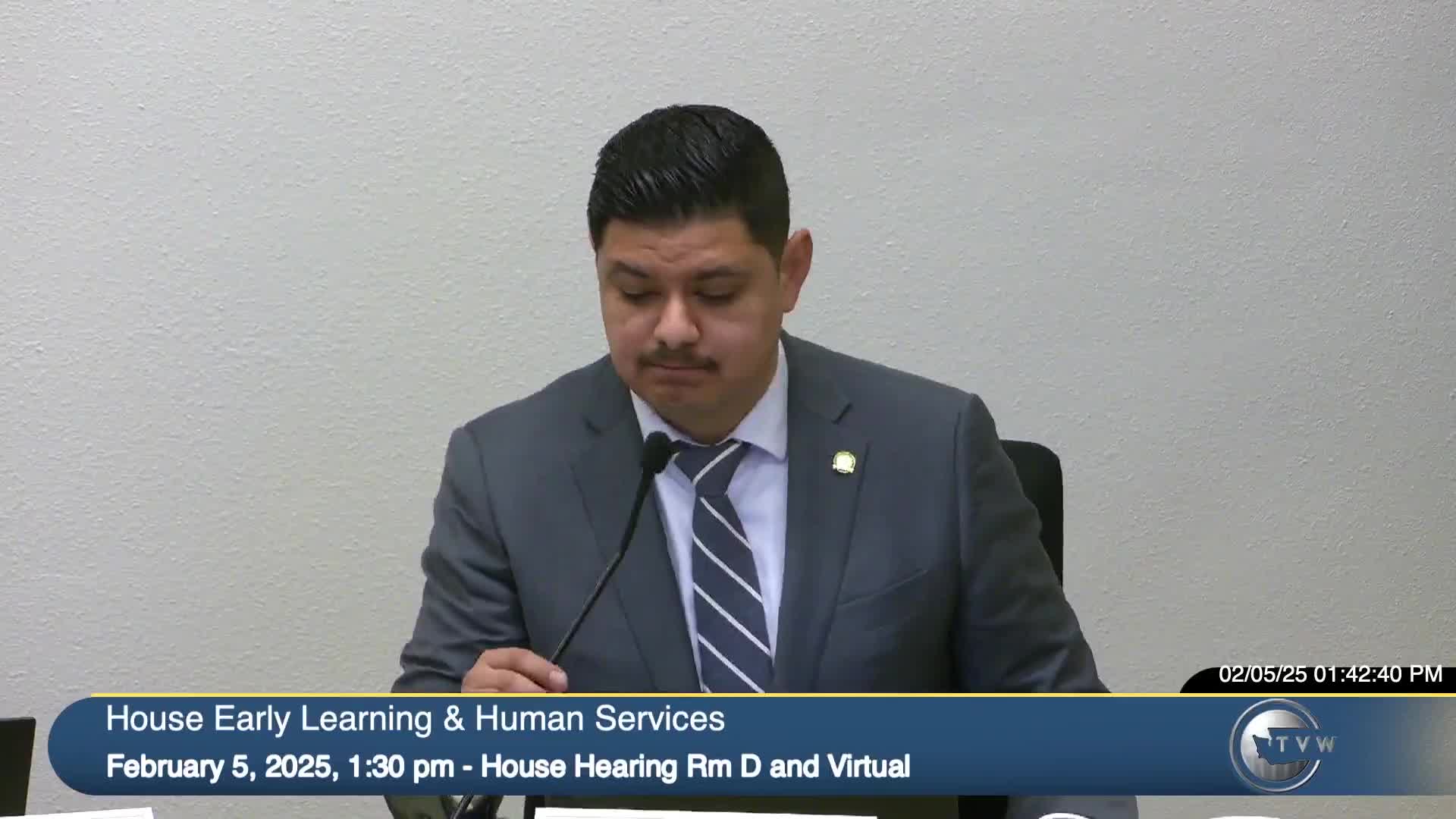
Representative Edwin O'Bros, the bill sponsor, told the committee this is an "agency request" bill intended to clarify statutory language so Washington continues to have access to the FBI database. He said the change would explicitly allow fingerprint background checks for staff at the new Lake Burien transitional care facility and others not clearly covered under current law. "Without changes, the FBI won't allow access to its fingerprint background check system, which is critical for public safety," he said.
Agency witnesses described the change as technical but necessary. Megan DeSmit, director of facilities for the Developmental Disabilities Administration, said the bill "will bring Washington into compliance with federal requirements and maintains access to the FBI system." Dr. Upkar Mangat, deputy assistant secretary for the Developmental Disabilities Administration, testified the FBI flagged Washington's current statute, RCW 43.43.837, as too broad and unclear and that the bill would fill a gap that currently excludes transitional care facilities.
Under the bill as presented, statutory categories of positions that require fingerprint-based checks would be made more specific; some categories would be expanded (for example, to include individuals 16 years of age and older residing in certified community residential companion homes); and specific definitions would be added for terms used in background-check provisions. The bill would also apply a residency-based narrowing criterion (the prior 3-year residency limitation) consistently across categories in statute and allow agencies to require a background check at application or when new disqualifying information arises.
Supporters described the bill as a technical fix that is essential for protecting vulnerable populations by ensuring complete access to national investigative resources. Committee members asked clarifying questions about an amendment the sponsor planned to work on with agency staff and indicated a willingness to coordinate language changes with the Washington State Patrol and the agencies that administer care licensing.