Get Full Government Meeting Transcripts, Videos, & Alerts Forever!
Get email alerts on the Healthcare Administrator Licensure topic
No spam. Unsubscribe anytime.
Proposal to license hospital administrators draws sharp divide between nurses and hospitals
Summary
House Bill 1567 would require the Department of Health to license certain hospital administrators who supervise clinical staff or manage departments. Nurses and unions testified in favor, saying licensure would improve accountability and patient safety; hospital associations opposed the bill, citing lack of national exam or model, unclear scope,
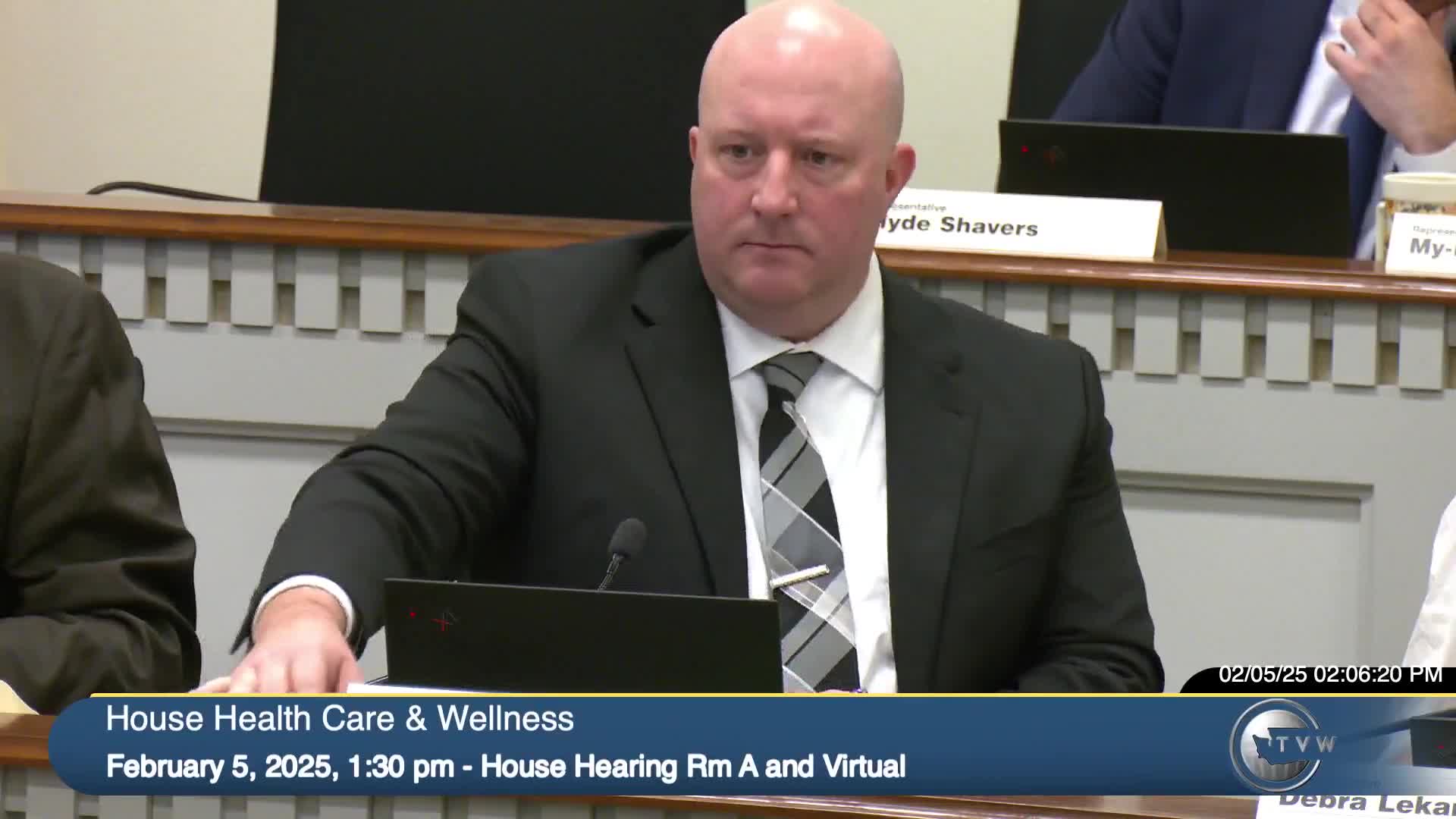
The House Health Care & Wellness Committee on Feb. 5 considered House Bill 1567, a bill that would require the Washington State Department of Health to license healthcare administrators who supervise clinical staff or who hold director, officer or executive positions with supervisory responsibility over nonclinical managers.
Chris Blake, committee staff, said the bill defines two categories of employees who would require a license: nonclinical managers with direct supervisory authority over clinical staff (including hiring, scheduling, regulatory compliance and fiscal reporting) and executive‑level employees who supervise those managers and make policy and financial decisions affecting patient care. Licensure would begin Jan. 1, 2027; applicants must pass an examination, pay a fee, complete continuing education, and comply with disciplinary standards under the Uniform Disciplinary Act. The bill also creates several administrator‑specific unprofessional‑conduct provisions related to fiscal or operational decisions that injure or risk injury to patients.
Supporters testified largely from the clinical workforce. Kelly Johnson, an emergency nurse, and Sarah Gehring, an ICU nurse, told the committee administrators sometimes make decisions that increase patient safety risk and that licensure would align administrators' accountability with that of licensed clinicians. Maureen Hatton of UFCW 3000 and representatives of the Washington State Nurses Association and Washington State Medical Association urged passage as a patient‑safety measure and said licensure would create standards and disciplinary pathways for administrative decisions.
Hospital organizations strongly opposed the bill. Ashlyn Strong and Shailene Whitaker of the Washington State Hospital Association said the bill's definition of "healthcare administrator" is broad and vague; they argued the Department of Health lacks the institutional expertise to design and administer a national‑level licensing examination or continuing education program for hospital administrators. The hospital association pointed out that nursing home administrator licensure is a different, longstanding program with national exam infrastructure and that no comparable national licensing board exists for hospital executives.
Hospital witnesses noted existing oversight mechanisms: hospital boards (elected in public hospital districts), state hospital staffing laws passed in 2023, and the Department of Health's existing patient‑safety authority. Asked by committee members, witnesses said the Department of Health already has investigatory authority for patient safety and can pursue penalties; opponents recommended using targeted statutory fixes rather than a new licensing regime.
Testimony included frontline examples — surgical tech staffing, emergency department workload and reported instances where nurses said administrators' decisions limited safe care — that supporters said illustrated the bill's need. Opponents said the legislature should be cautious about creating a new licensing program without a national standard or clear scope, and they urged the committee to consider other bills addressing corporate practice and administrative influence over clinical decisions.
The committee did not take a vote during the Feb. 5 hearing.