Get Full Government Meeting Transcripts, Videos, & Alerts Forever!
Get email alerts on the Prior Authorization Reform topic
No spam. Unsubscribe anytime.
Committee hears broad bill to tighten prior authorization, limit AI sole‑use denials
Summary
The Washington House Health Care & Wellness Committee on Feb. 5 heard House Bill 1566, which would increase transparency and oversight of prior authorization decisions, restrict the sole‑use of AI to deny care, require peer‑to‑peer review opportunities, and strengthen protections against retrospective denials.
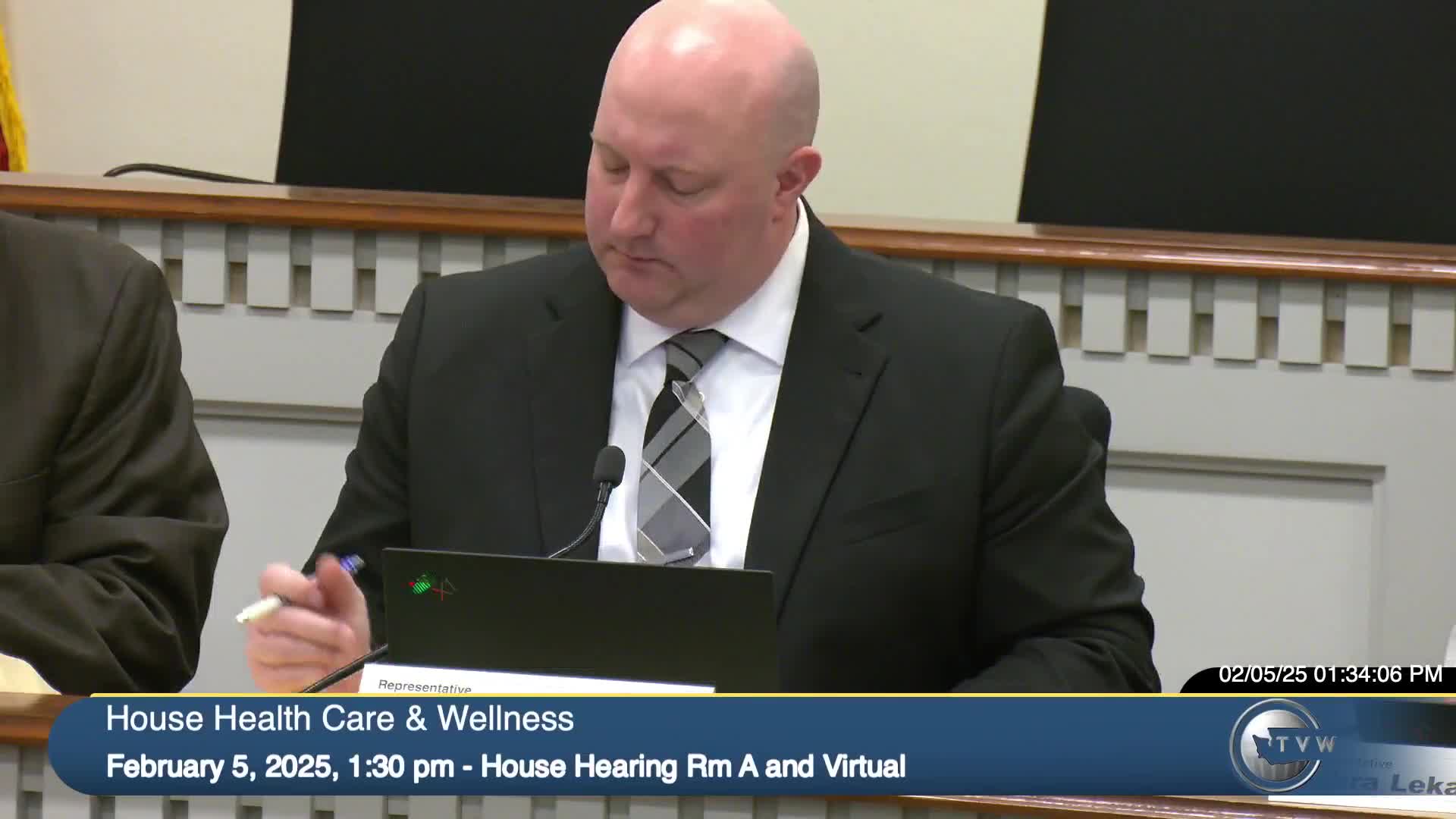
The Washington House Health Care & Wellness Committee on Feb. 5 heard extensive testimony on House Bill 1566, a multi‑part proposal to reform prior authorization for medical procedures, imaging and medications.
Emily Poole, committee staff, opened the briefing by describing the bill's principal elements, including new notification requirements that would force carriers, health plans and managed care organizations (MCOs) to identify the individual reviewer and the supervising physician (by national provider ID) when issuing prior authorization determinations; mandatory peer‑to‑peer review opportunities for adverse determinations; and limits on when plans may change prior authorization policies to once per year, effective Jan. 1 of each year beginning after Aug. 1, 2025.
Poole also summarized the bill's protections for the use of artificial intelligence and related software tools: "only a licensed physician or health professional may make determinations of medical necessity," and an AI algorithm "may not be the sole means used to deny, delay, or modify health care services." If an AI tool is used, the tool must use a patient's individual clinical data rather than only a group dataset, must not discriminate against an enrollee, and must be subject to auditing and periodic review by the appropriate authority.
Representative Alicia Ruhl (D‑42), the bill's prime sponsor, told the committee the measure aims to reduce delays and administrative burdens that keep patients from timely care. "We need people to be able to access their surgeries, their procedures, and their specialist medical appointments when they need it," Ruhl said, arguing the bill would increase transparency about who is making prior authorization determinations and how AI is used in the process.
Hospital systems, physicians and patient advocates provided much of the oral testimony in support. Shaleen Whitaker of the Washington State Hospital Association said the bill would improve transparency and accountability and benefit patients. Troy Simonson of ProLiance Surgeons highlighted administrative burden and delays, and urged stronger peer‑to‑peer rules and limits on retrospective denials. Representatives from Evergreen Health, the Washington State Medical Association and other physician groups described repeated examples of retrospective denials and lengthy appeals that increased costs and delayed care.
Opposing testimony came primarily from insurers. Jennifer Ziegler of the Association of Washington Healthcare Plans said the industry has invested in API technology that automates prior authorization and returns faster, more accurate responses when requests arrive electronically; she warned overly broad AI language could undermine those technology investments. Ramla Batra, chief medical officer at Premera Blue Cross, said an annual freeze on medical policy updates could leave plans out of compliance with federal changes and slow the adoption of new, evidence‑based treatments.
Committee staff noted several specific timing and reporting provisions in the bill: carriers must limit prior authorization policy changes to an annual cycle that takes effect Jan. 1 beginning after Aug. 1, 2025; by Jan. 1, 2026, MCOs must begin quarterly reporting of prior authorization requests and approvals (including the percentage aided by AI); and by July 1, 2027, the relevant authority must determine which services MCOs may not subject to prior authorization for Medicaid enrollees.
Multiple testifiers described operational details the committee may need to reconcile in amendment: how peer‑to‑peer reviewers will be credentialed and whether they must be licensed in Washington, how to ensure portals and electronic submission rates increase (Ziegler noted about 45 percent of requests are still received by fax), and how to reconcile carriers' need to update medical policy with a statutory annual freeze.
The hearing included roughly three dozen witnesses and extended public testimony from hospitals, physician groups, veterans' and patient advocates, and people who reported personal harms from denials. Committee members asked education and technical questions but did not take a final vote on HB 1566 during the Feb. 5 hearing.