Get Full Government Meeting Transcripts, Videos, & Alerts Forever!
Get email alerts on the Juvenile Diversion topic
No spam. Unsubscribe anytime.
Committee hears bill to expand juvenile diversion, create DCYF grant program and require statewide diversion data
Summary
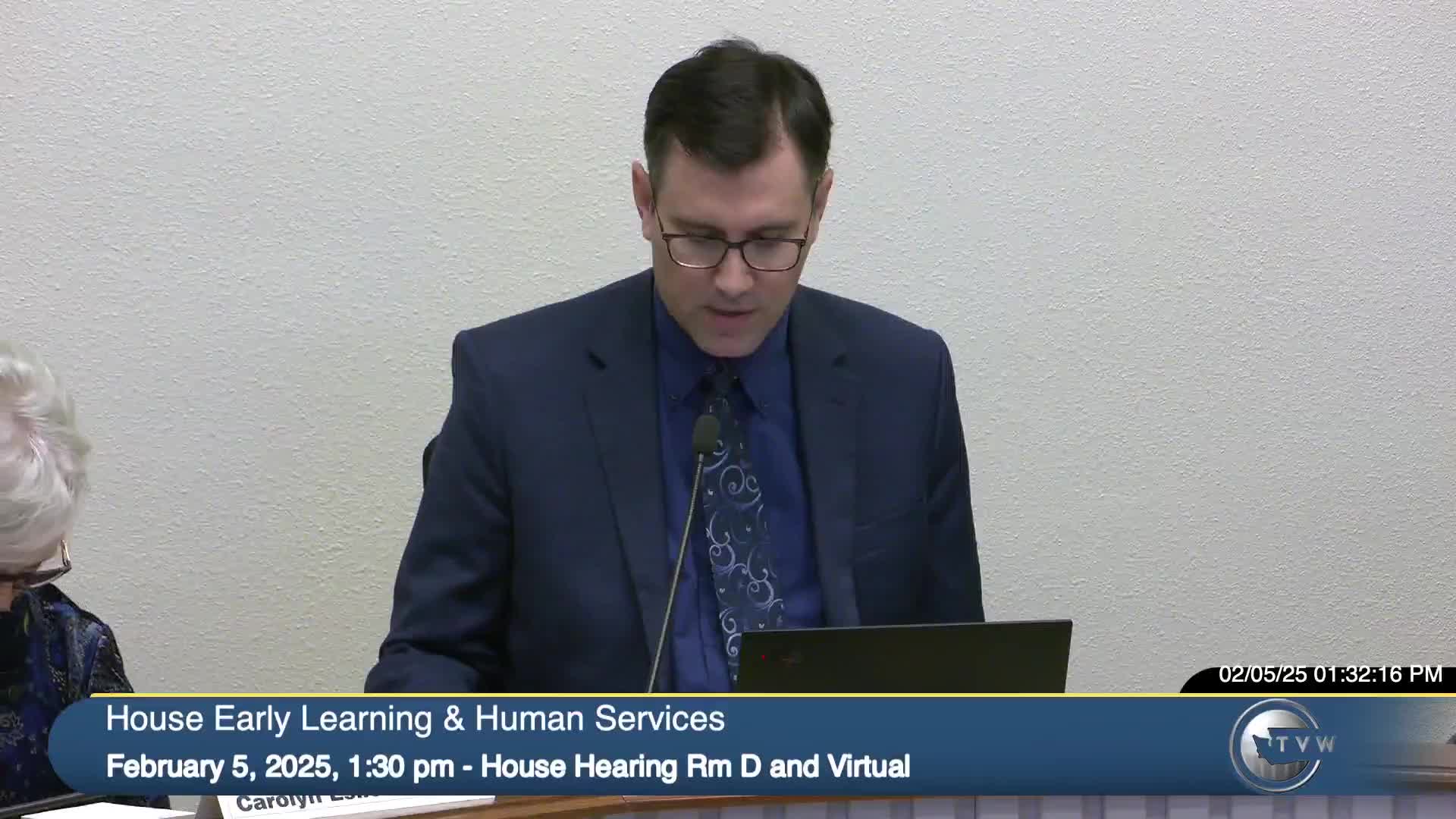
The Human Services, Youth, & Early Learning Committee heard testimony on House Bill 13 91 at a public hearing. The bill would expand the role of consolidated juvenile service programs, create a grant program at the Department of Children, Youth, and Families (DCYF) to support community-based diversion, require courts to transmit juvenile diversion agreement data to the Administrative Office of the Courts (AOC), and direct the AOC to develop common definitions, outcome measures, and an annual report on diversion agreements.
The Human Services, Youth, & Early Learning Committee heard testimony on House Bill 13 91 at a public hearing. The bill would expand the role of consolidated juvenile service programs, create a grant program at the Department of Children, Youth, and Families (DCYF) to support community-based diversion, require courts to transmit juvenile diversion agreement data to the Administrative Office of the Courts (AOC), and direct the AOC to develop common definitions, outcome measures, and an annual report on diversion agreements.
Supporters told the committee diversion reduces future offending, keeps youth connected to school and family, and saves public resources. "Diversion works," said Representative Cortez, the bill's prime sponsor, noting her years of direct service with at-risk and homeless youth. "The investments that we make through this bill are gonna pay out tenfold because youth will not be involved in the system." Sunshine, a 22-year-old testifier currently at Washington Correctional Center for Women, described diversion as a second chance: "Diversion allows youth to continue their education, contribute to society, and not be defined by a single mistake they may have made."
The bill summarizes current diversion practice and proposes several statutory changes: it would prohibit parents or guardians from preventing a juvenile from entering a diversion agreement; limit diversion agreements to offenses committed before a juvenile's 18th birthday and preserve prosecutors' ability to file charges later under specified age thresholds; expand consolidated juvenile service programs to include services and referrals for diverted and referred youth; create a DCYF grant program for community-based diversion providers; and require the AOC, in consultation with DCYF and juvenile court administrators, to standardize diversion definitions and outcome data and to publish annual reporting. Committee counsel Luke Wickham briefed committee members on the bill's components and existing diversion elements, noting common diversion requirements such as community service (up to 150 hours), restitution, counseling (up to 10 hours), and positive-youth-development sessions (up to 20 hours).
Local juvenile court administrators and community providers described geographic and funding gaps that limit diversion availability, particularly in rural counties. Roxanna Gomez of Legal Counsel for Youth and Children said that many counties now use their limited local budgets to fund diversion and that HB 13 91 would create consistent statewide funding and infrastructure. Liz Trautman of Stand for Children Washington cited state data showing lower recidivism for diverted youth and urged passage to address overcrowding at juvenile rehabilitation facilities.
Proponents including dispute resolution centers, youth-service organizations, and juvenile court administrators described community programs that keep young people in their communities, provide accountability and repair to harmed parties, and connect youth to education, mentoring and mental-health supports. Jack Murphy of the Washington State Association of Juvenile Court Administrators urged dedicated resources so courts can contract with community providers to offer consistent diversion programming.
Opposition or procedural concerns were not a primary focus during the hearing; committee members and witnesses discussed technical refinements and data collection details. Several speakers emphasized the need for investment and consistent metrics so diversion programs are widely available and comparable across counties.
The committee kept the public hearing record open for HB 13 91 and temporarily paused to hear other bills. Staff and advocates said they will continue working with the committee on technical amendments and funding mechanisms that would support statewide implementation.